
Tokyo 2 Day Itinerary: How to See Tokyo in 48 Hours
Updated August 2026: route, prices and transport tips re-checked, plus a new budget breakdown for the two days.
Tokyo squeezes ancient temples, neon skyscrapers, anime arcades and tiny back‑alley bars into one gigantic city. With only two days it can feel impossible to choose what to see – but with a smart route you can still experience the very best of it.
This 2‑day Tokyo itinerary is designed for first‑time visitors and hits the city’s essential contrasts: sushi breakfasts at Tsukiji, futuristic Odaiba, buzzing Shinjuku and Shibuya on day one, then gamer heaven in Akihabara, old‑world Asakusa and sunset views from Tokyo Skytree on day two.
Follow the plan below, plug it into your Japan Rail Pass and Tokyo Subway Ticket, and you’ll finish your 48 hours in Tokyo tired in the best possible way – and already planning your return.
At a quick glance: 3 must-do’s in Tokyo
This post may contain affiliate links, which means that if you purchase anything via them, we might earn a small commission – at no extra cost to you. Check our affiliate disclaimer for more information.
Tokyo 2 day itinerary
By the time you have arrived in Tokyo, you’ll have noticed that Japan is a land full of contrasts. And guess what – Tokyo will still surprise you with how much this holds. And hell, there are so many things to do in Tokyo.
Hip and trendy, traditional and down-to-earth, busy and loud and yet peaceful and calm… no matter what you’re looking for, there’s a good chance Tokyo has it.
So what to see in Tokyo in 2 days? Let’s get to it!
Day 1: Tsukiji Fish Market, Odaiba, Shinjuku, Shibuya
Morning: Tsukiji Fish Market
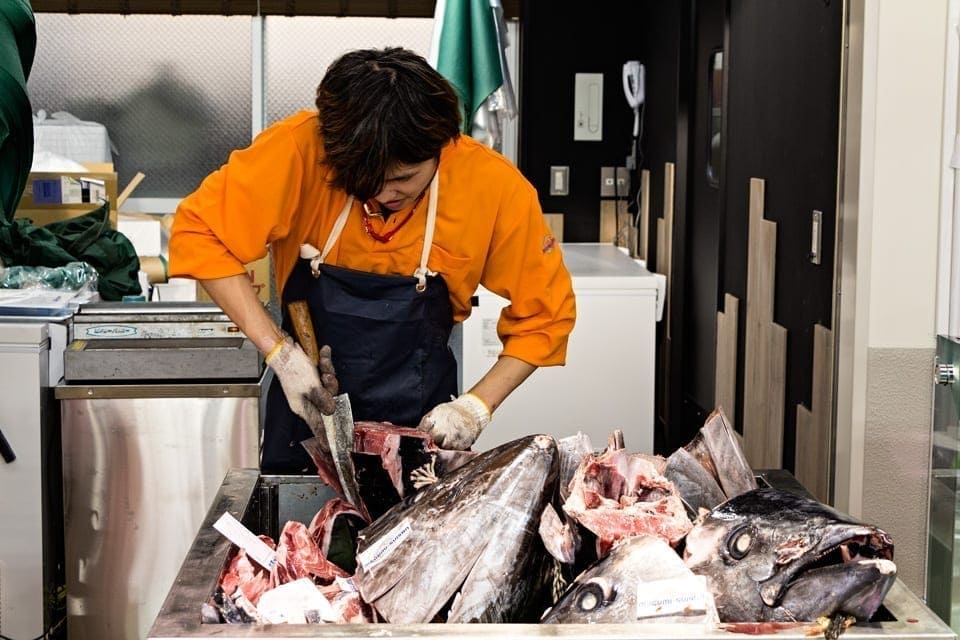
Start the first day of your 2 days in Tokyo by visiting Tsukiji Fish Market (now known as Tsukiji Outer Market).
A note: a part of the Tsukiji fish market has been replaced by Toyosu Fish market. Check here for more info.
With many restaurants and small shops, this is a fun place to walk around and savour the fishy experiences 😊 From the delicious huge tunas to the extremely poisonous Japanese delicacy of fugu (blowfish), this place probably has all the seafood imaginable, and frankly, maybe even some that are beyond imagination.
Did you know that fugu chefs are strictly licensed and take at least two years to learn how to turn the deadly fish into an edible delicacy?
You might also remember a Simpsons episode: One Fish, Two Fish, Blowfish, Blue Fish, where Homer ate a fugu fish and almost died!
Tsukiji is also the right place to watch the chefs as they prepare the freshest sushi in the world and then enjoy it in one of the many small restaurants hidden in the side streets of the market.
Transport
Tsukiji Station on the Hibiya Line is the most convenient for getting to the Tsukiji Fish market. However, if your hotel is in the Kyobashi area or Ginza, it is also possible to walk there in about 20 – 30 minutes.
Afternoon: Odaiba
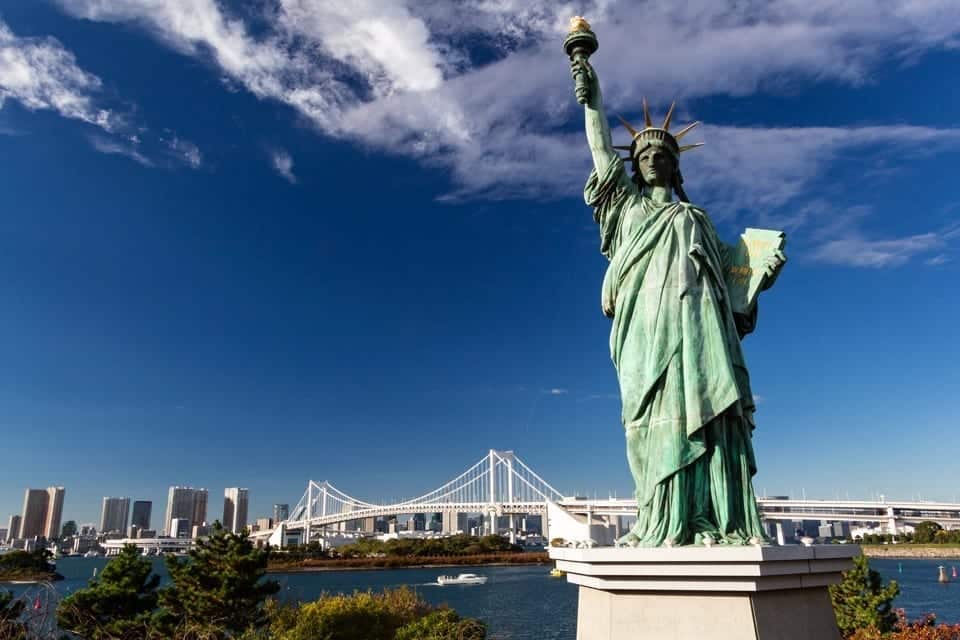
Having enjoyed the sushi, take an automatic elevated train to the nearby Odaiba – a futuristic part of Tokyo built on a man-made island and full of shopping, dining and entertainment options.
Why not take a selfie at the replica of the Statue of Liberty with Tokyo’s skyline in the background before heading to the Shinjuku district?
You can even spend a whole day in Odaiba entertainment centres if your time in Japan allows it!
We roamed here in the early afternoon of our first day in Tokyo. It was interesting, to say the least.
Transport
Odaiba requires a trip by a private Yurikamome driverless train from Shimbashi station. Get off at Daiba. This train requires a ticket, even if you have a day pass for the subway, as it is a private train.
Afternoon: Shinjuku
After Odaiba, make your way – with the driverless train! – to Shinjuku for some entertainment. Think skyscrapers, the world’s busiest railway station and plenty of shopping and entertainment options – that’s Shinjuku.
There are even bars, if that’s your scene – the most popular bars are in Shinjuku.
And as we promised some contrast, nearby is a vast Yoyogi park with the splendid Meiji Jingu shrine or the Shinjuku Gyoen National Garden. Unlucky for us, it started raining when we came back from Odaiba. But luckily, there are many nice little – and the main thing, warm! – teahouses in Shinjuku.
After having enjoyed Shinjuku, head on to Shibuya for some more contrast 😊.
Transport
Shinjuku station is served by 3 different metro lines. The circular JR Yamanote Line is the best place to get off and then explore the area on foot. For Meiji-Jingu Shrine and Yoyogi Park, you may walk -it’s about a 20-minute walk from both Shinjuku and Shibuya. If you prefer, you may also take the JR Yamanote Line and get off at Harajuku station.
Evening: Shibuya
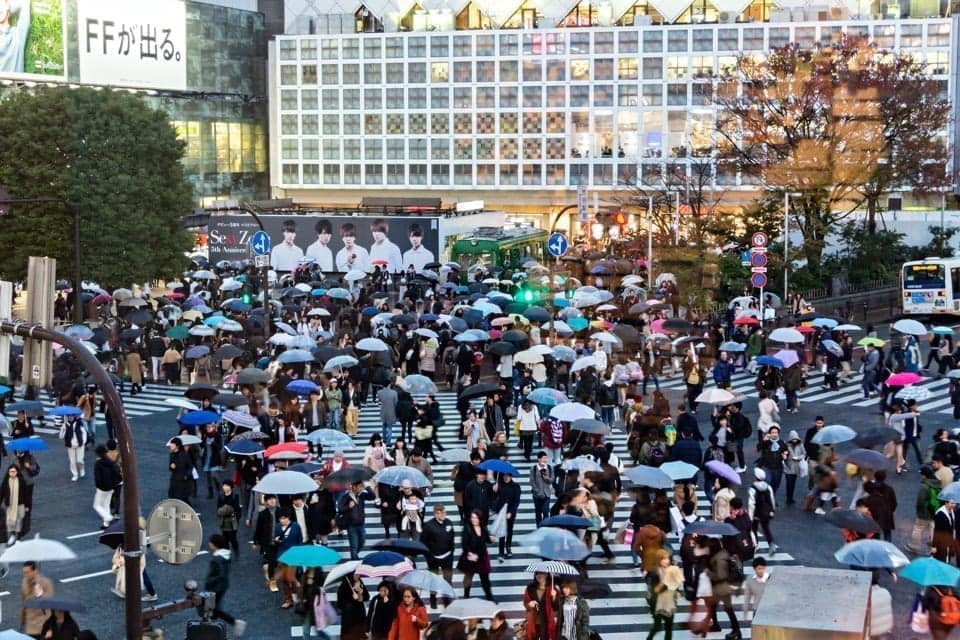
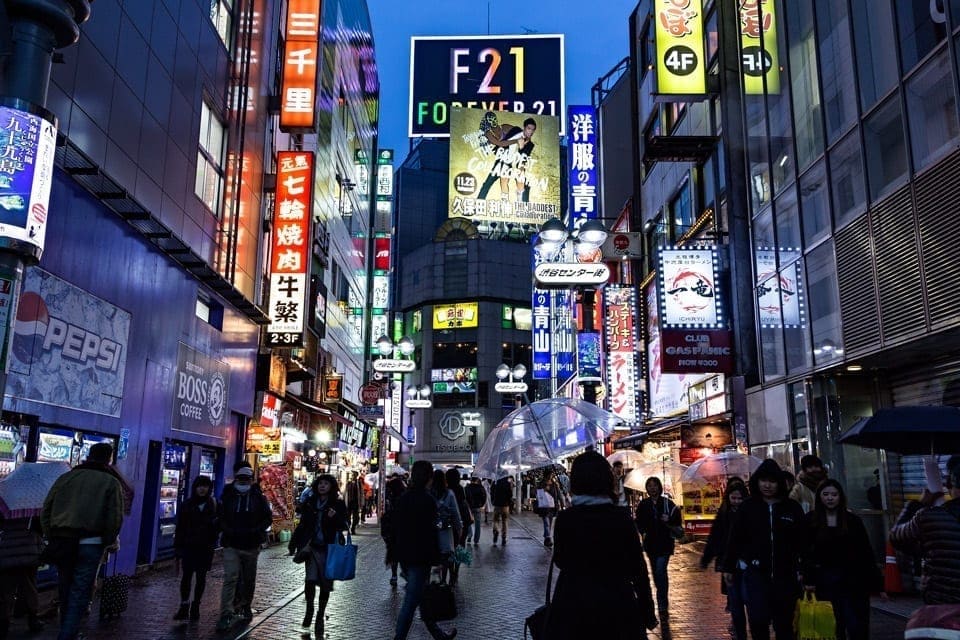
Shibuya is another modern district included in our 2 days in Tokyo itinerary, packed with shopping, entertainment, and flashing neon lights. Yup, this feels like 21st-century Japan.
Shibuya also has a famous bronze statue of Hachiko, a loyal dog who would come here every day to meet his master, a professor returning from work. After the professor’s death, Hachiko would still come to the same place for another 10 years, until his own death.
Ever wondered what the busiest pedestrian crossing in the world looks like? Shibuya crossing has the answer!
A tip – to get the best view of the Shibuya pedestrian crossing, go to the nearby Starbucks! Grab a coffee and watch this self-made street theatre from Starbucks’ second floor seating area. Just keep in mind that you will probably have to wait in line for the window seats overlooking the crossing.
Transport
Shibuya station is served by 3 different metro lines, as well as the circular JR Yamanote Line.
Day 2: Akihabara, Asakusa and the Tokyo Sky Tree
More of Tokyo’s highlights are waiting for you on the last day of this wonderful Tokyo 2 day itinerary.
Morning: Akihabara
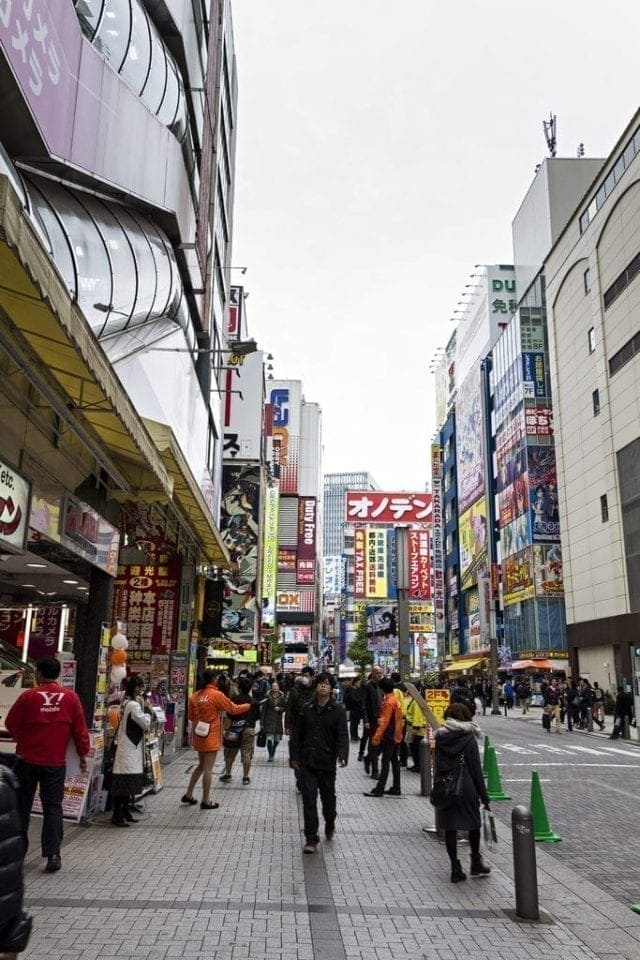
You can’t miss the Akihabara district – the centre for gaming, manga and anime culture (comics and animated stories) and also a place full of electronics stores and neon signs. It’s full of Japanese convenience stores – anything you can think of, there’s probably a store for that.
Perhaps you’ll find more electronics than you’ve ever seen before!
Perhaps you’ll be surprised to find that out of all the fancy gadgets, enjoying most of the attention of the locals are… the rice cookers! 😊
Transport
Akihabara – Akihabara station, served by JR Yamanote Line and Tokyo Metro Hibiya Line. Then wander around on foot.
Afternoon and Evening: Asakusa & Tokyo Skytree
Having checked out the gaming arcades and the excitement of the Japanese getting the latest rice steamer, make your way to a more down-to-earth district, Asakusa, with its beautiful Senso-ji Temple, which is one the most beautiful places we recommend to do in this Tokyo 2 day Itinerary.
Asakusa has an atmosphere of the old Tokyo and is in quite a contrast to Akihabara. Well, by this time, the contrasts will feel like a completely natural part of our 2 day Tokyo itinerary.
Take a short walk through the Asakusa district and then, to finish your splendid journey through the contrasts, have a look at Tokyo from a bird’s eye perspective.
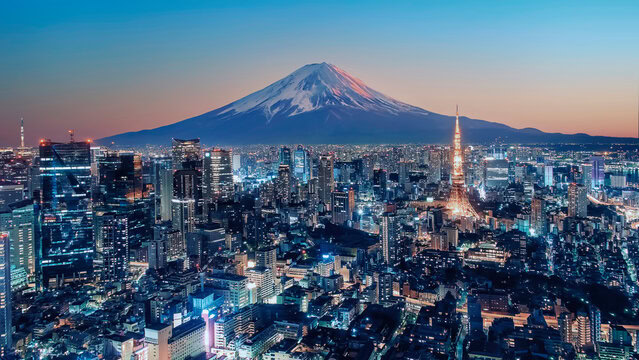
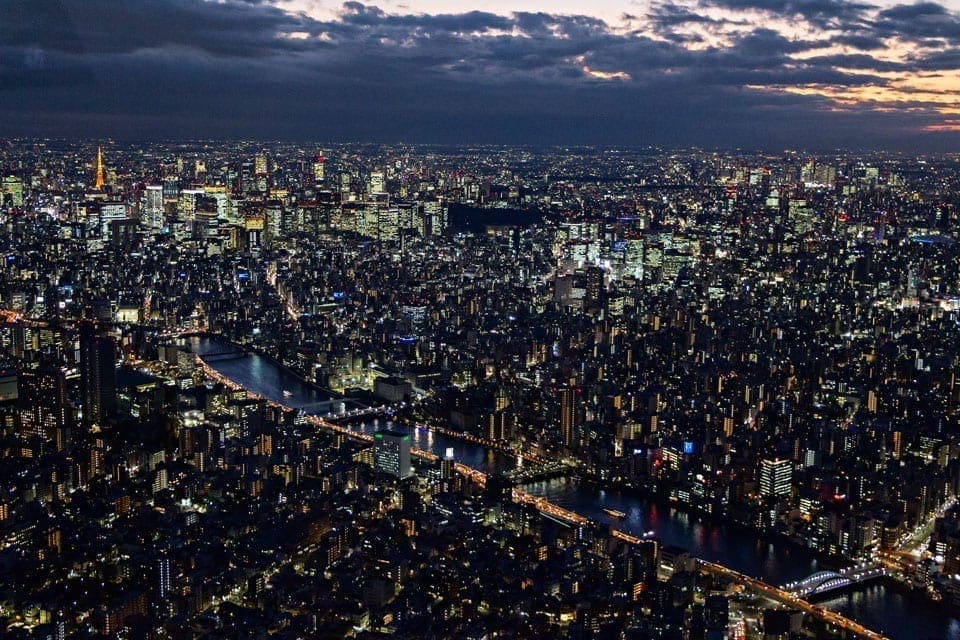
Your next stop is Tokyo Skytree, the tallest building in Japan, and it’s more than worth taking the elevators that whizz you up within seconds to the observation gallery located at 450 meters above the ground. Whichever direction you look, there’s Tokyo around you. With one exception – on clear days, the majestic Fuji is visible on the western horizon.
Altogether, it’s a really impressive vista of the Japanese capital and we recommend enjoying it during sunset and twilight, as the city will be gradually turning on its millions and millions of lights.
We recommend occupying the place with the best view a good minute before the sun sets. This is a very popular place for watching the sunset, which means the main deck gets full rather quickly.
Many people recommend going to the Tokyo Tower, but we think the Eiffel tower inspired illuminated structure of Tokyo Tower looked rather interesting from the Tokyo Skytree. Anyways, you can check also our review, whether to visit Tokyo Skytree or Tokyo Tower.
It’s time for the last dinner in Japan. So how about the fugu? 😊
Transport
Asakusa – Asakusa station is the best option, reachable by the Ginza line and Asakusa lines. Explore the area on foot.
Tokyo Skytree – reachable by Asakusa and Hanzomon lines, the stop is Oshiage (Skytree). If you previously visited Asakusa district and Senso-ji Temple, we suggest walking from there to the Skytree – it’s only about 25 minutes and with Skytree being the tallest structure in Japan, you shouldn’t miss it!
How to get around Tokyo?
How to get from Tokyo Airport to City centre
Tokyo has two major airports – Haneda and Narita. Most of the international flights arrive at Narita airport, while Haneda airport handles mostly domestic.
Haneda airport is closer to Tokyo, so you can take a limousine bus to get to Shinjuku.
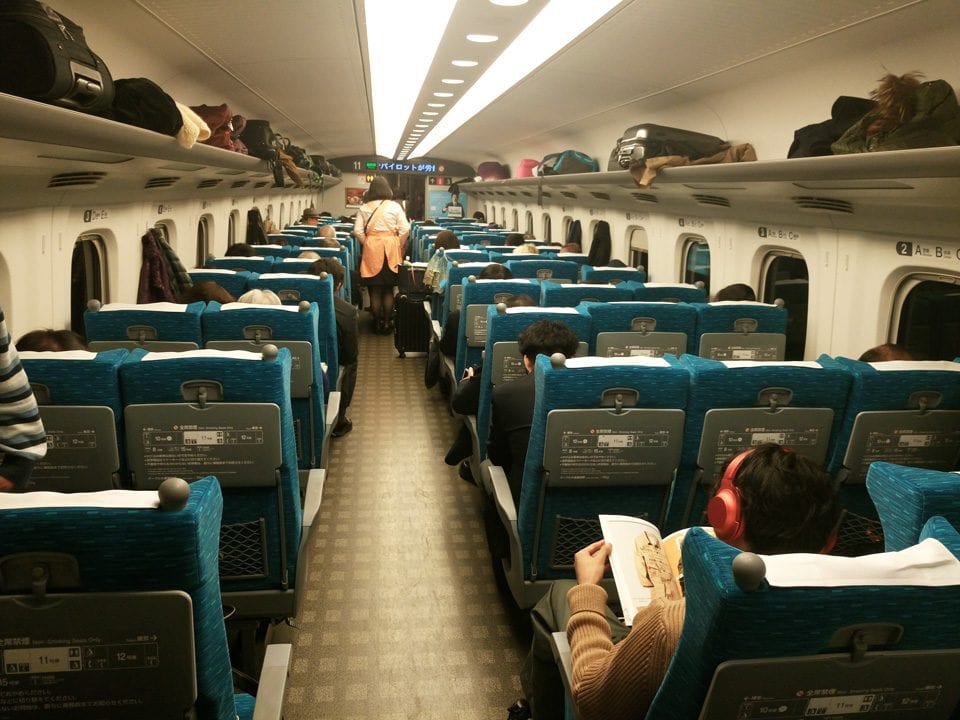
For Narita Airport, the most convenient option is taking the JR Narita Express to Central Tokyo. It’s a good use for your JR pass as well, so we would love to suggest you buying one, as it’s going to be a perfectly invested money when travelling to Japan.
Well, sometimes might be a good idea to save your Japan Rail Pass, and it’s quite common. So, let’s say you want to be in Japan for total of 16 days, but the Rail Pass is valid only for 14 days. Well, while you stay in Tokyo for 2 days, you can start using your JR Pass just in the minute you leave Tokyo. But still, in this case you will need a ticket to get from Narita Airport to Tokyo city centre.
Most convenient (and expensive) from Narita Airport to Tokyo City
The Narita Express is our top choice as you don’t want to waste any minute in our Tokyo 2 day Itinerary. Despite a higher cost (¥3 070 one-way), it’s fast, direct, and comfortable. A discounted round-trip ticket is available for ¥5,000, valid for 14 days. The Narita Express ticket covers all JR stations in Tokyo at no extra cost.
Alternatively, the Skyliner connects Narita Airport with Ueno station, serving areas like Asakusa, Nippori, Akihabara, and Ueno. Fares start at ¥ 2 580 one-way. Packages with unlimited Tokyo Metro travel for 24, 48, or 72 hours. Prices are 800 YEN up to 1 500 YEN.
Express Bus
For budget-conscious travellers, express buses from Narita to Tokyo cost ¥1 300. They run to hubs like Shinjuku and Tokyo Station every 20 minutes. However, they might get stuck in traffic and lack WiFi or toilets.
By Local Trains
Local trains are another economical way to get from Narita Airport to Tokyo, with fares starting at ¥1,200. The journey can take 90-120 minutes, with possible transfers. The JR Sobu express service to Tokyo station, running hourly, is a good option.
Getting around Tokyo with subway
Tokyo is huge! We recommend using Tokyo’s efficient subway services for travelling between various neighbourhoods and then exploring them on foot.
Tokyo has altogether 13 lines of subway (metro), operated by two different companies (9 lines of Tokyo Metro and 4 lines of Toei Subway), as well as a circular JR Yamanote line and some private lines. The system is efficient, safe and easy to navigate for foreigners, with English signs helping you find your way everywhere.
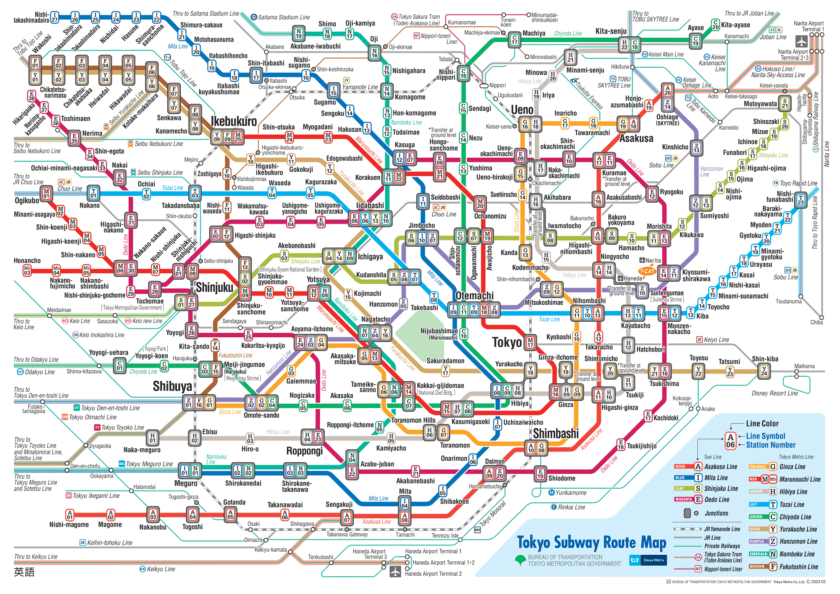
Well, as a tourist, you have basically just three options. You can get yourself a 24-hour ticket, 48-hour ticket or 72-hour ticket. All the prices are pretty much similar (You get a 100 YEN discount if buy for 72 hours). So, we are keeping it up to you, in case you want to stay in Tokyo for just two days, just get yourself a 48-hour ticket, which costs 1200 YEN for adults, and 600 YEN for kids under 11 years of age.
Price for Tokyo Subways Tickets
Tokyo Subway 24-hour Ticket – Adult: 800 yen, Child: 400 yen
Tokyo Subway 48-hour Ticket – Adult: 1,200 yen, Child: 600 yen
Tokyo Subway 72-hour Ticket – Adult: 1,500 yen, Child: 750 yen
The easiest, and most convenient way to get tickets is to buy them on GetYourGuide.com. The price is the same as if you buy them on-site, and you will have them easily prepared before travelling to Tokyo.
What do 2 days in Tokyo cost?
- Transport: about 1,600 to 2,000 yen for two days of metro and Yamanote hopping with an IC card. No day pass needed unless you really zigzag.
- Food: 8,000 to 12,000 yen for two days done well: morning sushi, ramen lunches, one proper izakaya evening in Shinjuku (our bar guide has the exact doors to knock on).
- Sights: most of this itinerary is free. Budget 2,100 yen if you go up the Skytree (or 1,500 yen for Tokyo Tower), and 300 to 600 yen for the odd temple or garden.
- Bed: from about 9,000 yen per night for a solid mid-range double near a Yamanote station; see where to stay in Tokyo for the area breakdown.
Call it roughly 15,000 to 20,000 yen per person for the two days plus your room, which for Tokyo is a bargain. If the city hooks you (it will), the same pace continues in our 10-day Japan itinerary.
Day trips from Tokyo
If you’d like to change some of the things that are in this Tokyo 2 day itinerary or maybe you have some extra time, I have some options for you:
A day trip to Hakone
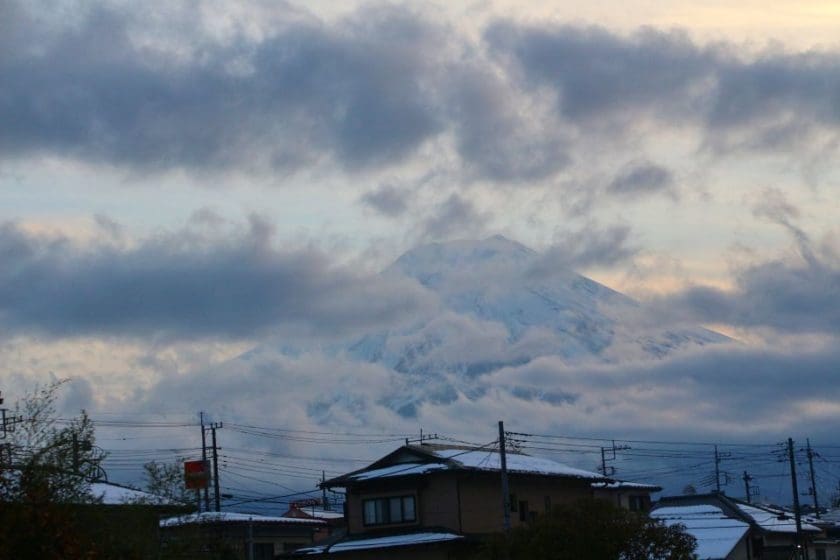
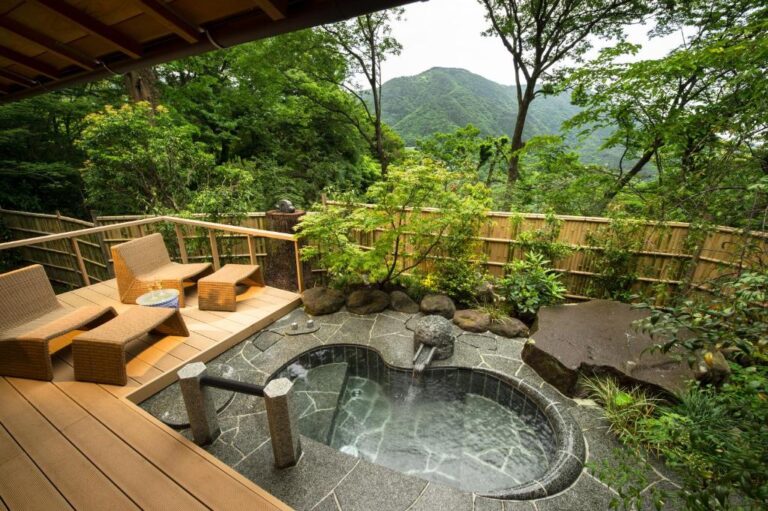
Generally, we suggest that you spend a couple of nights in Hakone, as there is an abundance of some of the best ryokans in Japan to enjoy there. But if you don’t have time for that and you do have an extra day, you can go for a day trip to Hakone. It’s not hard to plan the trip by yourself, but there are tours available, too.
Tokyo Disneyland or DisneySea
Another thing that requires a whole day – or even more, actually.
Two of the most amazing Disney parks are located not far from Tokyo.
Add some magic to your Tokyo trip – go on the space or splash mountain, join a journey to the centre of the Earth, have lunch at the granny’s kitchen, and so much more! And of course, the fireworks – cannot forget about those 🙂
A GoKart tour
It’s possible to dash through the streets of Tokyo – the Shinjuku, Harajuku, and Shibuya Crossing, even with a costume on! And have a photo shoot of the experience at the same time. A massive fun!
You can easily book here!
Digital Art Museum
The Tokyo Digital Art Museum has immersive exhibits and installations made of lights, sounds, and different materials to delight all five senses.
In this unique exhibition, your presence actually impacts the artwork – you basically become a part of it. The exhibition space includes several areas, covering over 10,000 square meters in total. There’s a great variety of installations, with different lights, sounds, and materials.
FAQ: Tokyo 2-Day Itinerary
Can you see Tokyo highlights in 2 days?
Yes, focus on 4-6 key spots per day like Senso-ji, Shibuya Crossing, Meiji Shrine, and Shinjuku. Prioritize west (Shibuya/Shinjuku) one day, east (Asakusa/Ueno) the next.
Where to stay for a 2-day Tokyo itinerary?
Shinjuku, Shibuya or Tokyo Station area—central for JR Yamanote Line access. Avoid Narita/Haneda far-out; use early trains if layover.
Is JR Pass worth it for 2 days in Tokyo?
No, get Suica/Pasmo IC card instead. Covers subway/JR for ~¥2,000/day vs ¥10,000+ JR Pass (better for longer trips).
Like this post? Share it!
Are 2 days enough for Tokyo?
Enough for a brilliant first taste: Asakusa, Shibuya, Shinjuku, a market morning and a skyline view. You will leave with a long list for next time, which is exactly how Tokyo works.
Where should I stay for a 2-day visit?
Near a Yamanote Line station. Tokyo Station or Ginza for convenience, Shinjuku or Shibuya for atmosphere; every stop of this itinerary stays within easy reach.
Do I need a transport pass for 2 days in Tokyo?
Usually not. An IC card (Suica or Pasmo, also on your phone) at roughly 800 to 1,000 yen of rides per day beats most passes and works in shops and vending machines too.
Is the Tsukiji fish market still worth visiting?
Yes, the outer market remains a fantastic breakfast crawl of sushi and street food stalls. The wholesale auctions moved to Toyosu, which you can visit separately on the way to Odaiba.


![10 Days in Japan: A Unique Japan Itinerary [2026]](https://www.wanderlustdesigners.com/wp-content/uploads/2020/02/fushimi-inari-kyoto-768x512.jpg "10 Days in Japan: A Unique Japan Itinerary [2026] fushimi inari kyoto")

This itinerary is so helpful! I love how you prioritized both iconic sights and hidden gems. Can’t wait to try the recommended food spots!
This itinerary is fantastic! I love how you included a mix of traditional and modern attractions. Can’t wait to try the food spots you recommended. Any tips for getting around efficiently?