

Japan Rail Pass Review 2026: Is the JR Pass Worth It?
Updated August 2026: every price in this review was re-checked against the official JR price list, including the JR Pass price increase coming on October 1, 2026.
There are many ways of getting around in Japan. Its road and public transport networks, and even airports, are quite easy to access and understand.
Some of the ways are faster, some are slower, some are more expensive, and some are cheaper.
The best, though, in our opinion, is train – that’s how we were getting from one place to the other during our trip.
But let me tell you more about Japan Rail Pass and other ways of getting around this incredible country so that you can decide what’s best for you.
This post may contain affiliate links, which means that if you purchase anything via them, we might earn a small commission – at no extra cost to you. Check our affiliate disclaimer for more information.
Rail travel in Japan – what you need to know

The best way to get around Japan, in our opinion, is by taking a train.
Rail travel in Japan is not only the most efficient way of domestic travel, but it is also a super-cool experience by itself. If you picture Japanese rail travel as sitting in the sleek and futuristic-looking Shinkansen, whizzing by at a neck-breaking speed through the beautiful Japanese landscape, with the majestic snow-capped Mt. Fuji somewhere behind the windows, you’re pretty right.
There are quite a few train companies operating, but the most popular and efficient is definitely the JR Railways. They have a special pass for tourists – the JR Pass – which allows for a fast and cost-efficient exploration of the country.
What is a Shinkansen?

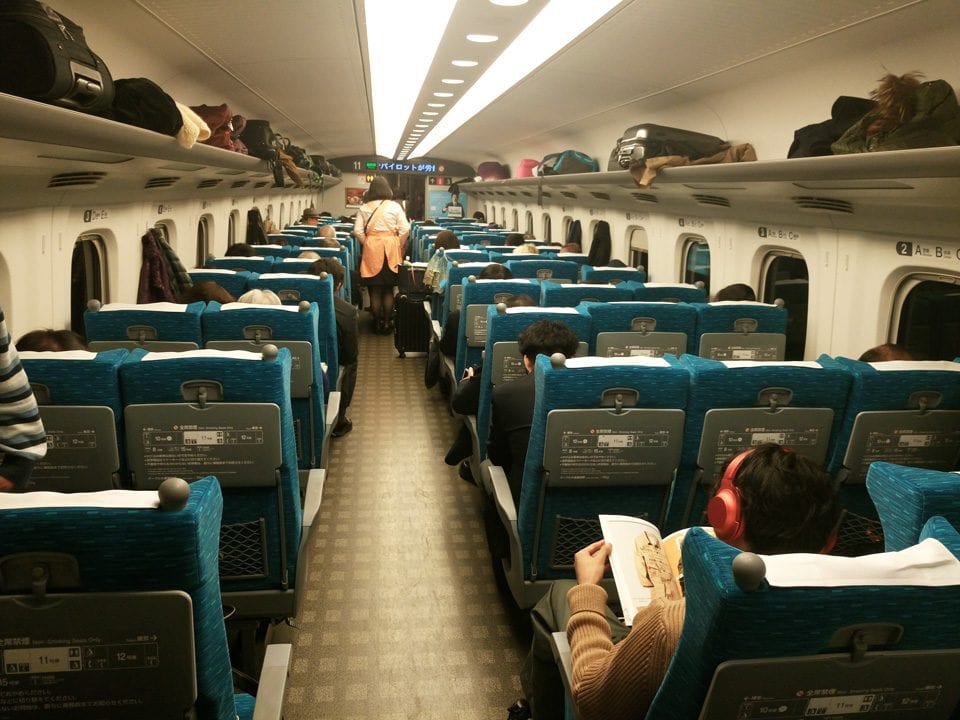
Lost in translation? Not really! The digital screens alternate between Japanese and English information, while all the signs are also bilingual – Japanese and English.
If one was looking for a synonym for reliability, punctuality, and comfort, then Shinkansen might be the right word.
The futuristically looking bullet train whose average delay is expressed in seconds rather than minutes is a tribute to the Japanese love of modern technologies, sense of precision and attention to detail. It has been safely carrying people in Japan for more than 60 years now, and even nowadays it still looks as futuristic as ever.
Running at speeds up to 300 km/h (even a bit higher at certain segments), the journey times are quite short – the Nozomi Shinkansen (the fastest category of Shinkansen) does the 514 km trip between Tokyo and Kyoto in 2 hours and 15 minutes.
I admit we were a bit worried about moving around in Japan before our trip. What if the signs will be only in Japanese?

You know exactly where your car will stop – rail travel in Japan is really easy, super-efficient, fast and fun.
Fortunately, there’s no need to worry. All the Japanese train stations have bilingual signs – in Japanese and English. Also, most of the staff at the stations used on our Japan itinerary spoke (at least some) English. And everything is posted so clearly and precisely that you always know exactly where to go.
You can find out which platform and track your train would be departing from already on Google Maps or in the Japan Travel by NAVITIME app but of course, all this information is found on large screens inside the station as well.
For the Shinkansen, which runs on dedicated tracks, all the platforms have precise information about where every car will stop – very handy indeed. So you know from your reservation that you’re seated in car number four – you know exactly where to wait on the platform. The door will be right there where it shows, not a meter to the left or right – right there!
The Shinkansen have conductors – not really for checking the tickets, but rather for seeing to the fact that everything goes safely and smoothly. He bows as he enters the car, wearing his uniform with white gloves, passes through the car and then turns around to face the passengers and bows once more before leaving.
Funnily, on our very first ride on the Shinkansen, our train was about 35 seconds late (!) on arrival in Hiroshima. The poor conductor was apprehensively looking at his wristwatch, knowing this ain’t the way Shinkansen is supposed to run 😊 True, with the scandalous delay of 35 seconds, our service was worsening the statistics!
What is the Japan Rail Pass?
First, let’s mention the fact that there are several rail companies in Japan – the Japan Railways (JR) and various private companies, operating their trains usually on their own rail tracks. The JR is the exclusive operator of Shinkansen.
Japan Rail Pass is the most cost-effective solution for long-distance rail travel in Japan, meant only for foreign tourists to the country. It pays off the best when using the Shinkansen for long-distance trips. The pass allows unlimited travel on all JR-operated trains, except for the fastest category of Shinkansen (called Nozomi and Mizuho). It comes in a 7, 14 or 21-day validity.
You can order an Ordinary pass (the equivalent of 2nd class) or a Green pass that entitles you to travel in the Green car, an equivalent of the 1st class.
How much does the Japan Rail Pass cost?
The current prices of the Japan Rail Pass are as follows:
| Type of pass | Ordinary | Green car |
| 7-day | 50 000 YEN | 70 000 YEN |
| 14-day | 80 000 YEN | 110 000 YEN |
| 21-day | 100 000 YEN | 140 000 YEN |
While these prices might seem high, they are in fact the cheapest means of long-distance travel in Japan.
The prices were raised for the first time in 15 years in October 2023, and another increase is coming: for passes bought on or after October 1, 2026, the 7-day Ordinary pass costs 53,000 yen, the 14-day 84,000 yen and the 21-day 105,000 yen (Green car 74,000 / 116,000 / 147,000 yen). Buy by September 30, 2026 and you still pay the current prices, so if your trip is close, buying earlier saves real money. You can double-check everything on the official JR price list.
The price of a 7-day ordinary car pass is about the same as the price of a return ticket between Tokyo and Kyoto. Even if you were visiting only these two cities, it’s still worth it to get the Japan Rail Pass, as it also covers Narita Express from Tokyo Narita airport to Tokyo and Limited Express Haruka running from Osaka Kansai airport to Osaka and Kyoto.
And if you were wondering if you could ride the Nozomi with JR Pass, the answer is yes: after the prices were raised, the Nozomi and Mizuho trains, which were not covered by the current JR pass, are now available for an extra fee to all of the JR pass holders.

The more places you explore in this amazing country – for example, if you follow our 10-day Japan itinerary, the more you’re getting worth of your Japan Rail Pass.
Where to buy the Japan Rail Pass?
The simplest answer to this is: either online or from specialized travel agents, before travelling to Japan.
The first step is to purchase a voucher (also called an exchange order) before your trip to Japan. If you prefer to buy it online, there are several authorized agencies selling it. The voucher will then be delivered to you by a courier. I recommend buying it via JRPass.com or GetYourGuide.com. The prices are basically the same.
You can also buy the pass directly on the official Japan Rail Pass online site: pay by card, then pick the pass up in Japan at a ticket office or machine with your passport. The official site also lets you reserve seats online, which the agent route does not. Whichever way you buy, remember the 3-month rule: an exchange order must be swapped for the pass within 3 months of purchase, so buying one to three months before your trip is the sweet spot.
Either way, you end up with a voucher that you’ll have to exchange for the actual Japan Rail Pass after arriving in Japan, at any ticket office of Japan Railways.
Don’t get the voucher way too early – it will need to be exchanged for the pass within 3 months from its purchase.
Deliver a Japan Rail Pass to Japan
If you’re purchasing your Japan Rail Pass last minute, you can have the exchange order sent directly to your first hotel in Japan. Just make sure to agree on this with your hotel or Airbnb beforehand, but it should be no problem at all.
How does the Japan Rail Pass work?
The Japan Rail Pass is personalized, so you’ll need your passport (bearing the stamp “Temporary Visitor” that you get as a tourist in Japan) to exchange the voucher for the pass. We recommend doing this right after your arrival in Japan at Tokyo or Osaka airport.
The Rail Pass needs to be activated as well – that means you need to decide when you’ll use it for the first time and then set that day as the first day of its validity (it might be the very same day you arrive in Japan or some later day, depending on your itinerary).
While you’re still in the JR ticket office, we also recommend making seat reservations for all your train journeys by Shinkansen. While most Shinkansen trains have cars with both reserved and non-reserved seats, having a seat reservation offers you peace of mind that you’ll have a seat available (or seats together if you’re a larger group), and it is completely free.
Once you’ve got your Japan Rail Pass and made the seat reservations, all you need to do is use one of the manned gates at the railway stations (JR pass doesn’t work with electronic gates) to proceed to the platform and board the train.
Always carry your passport when travelling with the JR pass – the staff at the manned gates might check it.
So hop on the fancy Shinkansen and enjoy the ride! Simple as that!
How to use the Japan Rail Pass?
The Japan Rail Pass can be used – as the name suggests – for JR trains. If you use trains operated by other companies, you’ll need to get tickets for those.
Let’s have a closer look at what’s covered by Japan Rail Pass:
- All JR trains. You get the best of your money’s worth when using Shinkansen services. Please note that Japan Rail Pass is ONLY VALID for the fastest category of Shinkansen trains, called Nozomi and Mizuho if you purchase an upgrade. You’ll need to use other Shinkansen services, called Sakura, Hikari (we recommend using these two) or Kodama (the slowest category of Shinkansen that has the most stops) with the basic JR Pass. For comparison, the journey between Tokyo and Kyoto takes around 2 hrs 15 min on Nozomi, 2 hrs 40 min on Hikari and 3 hrs 40 min on Kodama.
- Tokyo Monorail (convenient connection to Tokyo Haneda airport). If you’re arriving at Narita airport, we recommend taking Narita Express – a JR train.
- JR Miyajima ferry – a convenient means of reaching the beautiful Miyajima island.
- Loop bus Hiroshima Meipuru-pu – convenient for reaching the most important sights in Hiroshima
Our tip: Hyperdia, the timetable website we used to recommend here, has shut down. These days we plan every train ride with the Japan Travel by NAVITIME app or Google Maps, and for the Tokaido and Sanyo Shinkansen you can even book seats from the official smartEX app.
The math on our own 10-day route
Abstract advice is cheap, so here is the actual arithmetic for the route from our 10-day itinerary, using approximate 2026 reserved-seat fares:
- Narita Express to Tokyo: about 3,000 yen
- Tokyo to Hiroshima by Shinkansen: about 19,000 yen
- Hiroshima to Kyoto: about 11,500 yen
- Kyoto to Odawara (for Hakone): about 12,000 yen
- Miyajima ferry and local JR trains around Kyoto: about 1,500 yen
That is roughly 47,000 yen in single tickets against 50,000 yen for the 7-day pass. On paper, almost a wash. In practice the pass still won for us: no queueing for tickets, free seat reservations, the freedom to hop on a train for a spontaneous detour, and if you make even one extra day trip (Nara, Osaka, Himeji), the pass pulls clearly ahead. But if your route is just Tokyo and Kyoto, run this same arithmetic and the pass loses. That is the honest answer.
When you should not buy a Japan Rail Pass
If you’re flying into Tokyo and out from Osaka (or vice versa) and only visiting Tokyo, Kyoto, and Osaka, a JR Pass might be more expensive than a one-way Shinkansen ticket from Tokyo to Kyoto.
Even if you’re traveling round-trip from Tokyo to Kyoto without major day trips, individual Shinkansen tickets are cheaper, plus you’ll have access to the fastest Nozomi trains.
For travel confined to one area, like the Kansai region (Osaka and Kyoto), buying individual tickets is likely cheaper than a JR Pass. Consider regional passes like the Kansai Area Pass instead; we compare them all in our regional JR pass guide.
Other ways how to get around Japan
So, let me tell you about the other possible options for getting around in Japan, from one city to another.
Getting around Japan by plane
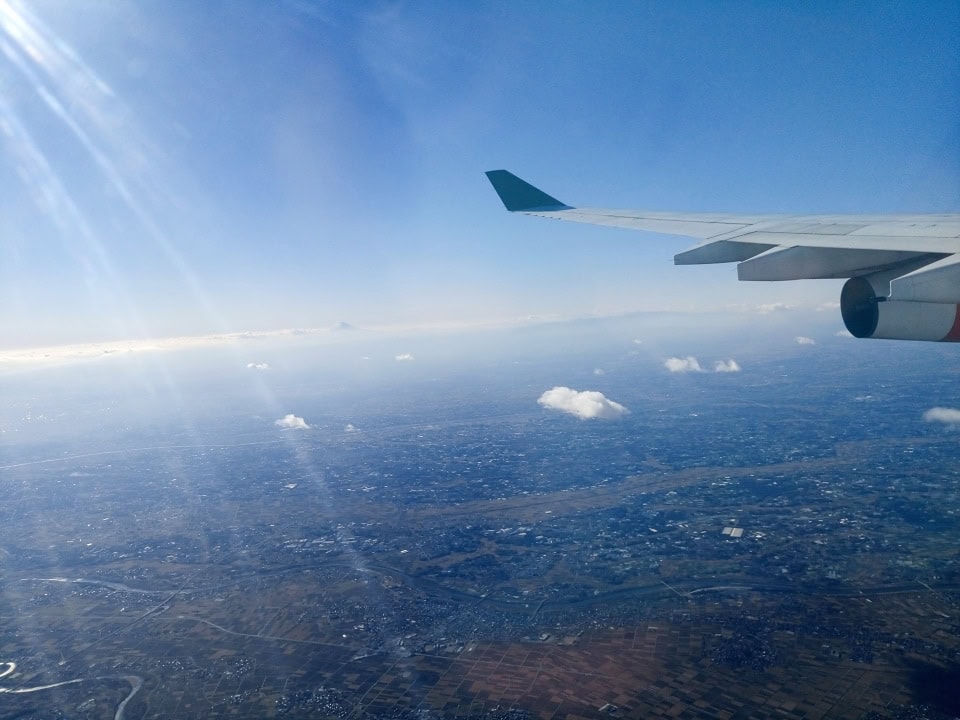
Most of the cities in Japan have domestic airports, which means that they are easy, fast, and actually quite cheap to reach. If you’d like to check a lot of cities during the limited time you have in Japan, you can consider this way of getting around.
On the other hand, it’s not exactly possible to enjoy the majesty of the Japanese landscape from an aeroplane.
Getting around Japan by rented car
As usual, renting a car gives you the most freedom. It’s just so much easier to explore all the nooks and crannies of a country when you can stop almost wherever you wish.
Roads in Japan are in great condition and are fixed promptly if something appears.
There are some tricky things that you have to consider if you decide to rent a car in Japan.
- The signs are generally translated to English but the weather warnings and road closures might not be.
- The biggest problems would arise in the mountains, though, especially if you have no experience driving in snowy conditions. The roads might be slippery and the mountain passes might be closed as early as November and as late as April because of snow.
Actually, we had problems getting up to the Gora-Hakone area because of snow – it paralysed everything for most of the day, as trains didn’t run and buses couldn’t drive up because of no chains. Taxis had a line of people waiting which was like 4 hours long.
- Another thing to consider is that the navigation might not be all that precise in mountainous areas. Otherwise, though, the GPS works ok.
- The parking and driving in big cities might be quite interesting as well.
- And the last thing, driving a car, if you want to cross long distances, will most probably take longer than a train.
If you do decide to rent a car, it’s actually not as expensive as I expected. Generally, compact cars generally start at around 6,000 to 8,000 yen a day. Most of the major car rental companies are available in Japan, just make sure to check the one that you enjoy the most.
One thing you should know, though: depending on your country you will need either an International Driving Permit (1949 Geneva Convention) or an official Japanese translation of your licence from JAF. Check the JAF rules before you book a car.
Getting around Japan by bus
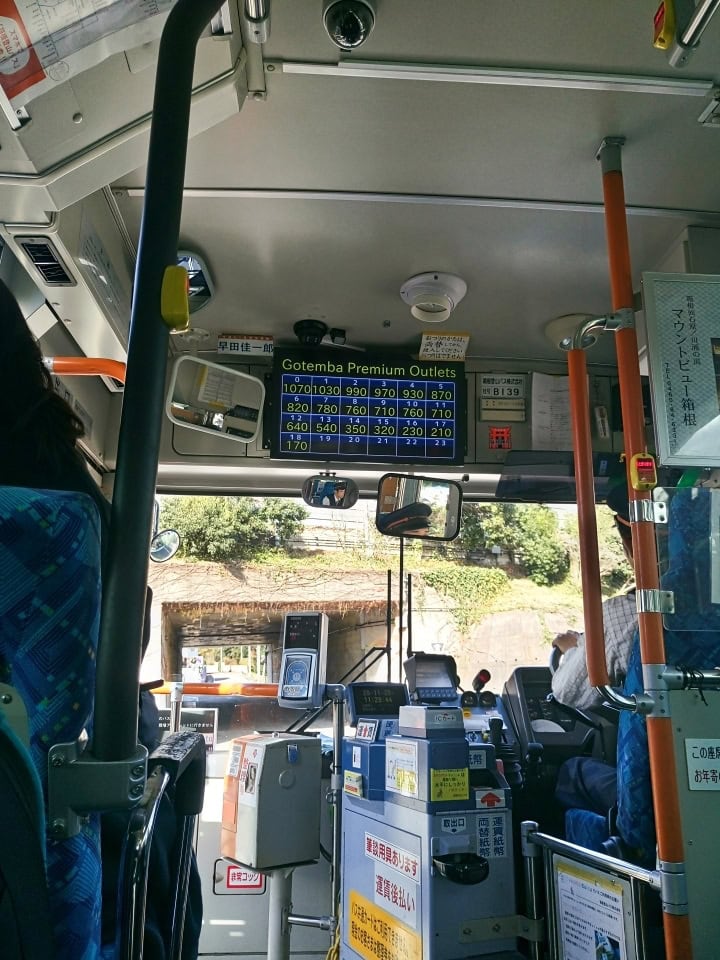
There are lots of busses connecting Honshū, Shikoku and Kyūshū islands. If you’re on a tight budget, this might be the best option. There are even overnight buses which would help you save on accommodation.
With a bus, you might even be able to see some incredible views! On the flip side, though, it’s a lot slower than the other options available.
You can compare routes and book most highway buses on Japan Bus Online, or go straight to the biggest operator, Willer Express.
Conclusion: Is Japan Rail Pass worth it?
The Japan Rail Pass (JR Pass) is often hailed as a must-have for travelers wanting to explore Japan efficiently and affordably. This pass offers unlimited travel on most JR trains, including the famed Shinkansen bullet trains, for a set period (7, 14, or 21 days).
If you’re planning to hop between major cities like Tokyo, Kyoto, and Osaka, the JR Pass can offer substantial savings. For instance, a round trip from Tokyo to Kyoto costs nearly the same as a 7-day JR Pass. Plus, the convenience of not having to buy individual tickets for each leg of your journey adds to its appeal.
However, the JR Pass might not be the best option for everyone. If your travel plans are confined to a single region or if you’re staying put in one city, regional passes or individual tickets might be more economical. In this case, would be the best, if you use a Japan Rail Pass Calculator.
In essence, whether the JR Pass is worth it depends on your travel style and plans. Calculate your potential train costs without the pass and compare them to the price of the JR Pass. And if this is your first visit, our first-time Japan guide and Japan packing list pair well with this one, and our full Japan trip cost breakdown puts the pass into the bigger budget picture. For getting around inside the cities, a tap-to-ride Suica or IC card handles everything the pass does not.
Is the Japan Rail Pass worth it in 2026?
For multi-city trips, usually yes. A 7-day Ordinary pass costs 50,000 yen (53,000 yen from October 1, 2026), roughly the price of a Tokyo to Kyoto round trip plus airport transfers. If you stay in one region, a regional pass or single tickets will beat it.
Can I ride the Nozomi or Mizuho with the JR Pass?
Yes, but only with a paid supplement ticket. Without it, use the Hikari, Sakura or Kodama services, which are fully covered. Tokyo to Kyoto takes about 2 hours 40 minutes on the Hikari.
How far in advance should I buy the pass?
One to three months before your trip. An exchange order must be swapped for the actual pass within 3 months of purchase. Passes bought by September 30, 2026 still get the pre-increase prices.
What replaced Hyperdia for checking train times?
Japan Travel by NAVITIME or Google Maps for timetables and platforms, and the official smartEX app for booking Tokaido and Sanyo Shinkansen seats online.
Like this article? Pin it!

![10 Days in Japan: A Unique Japan Itinerary [2026]](https://www.wanderlustdesigners.com/wp-content/uploads/2020/02/fushimi-inari-kyoto-768x512.jpg "10 Days in Japan: A Unique Japan Itinerary [2026] fushimi inari kyoto")
