
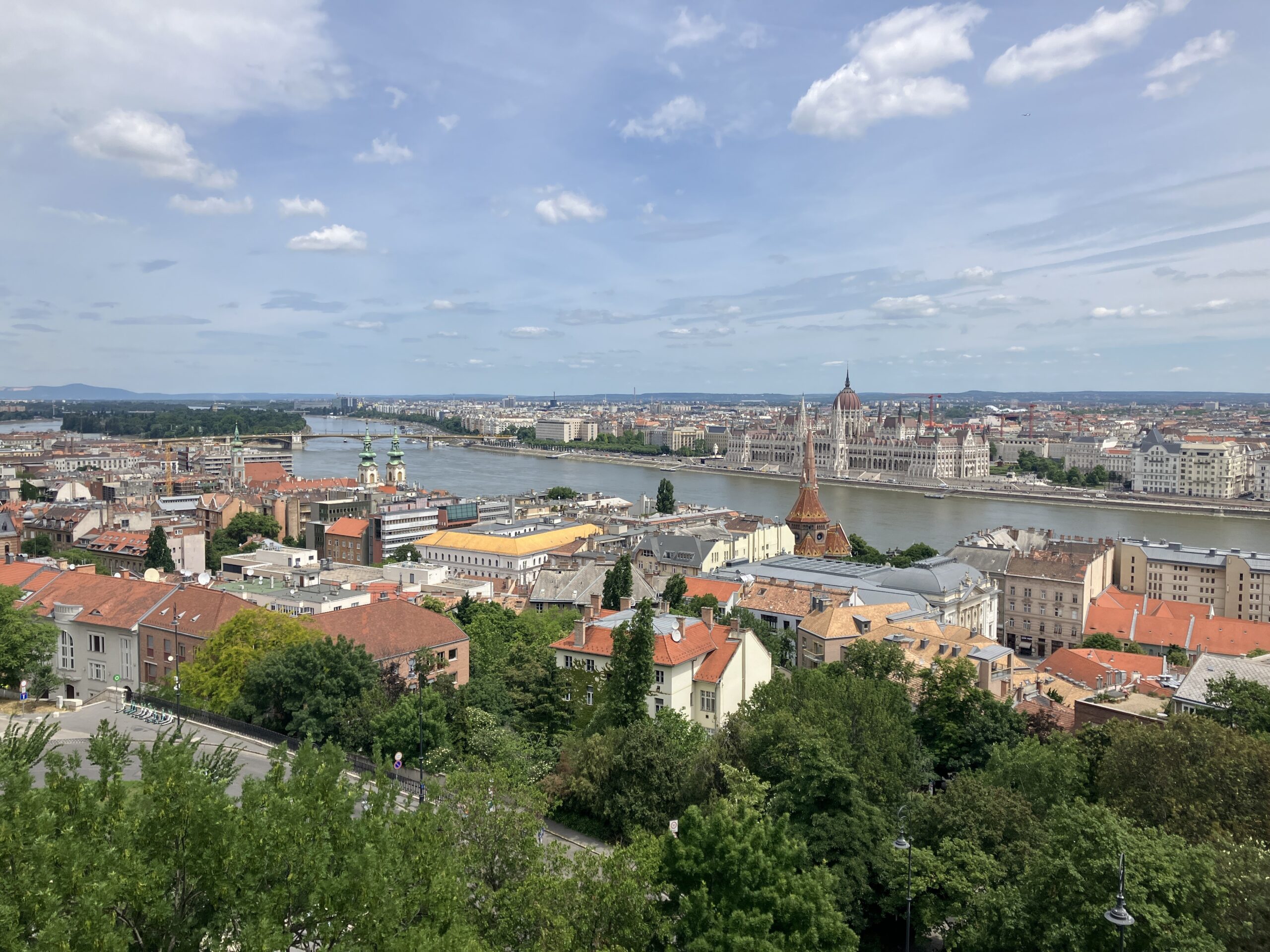
Hungary travel guide: Budapest baths, ruin bars and the Danube
Budapest is the city we keep going back to. Two very different halves stitched together by the Danube – hilly, castle-topped Buda and flat, grand, slightly chaotic Pest – with thermal baths under art nouveau ceilings, ruin bars in abandoned apartment blocks, and some of the best value in Europe. Here is everything we’ve written about Hungary, which for now means Budapest and its surroundings.
Budapest in numbers
Time needed: 3–4 days for the city, longer with day trips
Money: Hungarian forint (HUF) – euros are accepted in a few tourist spots at bad rates, so use forint
Best months: April–June and September–October; December for the Christmas markets
Daily budget: €60–100 comfortably, less if you cook and stick to ruin bars
Getting around: walkable centre plus excellent metro and trams
Famous for: thermal baths, Parliament, ruin bars, and paprika in everything
Our Budapest guides
👉 4 days in Budapest – our full itinerary, day by day
👉 Things to do in Budapest – the complete list of sights, baths and neighbourhoods
👉 Best hotels in Budapest – where to stay in each district, and what it costs
The things not to miss
A thermal bath. Széchenyi for the vast outdoor pools and steam rising in winter, Gellért for art nouveau tilework, Rudas for the rooftop tub looking down the Danube. This is the one Budapest experience nobody should skip.
The Parliament building. Best seen from the Buda side or from the water at night – the interior tour is worth booking ahead.
Fisherman’s Bastion. The lower terraces are free at any time; the upper towers cost around 1,700 HUF (~€4) during opening hours and are free before 9 am and after closing. Go early and have it to yourself.
The Jewish Quarter and ruin bars. Szimpla Kert started it; the whole district is now the city’s nightlife heart, and the Dohány Street Synagogue – Europe’s largest – anchors it with something far more sobering.
A Danube cruise after dark. Touristy, and completely worth it.
Practical Budapest
Transport: the M1 yellow metro line is UNESCO-listed and older than almost any underground in the world; tram 2 along the Pest embankment is a sightseeing tour disguised as public transport.
Baths: book online in high season, bring flip-flops and a towel (rental exists but costs), and check whether your chosen day is mixed or single-sex at the older Turkish baths.
Cash and cards: cards work almost everywhere, but some ticket offices – Fisherman’s Bastion among them – are card-only, while a few markets are cash-only. Carry a little of both.
Tipping: 10% is standard; check whether service is already on the bill, which is increasingly common in the tourist centre.
When to visit
April–June and September–October are the sweet spots: warm enough for terraces, cool enough to walk all day, and without the August crowds. Summer is hot and busy but the outdoor pools and Danube evenings make up for it. December brings excellent Christmas markets and the very particular pleasure of an outdoor thermal bath in the cold.
Tours and tickets
Worth booking ahead: Parliament interior tours (limited slots, they sell out), thermal bath entry to skip the queue, and evening Danube cruises.
Where to stay in Budapest
District V for first-timers, District VII for nightlife, Buda for quiet and views – our Budapest hotel guide breaks it down. Or browse the live map:
Or search Budapest hotels on Booking.com.
More destinations
Budapest works beautifully as part of a Central European trip – and for everywhere else we’ve written about, see our destinations page.
A perfect long weekend in Budapest
Day 1 – Pest. Parliament from the outside (inside if you booked), the Danube promenade and the Shoes on the Danube memorial, then Great Market Hall for lunch and the Jewish Quarter in the evening.
Day 2 – Buda. Up to Castle Hill, Matthias Church and Fisherman’s Bastion early to beat both the crowds and the ticket, then Gellért Hill for the view and an afternoon in a thermal bath.
Day 3 – slow down. Margaret Island, the Central Market, a coffee house that predates most European republics, and an evening Danube cruise.
Day 4 – your call. Memento Park’s Soviet statues, the House of Terror, or a day trip up the Danube Bend to Szentendre and Visegrád. Our 4-day itinerary has the full version.
What Budapest costs
| Item | Typical price |
|---|---|
| Thermal bath entry (Széchenyi) | €25–35 depending on day and locker type |
| Fisherman’s Bastion upper towers | ~1,700 HUF (~€4), free before 9 am |
| Meal in a mid-range restaurant | €12–20 |
| Ruin bar beer | €2.5–4 |
| 24-hour transport ticket | ~2,500 HUF (~€6) |
| Evening Danube cruise | from ~US$14 |
What to eat in Budapest
Hungarian food is richer and more paprika-forward than its neighbours. Look for gulyás – a soup here, not the stew foreigners expect – pörkölt (the actual stew), lángos (deep-fried dough with sour cream and cheese, the great market-hall hangover cure), chimney cake from a street stall, and Dobos torte in one of the grand coffee houses. Drink Tokaji if you like sweet wine, or a Bull’s Blood red from Eger. And be warned about pálinka: fruit brandy that arrives as a gesture of hospitality and hits like a small argument.
Day trips from Budapest
Szentendre – a baroque riverside artists’ town 40 minutes by HÉV suburban train.
Visegrád and Esztergom – castle ruins and Hungary’s largest basilica on the Danube Bend.
Lake Balaton – two hours by train, and a completely different summer country.
Eger – wine cellars in the Valley of the Beautiful Women, two hours east.
Things we wish we’d known
Fisherman’s Bastion is free early. Before 9 am you get both the terraces and the light without paying or queuing.
Some ticket desks are card-only, some markets cash-only. Carry a little of both.
Baths need flip-flops and a towel – rentals exist but cost more than bringing your own.
Book Parliament tours ahead. Slots for English tours sell out days in advance in season.
Watch the taxi meters. Use Bolt or an official taxi company rather than flagging one down near tourist sights.
Frequently asked questions about Budapest
How many days do you need in Budapest?
Three to four days. Two cover the main sights on both banks, a third leaves room for a proper thermal bath afternoon and the Jewish Quarter, and a fourth allows a slower pace or a day trip.
Is Budapest cheap?
It is one of Europe’s better-value capitals – eating and drinking cost well below Western European prices. Baths, museums and castle-hill attractions are where the money goes; public transport is inexpensive.
Which Budapest thermal bath should you choose?
Széchenyi for the grand outdoor pools, Gellért for art nouveau interiors, Rudas for the rooftop tub with a Danube view. Book online in high season and bring flip-flops and a towel.
Is Fisherman’s Bastion free?
The lower terraces are free at all times. The upper towers cost about 1,700 HUF (~€4) during opening hours, but are free to everyone before 9 am and after closing – the early morning is also when you get the views to yourself.
What is the best time to visit Budapest?
April to June and September to October for mild weather and manageable crowds. December is magical for Christmas markets and outdoor thermal baths in the cold; August is hot and busiest.


