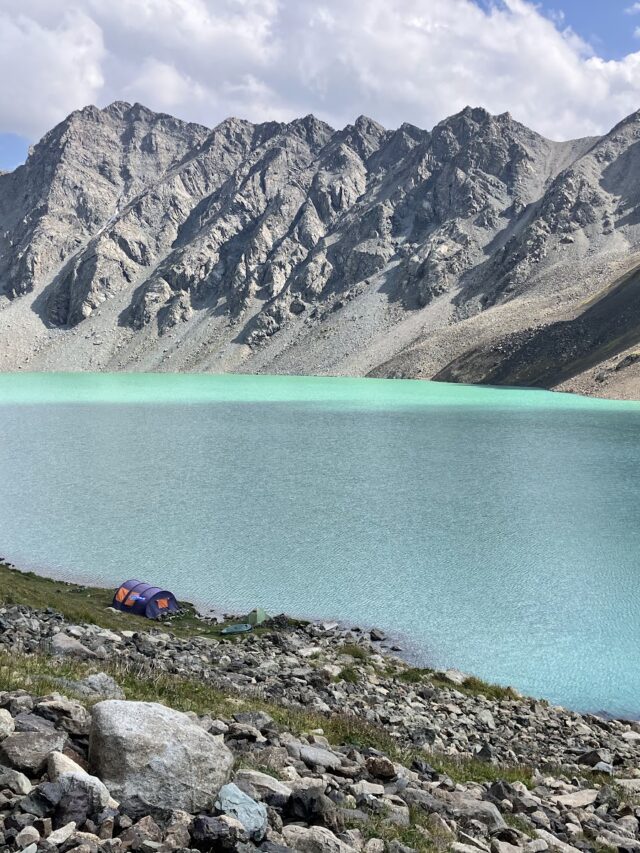
Kyrgyzstan travel guide: yurts, treks and the Silk Road
Kyrgyzstan is the trip we recommend to people who think they’ve seen Europe and Asia already. Ninety percent mountains, a nomadic culture that still moves its animals to summer pastures, yurt camps beside alpine lakes, and – crucially – no visa required for most Western travellers. It’s also gloriously cheap, and hitchhiking is a normal way to get around. This is everything we’ve written about it.
Kyrgyzstan in numbers
Visa: visa-free for 60+ nationalities (US, UK, EU, Canada, Australia) – check current length before you fly
Best months: July–September for the mountains; yurt camps close outside summer
Money: Kyrgyz som, cash-based country – ATMs in cities, almost nothing in the mountains
Daily budget: US$20–40 including yurt stays and shared transport
Getting around: marshrutkas, shared taxis, and hitchhiking – all cheap, none on a fixed timetable
Time needed: two weeks for the classic loop
The mountains: treks and lakes
This is why you come. The Ala Kul trek is the country’s signature multi-day hike, and Song Kul is where you sleep in a yurt at 3,000 m surrounded by horses.
👉 Ala Kul trek – the full multi-day route with camps and costs
👉 Ala Kul lake – the shorter version and what to expect at the pass
👉 Song Kul horse trek – three days on horseback to the high lake, booked through CBT
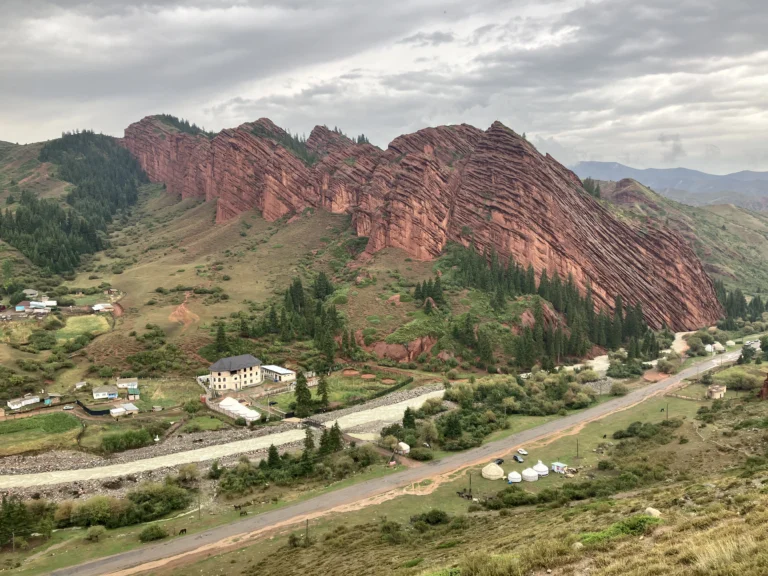
👉 Jeti Oguz – the Seven Bulls cliffs and the valley behind them
Silk Road and short trips
👉 Tash Rabat – a 15th-century stone caravanserai in the mountains near Naryn
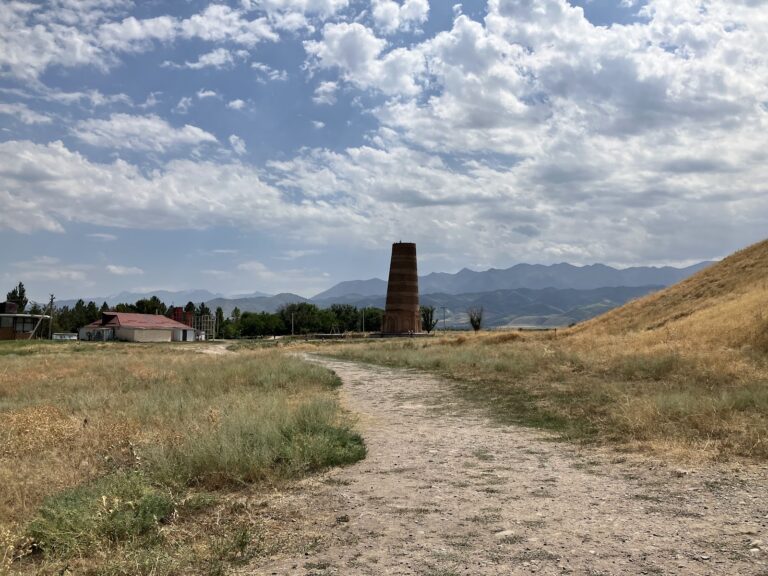
👉 Burana Tower – the minaret of a lost Silk Road city, an easy half-day from Bishkek
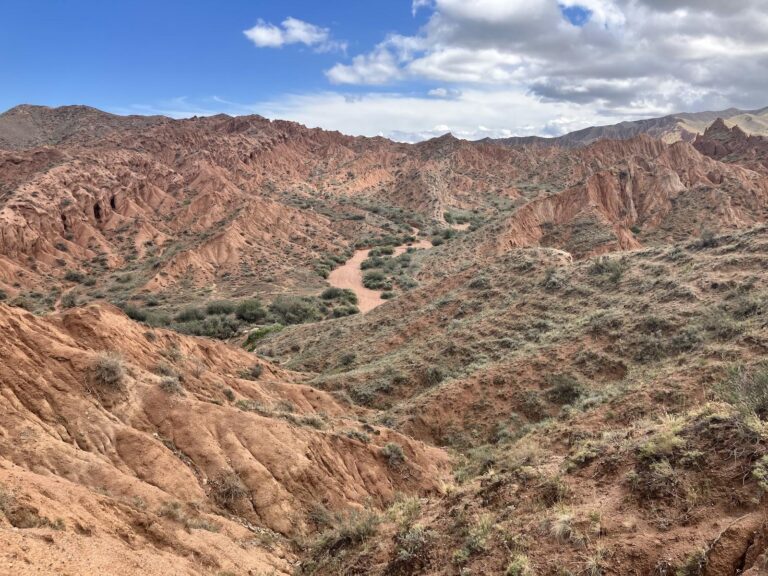
👉 Skazka Canyon – red rock formations on the south shore of Issyk Kul
Practicalities
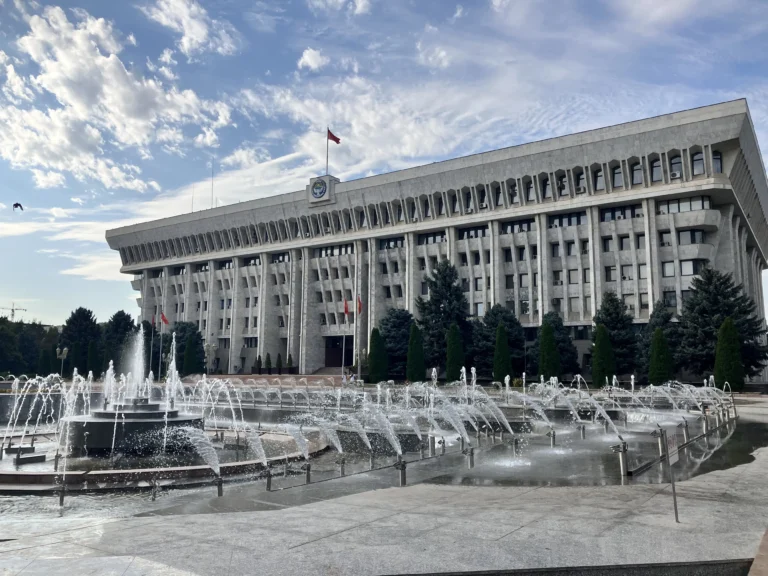
👉 Where to stay in Bishkek – your base for logistics, gear and onward transport
👉 Hitchhiking in Kyrgyzstan – how it works, whether you pay, and why it’s the best way to meet people here
How to travel Kyrgyzstan
There is no rail network to speak of and no fixed bus timetable in the mountains. What you use instead: marshrutkas (shared minibuses that leave when full), shared taxis for longer or rougher routes, and hitchhiking, which locals do routinely – often for roughly the marshrutka fare, so agree on money before you get in. For the high pastures, a driver or a horse is the only option, and CBT offices arrange both.
CBT: how to book yurts and treks well
Community Based Tourism (CBT) offices in Kochkor, Karakol, Naryn and Bishkek are the backbone of independent travel here. They arrange horse treks, yurt stays and drivers, staff speak English, and the great majority of what you pay stays with the herder families. Booking a week or two ahead is wise for July and August; outside those months, half of it isn’t running at all.
A three-day Song Kul horse trek with an English-speaking guide runs around 10,000 KGS (~US$120) per person including yurts and meals. Yurt nights on their own are typically US$15–30 with food.
When to visit
July–September is the season, full stop. Passes are clear of snow, yurt camps are up, and the pastures are green. June works at lower altitudes but the high passes may still hold snow. October–May is for Bishkek, Burana and skiing – the mountain infrastructure simply isn’t there.
What to know before you go
Bring cash. Outside Bishkek, Karakol and Osh, cards are useless. Stock up on som before heading into the mountains.
Altitude is real. Song Kul sits above 3,000 m and the Ala Kul pass is close to 3,900 m – take it slow on the first days.
Weather changes fast. Snow in August at altitude is not unusual; pack layers and a proper shell.
Language. Russian is the lingua franca, Kyrgyz the mother tongue, and English is limited outside CBT and hostels. A translation app earns its keep.
Insurance. Trekking above 3,000 m needs a policy that actually covers it – we use SafetyWing on long trips.
Where to stay
Bishkek is where most trips start and end – our Bishkek accommodation guide covers the neighbourhoods, or browse the live map:
In the mountains, yurt camps are booked through CBT or on arrival – there is nothing to reserve online, and that’s part of the charm.
More destinations
Kyrgyzstan pairs well with the rest of Central Asia, or with a longer Asia trip – see our destinations page and our Cambodia guide for another country that rewards slow travel.
A two-week Kyrgyzstan itinerary
Days 1–2 – Bishkek. Land, sort cash and a SIM, eat well, buy anything you forgot. Day-trip to the Burana Tower if you have the energy.
Days 3–5 – Song Kul. Drive or shared-taxi to Kochkor, arrange a horse trek at the CBT office, then three days riding up to the lake and sleeping in yurts.
Days 6–7 – Naryn and Tash Rabat. The Silk Road caravanserai, and a night in a yurt beside it.
Days 8–9 – south shore of Issyk Kul. Break the drive east at Skazka Canyon.
Days 10–13 – Karakol. The Ala Kul trek over the pass to Altyn Arashan hot springs, with Jeti Oguz as a gentler alternative.
Day 14 – back to Bishkek. A long drive along the north shore, or fly from Karakol in season.
What Kyrgyzstan costs
| Item | Typical price |
|---|---|
| Hostel bed in Bishkek | US$8–15 |
| Guesthouse room | US$20–35 |
| Yurt night with meals | US$15–30 |
| 3-day Song Kul horse trek (guide, food, yurts) | ~US$120 |
| Marshrutka between towns | US$2–8 |
| Shared taxi, longer routes | US$5–15 |
| Meal in a local café | US$3–6 |
Food worth knowing about
Central Asian cooking is meat, dough and dairy – and better than that sounds. Lagman (hand-pulled noodles in broth with mutton and vegetables) is the national comfort food, beshbarmak – “five fingers” – is boiled meat over flat noodles, eaten at celebrations, and samsa are baked pastries from tandyr ovens on every roadside. In yurts you’ll be offered kymyz, fermented mare’s milk: sour, fizzy, an acquired taste, and refusing it politely is fine but trying it is better manners. Vegetarians will struggle outside Bishkek – learn the phrase for “without meat” and expect a lot of bread, salad and dairy.
Yurt etiquette, briefly
You will sleep in someone’s home. Take your shoes off at the door, don’t step on the threshold, accept the tea that appears within a minute of arrival, and don’t point your feet at the stove or at people. If bread appears, it doesn’t get placed upside down. None of this is tested, and all of it is noticed.
Mistakes to avoid
Going too early or too late. Arrive in June and half the yurt camps aren’t up; arrive in October and they’ve gone.
Underestimating the altitude. Song Kul is over 3,000 m and the Ala Kul pass close to 3,900 m – give yourself acclimatisation days.
Running out of cash. There is no ATM at Song Kul, Tash Rabat or in the trekking valleys.
Assuming timetables exist. Marshrutkas leave when full, not when scheduled – start travel days early.
Booking everything in advance. Beyond CBT treks in high summer, you can’t – and you don’t need to.
Frequently asked questions about Kyrgyzstan
Do you need a visa for Kyrgyzstan?
Most Western travellers do not – citizens of more than 60 countries, including the US, UK, EU states, Canada and Australia, enter visa-free. Allowed stays have changed in recent years, so confirm the current limit for your passport before you fly.
Is Kyrgyzstan safe for travellers?
Yes, and notably so for solo and female travellers by regional standards. Hitchhiking is normal and generally safe, cities are relaxed, and the main risks are mountain weather, altitude and road conditions rather than crime.
When is the best time to visit Kyrgyzstan?
July to September. The high passes are clear, yurt camps are open, and the summer pastures are at their greenest. Outside that window much of the mountain infrastructure closes down entirely.
How much does travel in Kyrgyzstan cost?
Around US$20–40 a day covers guesthouses or yurt stays, meals and shared transport. A three-day horse trek to Song Kul with a guide costs roughly US$120 per person including food and yurts.
Do you need a guide to trek in Kyrgyzstan?
Not for well-marked routes like Ala Kul, which many people walk independently. For horse treks, remote valleys and anything involving pastures without trails, a local guide through CBT is both safer and far more interesting.