
Torres del Paine tickets & entrance fees 2026: prices and how to buy
Buying a ticket to Torres del Paine used to be simple: show up, pay at the gate, walk in. Not anymore. Tickets are now bought online on the official CONAF portal, and since May 2026 the park runs a brand-new fee system. If you show up without a ticket, you may simply not get in. We’ve untangled it so you don’t have to.

All prices and rules below were checked in September 2026 directly on the official CONAF ticketing portal. Rules in Patagonia change often – always double-check while booking. This post contains affiliate links – see our affiliate disclaimer.
The short version
1. Buy your ticket online at pasesparques.cl (the official CONAF portal) before you travel to the park.
2. Pick the right ticket type for your plans – daily for a one-day visit, multi-day for treks like the W.
3. Download the PDF with the QR code – rangers scan it at the entrance, and mobile signal in the park is not something to rely on.
4. Book your refugios and campsites separately – the park ticket does NOT include accommodation.
Torres del Paine entrance fees 2026
Since 1 May 2026 CONAF uses a new system. Instead of the old split between visits of up to three days and longer stays, there are now just two ticket types: a daily ticket and a multi-day ticket valid for a continuous period of up to 10 days.
| Adult visitor (18–59) | Daily ticket | Multi-day (2–10 days) |
|---|---|---|
| Foreign visitor | US$36.16 | US$54.13 |
| Chilean national or resident | US$10.49 | US$15.85 |
Besides the adult rate, the portal has categories for youth (12–17), children (0–12), seniors (60+), and visitors with disabilities – you see the exact price for each once you pick a date. Two things worth knowing before you pay: tickets can’t be cancelled or refunded, and if you’re buying for Chilean and foreign visitors together, you have to select them in separate steps (you can still put both in the same cart).
The multi-day ticket is the one W and O trekkers need – our W trek guide shows how the days add up.
Daily or multi-day ticket?
Daily ticket
The classic day visit: driving the vehicular circuit, the big viewpoints (Salto Grande, Lago Pehoé, Lago Sarmiento), and short walks. This is what day-trippers from Puerto Natales need – and also what you buy if you only want to hike to the Base of the Towers in a single day.
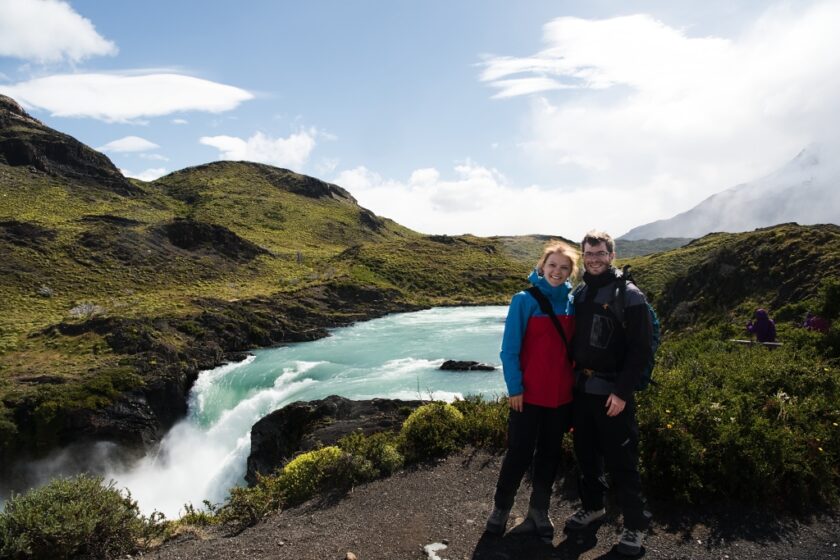
The Base Torres hike takes 8–10 hours round trip, so start as early as you can to avoid racing the light. Details of the trail are in our best hikes in Patagonia guide.
Multi-day ticket
For the W trek, the O circuit, or simply spending several days in the park. On top of the ticket you need a refugio or campsite booking for every night – rangers do check them along the trail.
Opening hours and winter rules
| Season | Months | Opening hours |
|---|---|---|
| Summer | October–April | 07:00–21:00 |
| Winter | May–September | 08:00–18:30 |
Travelling outside summer? In 2026, between 27 April and 15 September (or while winter conditions last), CONAF requires hikers on the Base Torres trail and the W circuit to go with an accredited specialist guide. The list of accredited guides is linked from the ticketing portal.
And the O circuit (Macizo Paine) stays closed until 31 October 2026 – reopening depends on a weather and safety assessment. If you’re planning the O for the start of the season, confirm before booking anything.
Step by step: buying your ticket
1. Go to pasesparques.cl and find Parque Nacional Torres del Paine.
2. Choose your date and the number of visitors per category (adult, youth, child, senior).
3. Pick daily or multi-day, national or international.
4. Pay by card and download the PDF – ideally print it too. The QR code is what gets scanned at the gate.
One practical warning: the portal is a Chilean government system, it occasionally goes down, and it is not famous for its user experience. Don’t leave it for the night before – and if it refuses your card, try a different browser or another card before panicking.
What if you arrive without a ticket?
Don’t count on buying one at the gate. If you arrive by bus, tour, or navigation, you’ll be expected to show a ticket bought in advance, and rangers may turn you around. Even with your own car, buy online before you set off: there is barely any signal in the park, and it’s not worth gambling the first day of a trek on it.
Where the money goes (and other rules)
The fee funds CONAF’s work in the park – trail maintenance, rangers, and the fire prevention that matters enormously here: open fires and camp stoves outside designated areas are banned after two devastating human-caused fires. You’ll also be asked to register at entry points and to stay on marked trails. Full park information is on CONAF’s official page and the park’s own site.
Booking the rest of your trip
Tickets are only step one. In booking order: beds first (refugios and campsites sell out 3–6 months ahead for December–February, and hotels and glamping go almost as fast), then the park ticket, then transport (how to get to the park).
Prefer to hand the whole thing to someone else? Guided day tours from Puerto Natales and organized W treks bundle transport, logistics, and often the beds – note that the park ticket itself is normally still paid separately, so check what your tour includes.
Where to stay for your park days
Staying in the park saves you two hours of driving each morning; staying in Puerto Natales saves you money and gets you king crab. Compare both on the live map:
Planning tips from our visits
Buy as soon as your dates are fixed. Good-weather days in high season fill first.
Save everything offline. Signal dies inside the park; a printed PDF has never crashed.
Build in a buffer day. Patagonian weather rewards flexibility, and tickets are date-specific.
Check the ticket type. Sleeping in the park? A daily ticket won’t do – you need the multi-day one.
Frequently asked questions
Can I buy Torres del Paine tickets at the entrance?
Don’t count on it. Tickets are sold online at pasesparques.cl, the official CONAF portal, and the safe bet is to arrive with the PDF and QR code already downloaded – especially if you come by bus or with a tour.
How much is the Torres del Paine entrance fee in 2026?
On the official portal in September 2026, a foreign adult paid US$36.16 for the daily ticket and US$54.13 for the multi-day ticket (up to 10 days). Chilean nationals and residents pay US$10.49 and US$15.85.
Does the park ticket include campsites or refugios?
No. Accommodation inside the park is booked separately with two private operators – Las Torres Patagonia and Vertice – and beds for high season sell out months in advance.
Do I need a guide for the W trek or Base Torres?
Only in winter. In 2026 CONAF requires an accredited specialist guide between 27 April and 15 September, or while winter conditions last. In summer you can hike both independently.
What happens if the weather ruins my booked day?
Tickets can’t be cancelled or refunded. That is exactly why we recommend a buffer day in your itinerary rather than betting everything on one date.
Tickets sorted? Now the fun part: our guide to Torres del Paine, the activities in the park, the W trek day by day, and a full Patagonia itinerary to build around them.

![Torres del Paine National Park: a place you can’t miss [2026 guide]](https://www.wanderlustdesigners.com/wp-content/uploads/2019/03/patagonian-wind-jpeg-768x513.jpg "Torres del Paine National Park: a place you can't miss [2026 guide] patagonian wind jpeg")
![Where to stay in Torres del Paine [2026]: hotels & glamping](https://www.wanderlustdesigners.com/wp-content/uploads/2023/04/cuernos-del-paine-and-lake-768x512.jpg "Where to stay in Torres del Paine [2026]: hotels & glamping cuernos del paine and lake")


![W trek in Torres del Paine: day-by-day guide [2026]](https://www.wanderlustdesigners.com/wp-content/uploads/2024/01/how-to-get-to-torres-del-paine-2-768x1152.jpg "W trek in Torres del Paine: day-by-day guide [2026] how to get to torres del paine 2")