
What to pack for Patagonia?
Well, it’s quite easy to answer – winter stuff!
Even if you’re travelling to Patagonia during summer, that is, December or January, you still need winter stuff.
Patagonia is located in the very south of South America where the Atlantic and Pacific winds meet, so it’s one of the windiest regions in the world. When we visited Patagonia back in December, we spent 5 days in Torres del Paine national park in Chile and the other five – in El Chalten and Los Glaciares national park in Argentina.
In Torres del Paine, we had just a few hours of sunshine — the rest was rainy, windy, and even snowy. And that was summer.
This is exactly why packing for Patagonia is different from most destinations — and why what you bring really matters.

This post might contain affiliate links, which means that if you purchase anything via them, we might earn a small commission – at no extra cost to you. Check our affiliate disclaimer for more information.
As an Amazon Associate we earn from qualifying purchases.
What to wear in Patagonia (before you pack)
Before you start packing for Patagonia, it’s important to understand what you’ll actually be wearing there.
Patagonia’s weather is unpredictable and can change quickly even during the same day. That’s why layering is essential no matter when you visit.
Most people travel to Patagonia during the summer months, especially February and March, so here’s what to expect and what to wear during that time.
What to wear in Patagonia in February
February is one of the warmest months in Patagonia, but that doesn’t mean stable weather.
You’ll still need layers, a light base layer, fleece, and a waterproof jacket. Hiking pants are a must, and don’t forget a hat and gloves, especially for windy days.
What to wear in Patagonia in March
March feels a bit colder than February, especially in the mornings and evenings.
Layering becomes even more important, a warmer mid-layer, waterproof jacket, and wind protection are essential. Gloves and a hat are highly recommended.
What to wear in Patagonia (general tips)
No matter the month, Patagonia is known for strong winds and sudden weather changes.
Golden rule: check Meteochile (the official Chilean forecast) right before you go – and then pack for all four seasons anyway, because Patagonia will ignore the forecast.
Always pack:
- waterproof jacket
- windproof outer layer
- warm mid-layer
- comfortable hiking clothes
| Period | What to wear |
|---|---|
| February | light base layer, fleece, waterproof jacket, hiking pants, hat |
| March | base layer, warmer mid-layer, waterproof jacket, gloves, hat |
| Always | windproof + waterproof outer layer, layers, comfortable hiking clothes |
What to pack for Patagonia?
I have a bit of a foreword for this “What to pack for Patagonia” list.
If you checked the table of contents, you could see that I’ve put quite a lot of hiking stuff here. I believe if you’re going to Patagonia, you want to go hiking. And you should be dressed appropriately for the conditions.
As for “how much stuff to pack for Patagonia” – I cannot tell you that. How much you pack depends on too many factors – how long is your trip? How many hikes have you planned?
For me, I usually do number of days on the trip +1 for underwear and socks, as well as for t-shirts. The rest of the stuff is usually either just the one thing (hiking pants) or an extra just in case (jeans). Lately, though, I’m trying to pack as lightly as possible.
What hiking clothes to pack for Patagonia
- Hiking pants
- Hiking boots – sturdy ones!
- Waterproof and windproof winter jacket
- Waterproof and windproof soft-shell jacket
- Fleece jacket
- Long sleeve shirts/t-shirts
- Thermal underwear
- Hiking socks
- Scarf
- Gloves
- Hat
When we visited Torres del Paine, I saw some people who clearly were not prepared for the weather and trail conditions.
Let me explain more about why you should take these things when packing for Patagonia.
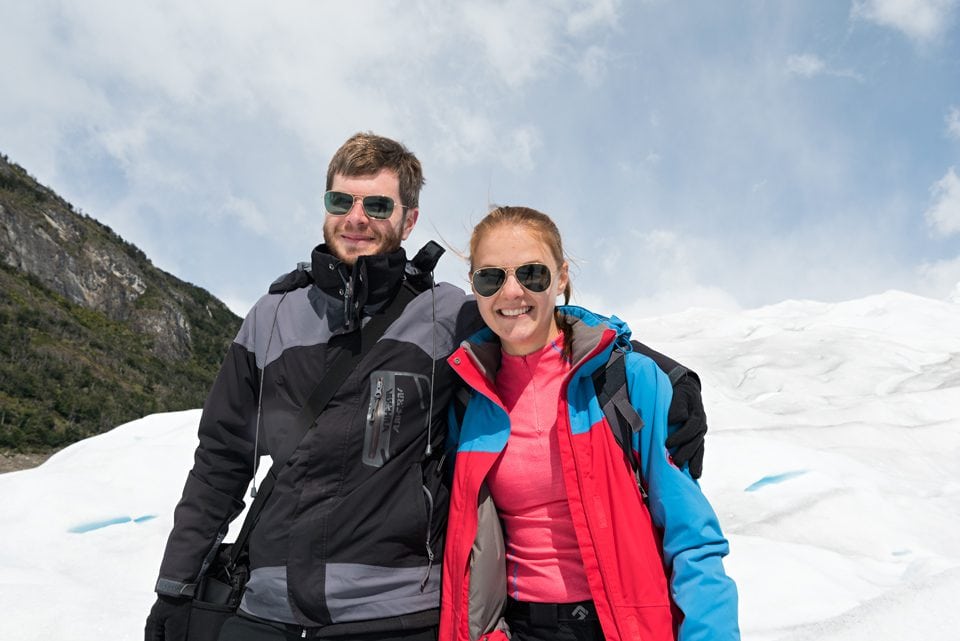
Layering is key in Patagonia
Hiking pants, water- and windproof winter jacket and soft-shell jacket, fleece jacket, long-sleeve t-shirts, thermal underwear.
If you’re wondering what to wear in Patagonia, then my best answer would probably be “layers”.
Since the weather is usually very changeable and out on a trail you won’t be close to your suitcase, it’s important to just be able to take clothes off and put them back on. And even more important for the top layers to be wind- and waterproof.
When we hiked in Torres del Paine, the weather changed within 2 hours from calm conditions to strong wind, then rain and even snow.
And, when hiking the day hike to Laguna de los Tres in Argentinian Patagonia (it’s one of the best hikes in Los Glaciares National Park!), at some points we could dress down to t-shirts, but at the very top, we had all the layers (besides the thermal underwear) on, as it got cold.
Thermal underwear is especially useful in colder seasons.
Make sure your gear is waterproof and windproof. The wind in Patagonia can be extremely strong.
A fleece layer is nice to have, as fleece things are quite warm, yet don’t take up too much space when you pack them.
Long-sleeve t-shirts which are made from synthetic material will help keep moisture away better than cotton ones and they dry faster, so if you’re all sweaty on the top of a mountain, you can just put it out to dry. Make sure to pack an extra t-shirt, though, when hiking! As for why “long sleeve” and not short – with the average temperature high in Patagonian summer being 15 degrees Celsius, I’m pretty sure you’ll never use them anyways.
Zip-off hiking pants can be a practical option.
Hiking shoes
One of the most important items that you should be packing for Patagonia is good and sturdy hiking shoes. Although the trails are well maintained, the rain and wind can make them slippery and unstable.
You wouldn’t want to be out in the wilderness and twist your ankle, so find shoes that have a good sole, proper ankle support, and a sturdy front to protect your toes.
Waterproof ones are a definite bonus!
I recommend getting hiking shoes in a brick-and-mortar store, though. They need to fit perfectly, not just good enough.
If you buy your shoes just before the trip to Patagonia make sure to pack a bunch of bandaids.
Accessories
Hiking socks, scarf, gloves, and hat.
The weather can get cold really fast in Patagonia. So, it’s important that you are protected from it!
Hiking socks will help you with keeping your feet warm and wick away moisture. Plus, they tend to be thicker, thus protecting you from blisters. Even if your shoes are broken in, they still sometimes rub the wrong way, especially on strenuous day hikes.
If you don’t feel like buying hiking socks, consider taking wool socks with you – they should do the job as well.
I usually pack a shawl wrap instead of a scarf when going anywhere because it has more uses (like, it can double as a blanket).

For the gloves, I used skiing gloves, and they seemed to do the job well. And for the hat, just a normal one, nothing fancy. Didn’t have to use it too much as well, since my jackets all had hoods, but it was needed on the ferry ride to the Perito Moreno and Isla Magdalena.
What hiking gear should be on your Patagonia packing list?
If your bag doesn’t already include one, definitely pack a rain cover. It’s not pleasant when a sudden rainstorm makes all of your stuff wet, especially if we’re talking camera and other valuables.
Packing for a multi-day trek like the W trek? Everything below still applies – plus whatever sleeping setup your refugio or campsite booking requires (see the refugios guide for what each place provides).
A good hiking backpack is a must. We managed with 20l and 30l ones since we only went on day hikes. If you’re planning on overnight trips, definitely check out bigger ones that fit all of your gear.
Consider taking a daypack so you can leave your main bag at camp and hike lighter.
Hiking poles make a big difference, especially on steep sections – both up and down.
As a side note: airlines will not allow you to carry hiking poles in the cabin – only as a piece of checked-in luggage. I’ve read that it’s possible to rent them in Puerto Natales, though.
One thing I wish I took with me, though, is a microfiber towel or something similar. If you wish to wash your hands during hiking, it’s nice to be able to dry them afterwards as well, you know?
What to pack for Patagonia (off the trail)
- Long pants
- Sneakers
- Long-sleeve layer
- Jacket
- Pyjamas
- Swimsuit
These things are beside the obvious stuff such as toiletries, socks, and underwear, which are essential things to have on all your packing lists.
Patagonia is quite a casual place. Most of people go there to enjoy the outdoors, so you’re rarely going to meet people who dress up.
The weather doesn’t change just because you’re not hiking, so long sleeves and pants are still the best choice. And just remember to take a jacket for the walk back.
For shoes, sneakers or whatever else you find comfortable is definitely enough.
You can consider packing some pyjamas or an extra comfortable t-shirt with you for the nights, as they can get quite chilly. Many hotels turn the heating off at night to save electricity, so especially in the morning, it might be rather hard to get out of the warm bed!
One thing you probably didn’t expect to see on a “What to pack for Patagonia” list is a swimsuit, haha! But many of the hotels in Patagonia have some kinds of pools or hot tubs, so it’s a good thing to not forget at home so you don’t miss that nice soak!
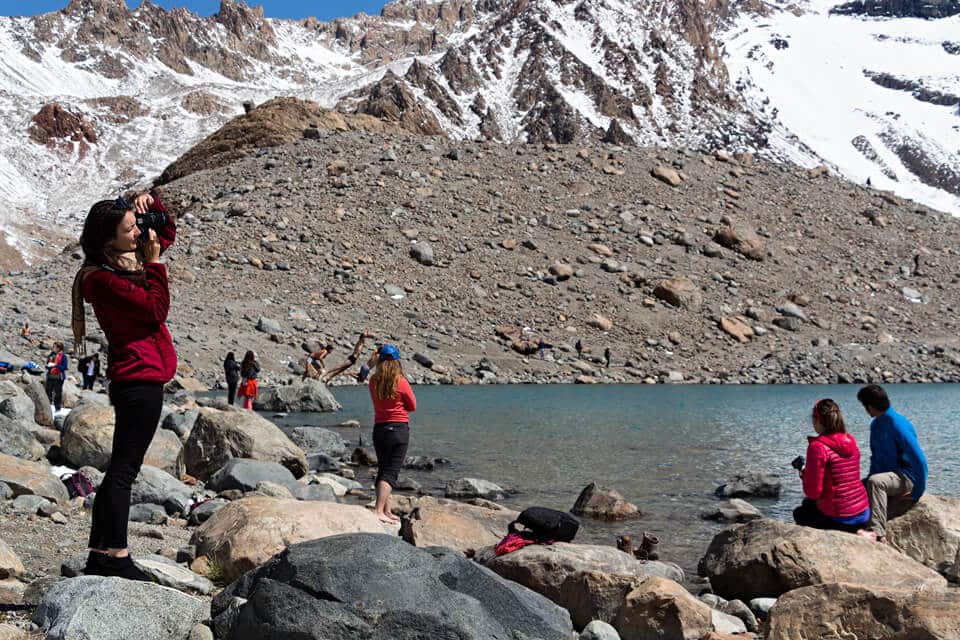
Miscellaneous stuff to take when packing for Patagonia
- Sunscreen
- Water bottle
- Power adapter – type C and L, which means 2 (like in Europe) or 3 round pins. 220V voltage.
- Sunglasses
- Essential things to pack with you
- GoPro or some other action camera
- Photo camera
- Travel insurance
- Portable charger
Sun protection
You might be thinking – sunscreen? When you’ve been telling us that the weather in Patagonia is all cold and rainy??
Even when it’s cloudy, you can get sunburned, especially at higher altitudes. Sunscreen and sunglasses are essential.
Electronics adapter
Even if you’re coming from Europe, it’s better to have an adapter for electronics on your packing list for Patagonia – and in your luggage. Most plugs use 2 round pins, but some places use 3.
And don’t forget the charger for your electronics!
Water bottle
A good thing to have with you to Patagonia is a collapsible water bottle. If you’re very opposed to drinking water from a tap or from streams, you can buy bigger – 5l or 7l jugs – in a supermarket and fill it up to take on the hikes.
An alternative to these is a water bottle with a filter – in that case, you don’t have to worry about any dirt or bacteria in the streams or the tap, as it would be filtered out.
Essential stuff
As for the essential things to pack when travelling, I have a whole article on those – check it out! In that article, I go over the things that you should take on every single vacation.
It includes some of the stuff already covered in this article and some other things like documents and what you should always have in your travel first aid kit.
Camera
To capture Patagonia properly, having something better than just a phone can make a difference.
Michal had his Nikon D810 DSLR camera to take the incredible pictures you can see in most of our Patagonia articles (like, for example, the Patagonia travel diary).
And as for the action camera, we had a GoPro5 with us.
Travel Insurance
Make sure your insurance covers:
emergency rescue (including helicopter) and high-altitude hiking.
Portable Charger
Patagonia is an incredibly beautiful place to visit, which means – you’ll want to take looooots of pictures. This means the phone will probably lose the battery quickly.
So, of course, it’s a good idea to take a lightweight and small portable charger with you. And don’t forget the cable for your phone!
What you don’t need to pack for Patagonia
Unless you’re going on multi-day treks and staying in campsites and refugios, you don’t need any camping gear such as a tent or sleeping bag with you. And even then, it’s possible to rent all of these things in almost all of the refugios, at least in Torres del Paine.
Shorts are not really necessary either. The weather is rarely warm enough, and lightweight hiking pants will do the job just fine.
Laptops and other bulky electronics are usually unnecessary unless you plan to work during your trip.
What to pack for a trip to Patagonia – last thoughts
This packing list covers the most important things you should bring to Patagonia.
This is actually pretty much what we had in our luggage when we spent 10 days in Patagonia! This packing list for Patagonia is improved, though, because we didn’t have things like collapsible water bottles (didn’t know such things existed) and microfibre towel.
As mentioned earlier, how much you pack depends on your trip length and comfort level.
There are always extra things you could bring, but most of them will likely stay unused — and just add unnecessary weight.
FAQs about packing for Patagonia
What clothes should I pack for Patagonia?
Layers are key. You’ll need a waterproof and windproof jacket, fleece, long-sleeve shirts, and hiking pants. The weather changes quickly, even within a few hours.
Do I need waterproof clothing in Patagonia?
Yes, absolutely. Rain and strong wind are very common, so waterproof and windproof gear is essential.
Can I wear shorts in Patagonia?
Not really necessary. Even in summer, temperatures are low, and hiking pants are a better choice.
What shoes should I pack for Patagonia?
Sturdy hiking boots with good grip and ankle support. Waterproof shoes are a big advantage.
Do I need hiking poles in Patagonia?
Not mandatory, but highly recommended. They make steep and slippery sections much easier.
Is it necessary to bring a sleeping bag to Patagonia?
Only if you plan multi-day treks with camping. Otherwise, you can rent gear in places like Torres del Paine.
Can I drink water in Patagonia?
In many areas, yes — especially from mountain streams. For extra safety, consider using a filter bottle.
Do I need travel insurance for Patagonia?
Yes. Make sure it covers hiking at higher altitudes and emergency rescue.
Like this packing list? Share it with others on Pinterest!


![Torres del Paine National Park: a place you can’t miss [2026 guide]](https://www.wanderlustdesigners.com/wp-content/uploads/2019/03/patagonian-wind-jpeg-768x513.jpg "Torres del Paine National Park: a place you can't miss [2026 guide] patagonian wind jpeg")


Hey! This packing list is great! My husband and I are Going to Patagonia for our honeymoon next month. We are doing both Chile and Argentina. I have a question not related to packing, but how you got from Torres del Paine to El Chalten transportation wise?? We’re trying to figure that piece out still! Thanks!
Hi Bekki,
Awww, congratulations! Patagonia was actually a part of our honeymoon as well!
As for how to get to El Chalten, I actually have that in the article about Los Glaciares or actually the opposite way (El Chalten to Torres del Paine) in the Torres del Paine article.
In short, there’s no direct way if you’d like to use public transport. You’d have to go to either Punta Arenas or Puerto Natales, then a bus to El Calafate and then another one to El Chalten.
Hope this helps!
We have gore-tex hiking shoes, but they are not high-tops – and gore-tex pants. Should we get spats to seal the tops of the shoes?
Hi,
I’d recommend reconsidering getting high-top hiking shoes for Patagonia, especially if you’d like to do any of the longer hikes. The main point of the high-tops is to support the ankles and protect them from any injuries, which is especially important on uneven terrain. And additionally, the weather, even in summer, is such that high-tops seem more suitable for hiking in Patagonia.
If you still prefer wearing low hiking shoes, then the spats are a good idea – the protection from mud and not nice weather is a good idea 🙂
Cheers,
Kristine
Hi! My girlfriend and I are going to Patagonia in March, probably doing the O circuit. Here’s the thing, we’ll get there after a month in Chile so we’ll also have some other unnecessary stuff for the trek. We wonder if we can find a place at the beginning of the trek where we can leave some stuff and then get back at the end of the circuit. Is there some sort of safety deposit box? Thank you!! Enrico
Hi Enrico,
It sounds like an awesome trip! We actually spent the month in and around Chile, too, so I completely understand the luggage situation.
There should be luggage storage in the Bus sur offices in Punta Arenas or Puerto Natales bus terminals. Contact them to make sure, of course. In Torres del Paine itself, I believe your hotel would be ok with storing the luggage while you’re on the trek, but of course, you’ll need to contact them. Or many hotels in Puerto Natales offer luggage storage for those who go hiking in Torres del Paine 🙂
Cheers,
Kristine
Hi, thank you for all the info. Very helpful.
I have warm sheep’s wool lined leather boots. If I take grippons, would they be suitable for short walks. I’m worried that leather soles might slip. I plan on taking tracking poles.
I am going on a commercial tour.
Hi Marleine,
For short walks, it should even be possible to go without grippons if you’re careful and use the trekking poles for support.
You can check out our hiking artilce to see if any of the hikes that you’re gonna take are covered 🙂
I hope you’ll have a great trip to Patagonia!
Cheers,
Kristine
Thank you so much for this post! My husband and I are also preparing for our trip to South America next December-January and I swear this is the best post I could find related to which clothes to bring! My packing anxiety has reduced to the minimum 😂😂😂 Thank you sooooooooo much!!!
Hi!
I’m so happy to hear that my packing list was helpful! Patagonia is a tricky place to pack for, haha.
Cheers,
Kristine
Thick face cream to protect against windburn.
Hi Sarah,
That’s actually a great idea, thanks!
Cheers,
Kristine