
Kulen Mountains – Perfect Day Trip from Siem Reap
Kulen Mountains, often called the sacred mountain of Cambodia, is one of the most meaningful places you can visit near Siem Reap. Unlike Angkor Wat, which impresses with its scale and architecture, Kulen Mountains combine nature, spirituality, and history in a single destination. It’s a national park filled with waterfalls, jungle landscapes, ancient temples, and sacred sites where Buddhism and Hinduism meet.
For many Cambodians, Phnom Kulen is not just a tourist attraction but a pilgrimage site, home to the famous reclining Buddha, the River of a Thousand Lingas, and the sacred spring. At the same time, it’s a refreshing escape from the heat of Siem Reap, where you can relax by the waterfall, learn about local beliefs, and discover why this place is called the “birthplace of the Khmer Empire.”
In this article, we’ll share our full experience of visiting Kulen Mountains, including the main top things to do in Kulen Mountains, our day trip from Siem Riep with a professional guide, insights into the spiritual traditions, and all the practical tips you need before going.
Top Things to do in Kulen Mountains
Poeng Ta Kho Cliff Viewpoint
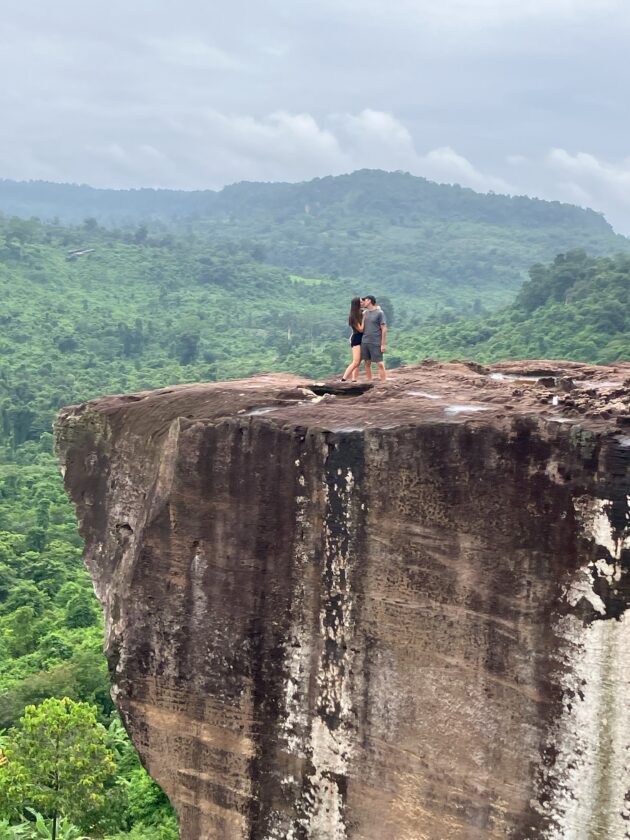
Our first stop inside Phnom Kulen National Park was the Poeng Ta Kho cliff viewpoint, a wide rock ledge overlooking the rolling hills and jungle. It’s one of the best spots to appreciate the natural landscape of Kulen. The view was refreshing after the drive, and we took some time for photos before moving deeper into the park.
River of a Thousand Lingas & Sacred Pond
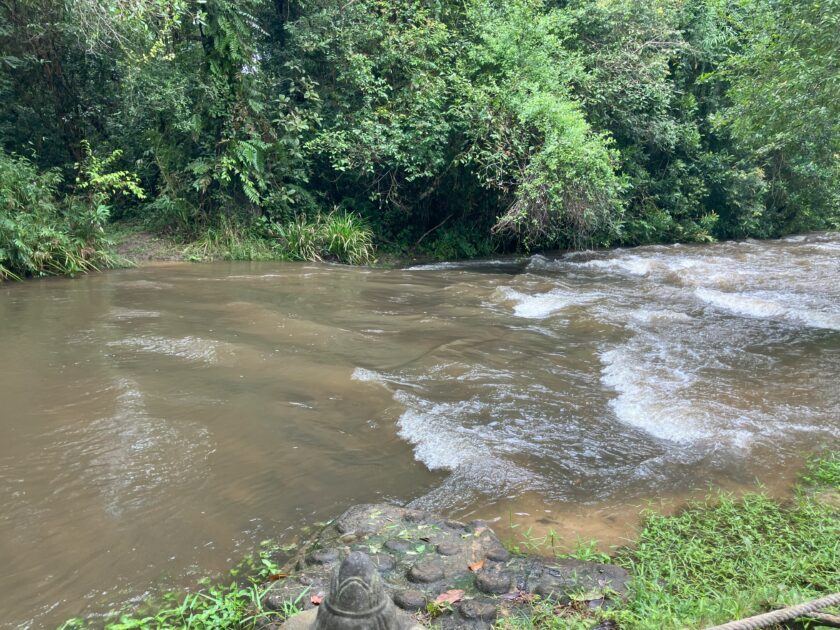
The River of a Thousand Lingas is perhaps the most famous site in Kulen Mountains. Carvings of lingas and yoni, symbols of Shiva and fertility, are etched directly into the riverbed. As the water flows over them, it becomes sacred – a blessing for those downstream.
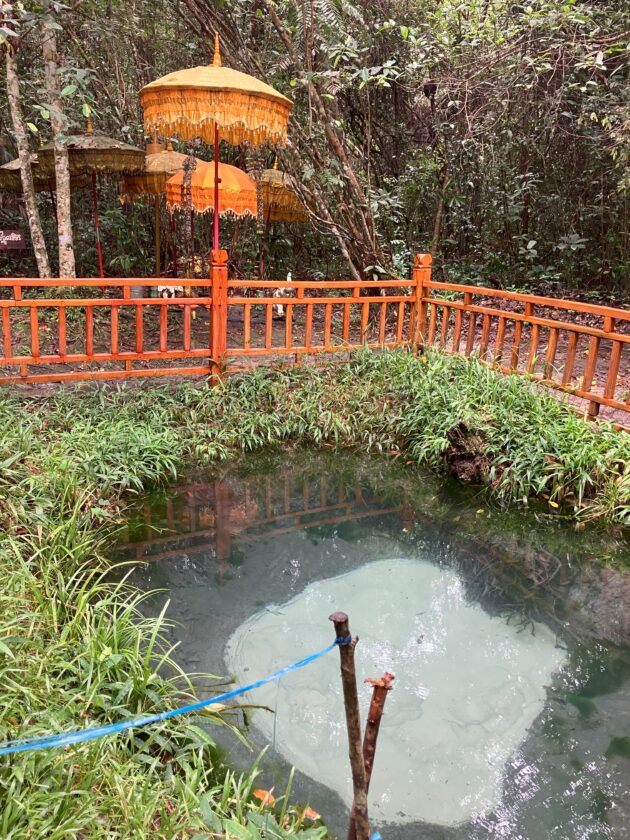
Next to the river is a sacred spring that locals have worshipped for centuries. In the past, people believed its pure water carried divine power, because those who drank it did not get sick. Today, science explains it as clean, filtered water – but the spiritual significance is still strong. We saw both Hindu and Buddhist shrines here, a reminder of Cambodia’s blended religious traditions. Many locals still come to drink from the pond, believing it brings health and longevity.
Reclining Buddha & Wat Preah Ang Thom Pagoda
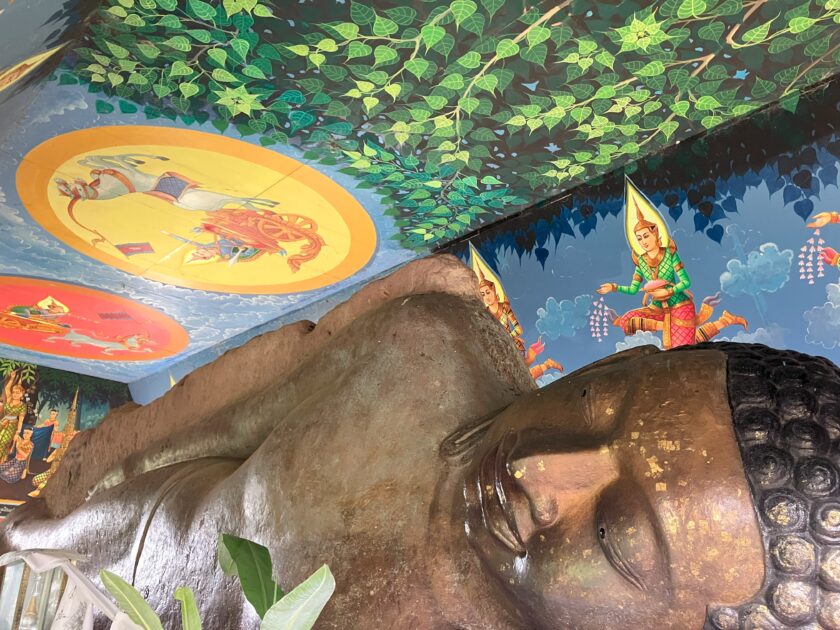
High on a sandstone boulder sits the Reclining Buddha of Phnom Kulen, part of the Wat Preah Ang Thom pagoda complex. This giant statue represents Buddha entering nirvana and is one of the most sacred places for Cambodians. Our guide explained that sleeping on the right side symbolizes health and good digestion, while lying on the left is seen as relaxation. Watching the families pray and monks chant while incense filled the air was a truly moving experience.
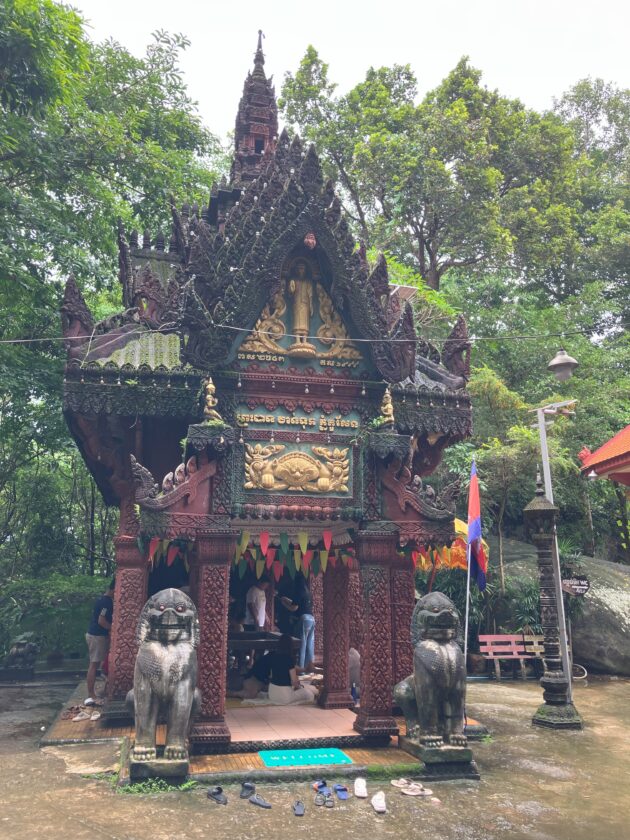
The surrounding pagoda is an active place of worship, filled with colorful flags and small shrines. It’s a mix of spirituality and everyday life – you’ll see both pilgrims and curious travelers climbing the stairs to pay their respects.
Phnom Kulen Waterfall
The last highlight of our tour was the Phnom Kulen Waterfall. Surrounded by lush greenery, it’s a popular picnic and swimming spot for locals. When we visited, the water was extremely powerful, crashing down into the pool below. Some people went for a swim, but we chose to simply enjoy the view – it felt a bit too wild to step in.
Still, the atmosphere was beautiful: children playing, families having lunch, and the sound of water filling the valley. After exploring the area, we joined in for our own picnic lunch provided by the tour, which was tasty and very generous. It was the perfect way to finish the day before heading back to Siem Reap.

Spiritual Beliefs and Traditions at Kulen Mountains
One of the most fascinating parts of visiting Phnom Kulen is not only the temples and nature, but the living spirituality that locals still practice today. Thanks to our guide, we learned about a unique blend of Buddhism, Hinduism, and animism, which together shape the cultural life of Cambodians.
Animism and the Full Moon
Although Buddhism is the official religion of Cambodia, many people also believe in animism – the idea that spirits are everywhere. Our guide told us that during the full moon, a mystical “gate” between heaven and hell opens for 15 days. During this time, souls can descend to earth: those from heaven visit their families, while those from hell search for food. If these “hungry ghosts” find nothing, they may bring misfortune to the living.
To prevent this, families leave offerings in front of their houses – on the ground for wandering spirits, and on higher platforms for their ancestors. This act is not only about respect, but also about restoring balance: when someone does something wrong, a good deed, like feeding the spirits, can bring harmony back.
Sacred Water and Healing Beliefs
Water plays a central role in the spirituality of Phnom Kulen. At the Sacred Pond, people believe the water is a gift of Amrita, the nectar of immortality. Drinking it is said to bring health and long life. In the past, when people got sick after drinking contaminated water, they thought they had angered the gods. If they stayed healthy, they believed the gods had blessed them. Today they understand bacteria and filtration, but the sacred meaning of water remains strong.
Nearby, we noticed both a Hindu shrine and a Buddhist shrine, showing how closely these traditions coexist.
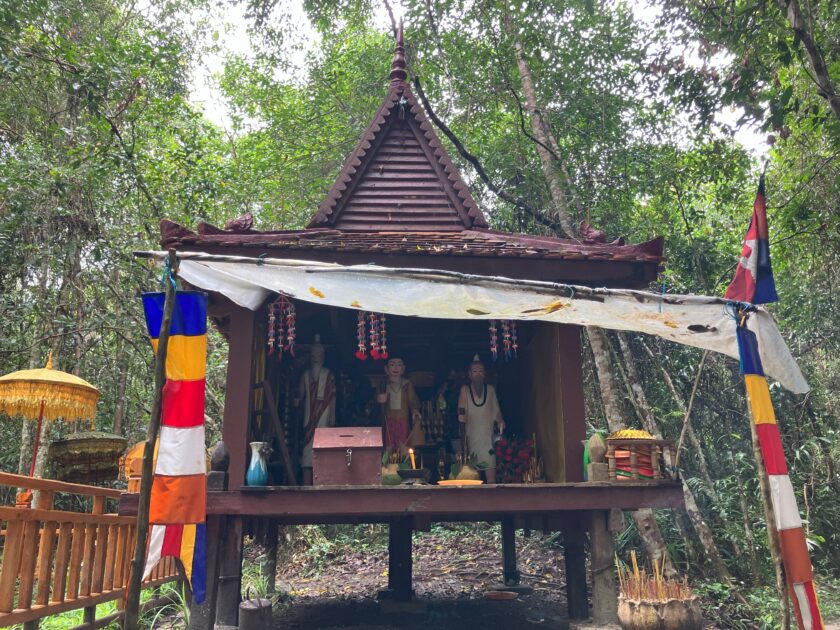
Symbolism in Prayer and Everyday Life
During prayers, people connect the five elements. Placing the hand on the chest over the heart means peace – “with a hand on the heart, you cannot attack anyone.” Our guide used a beautiful metaphor of the lotus flower: it grows from mud, yet blossoms pure and beautiful, reminding people to find goodness even in difficult conditions.
Reclining Buddha and Body Symbolism
On top of Phnom Kulen lies the impressive Reclining Buddha. The position carries deep symbolism:
- Buddha on the right side – represents entering nirvana.
- For ordinary people, lying on the right side immediately after eating is believed to cause health problems, especially with digestion.
- Lying on the left side symbolizes relaxation and rest.
Monks and Their Bowl
Monks carry their alms bowl, not to beg, but to receive food and money voluntarily offered. Our guide explained a beautiful metaphor: the bowl is like a pregnancy, reminding men of the burden women carry when they give life. Monks live without families, and if they have one, they must leave the monastery. They practice celibacy, meditation, and discipline. Interestingly, although monks avoid alcohol, everyday Cambodians do drink, even though this is a Buddhist country.
Gongs, Flags, and Symbolism
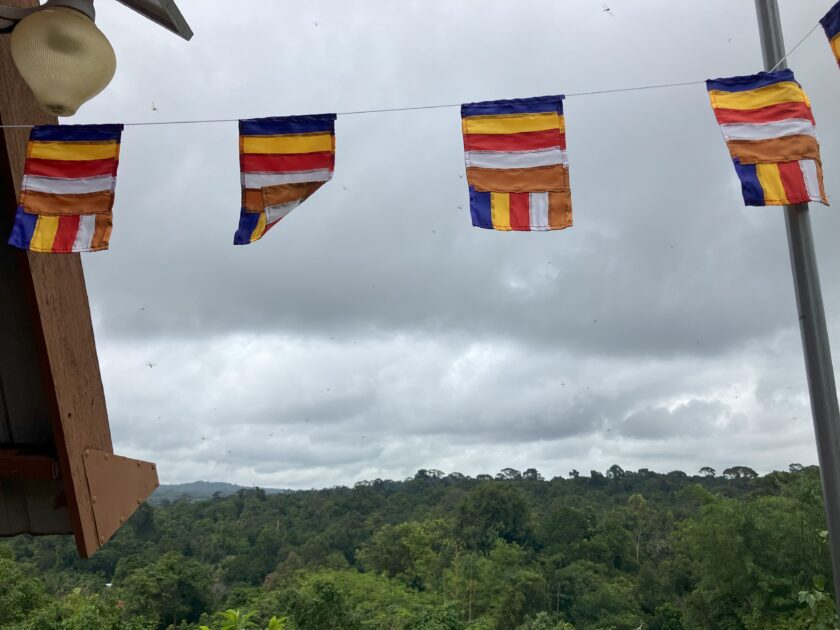
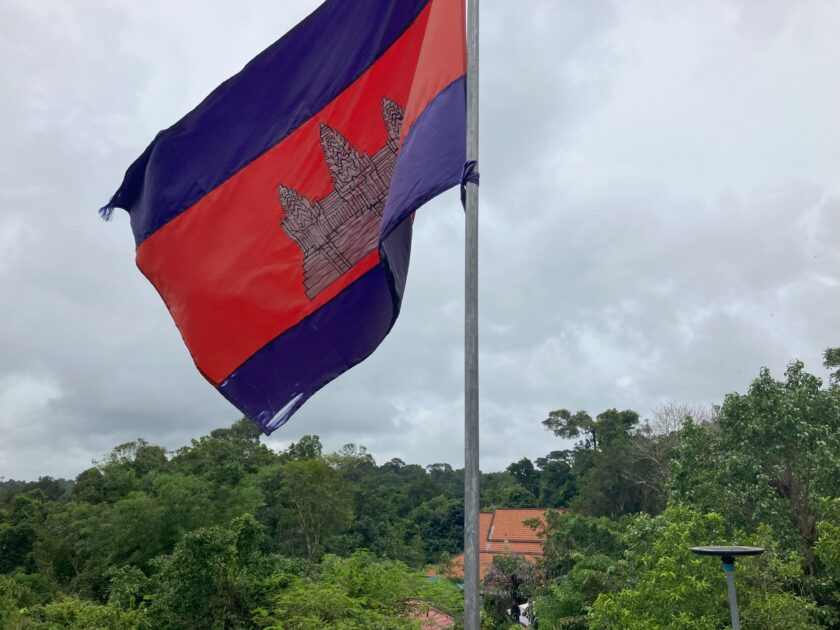
Hitting a gong is believed to send a message directly to the gods. Around the pagoda, colorful Buddhist flags wave in the wind, each color carrying meaning:
- White for purity,
- Blue for the sky and connection to the king,
- The flag overall symbolizes that Angkor and its faith are open to everyone, regardless of background.
Buddhist Schools
Our guide also mentioned differences in Buddhist traditions: the Southern school is slower and more stable, while the Northern school is sometimes seen as stricter and more driven. In both, however, the focus is on the path itself, not the speed of progress.
Temples, Dedications, and Names
At many temples, there are inscriptions showing who built the structure and for whom. This was part of Khmer tradition, a way of dedicating merit to family members or the community. Our guide also referred to Buddha using the local pronunciation “Citama Butama”, reflecting the way Cambodians connect with him personally.
Good and Bad Deeds
An important point in Cambodian spirituality is that it’s not just about how you treat others, but also how you treat yourself. Living well, with kindness toward both yourself and others, is considered essential for balance.
Inspiration from the Himalayas
Throughout our visit, our guide often compared Phnom Kulen to the Himalayas. Kings and monks saw these mountains as sacred and sought to build a Khmer version of a holy mountain here, blending spiritual symbolism with breathtaking landscapes.
Phnom Kulen National Park Today
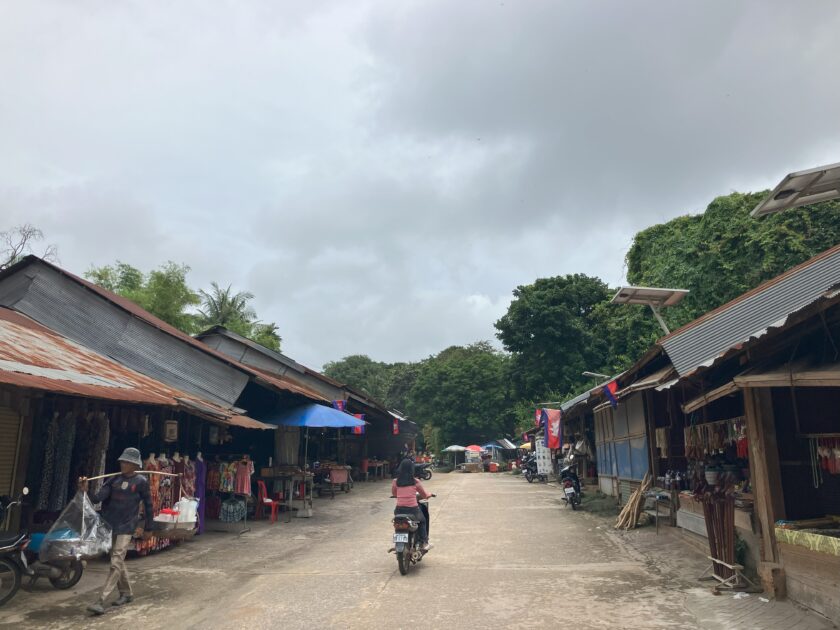
Finally, he told us that the park is vast – about 370 km² – with rice paddies, banana groves, cashew nut trees, and countless hidden temples and villages. Around nine villages are located within the park itself, and people here still live close to nature, growing what they eat and maintaining traditions that have been passed down for centuries.
Our Day Trip to Kulen Mountains
Our day started around 8 AM, when our driver and guide picked us up directly from our hotel. We had originally planned to hike to Kulen, since we usually prefer trekking over simple sightseeing tours, but this time it wasn’t really an option. Without a rented car or motorbike (we don’t drive scooters and had forgotten to extend our international driver’s license), the logistics would have been too complicated. A taxi alone would have cost around $50 USD, and moving between different places inside the national park would still require additional transport. That’s why the guided tour made perfect sense – comfortable, affordable, and without any stress.
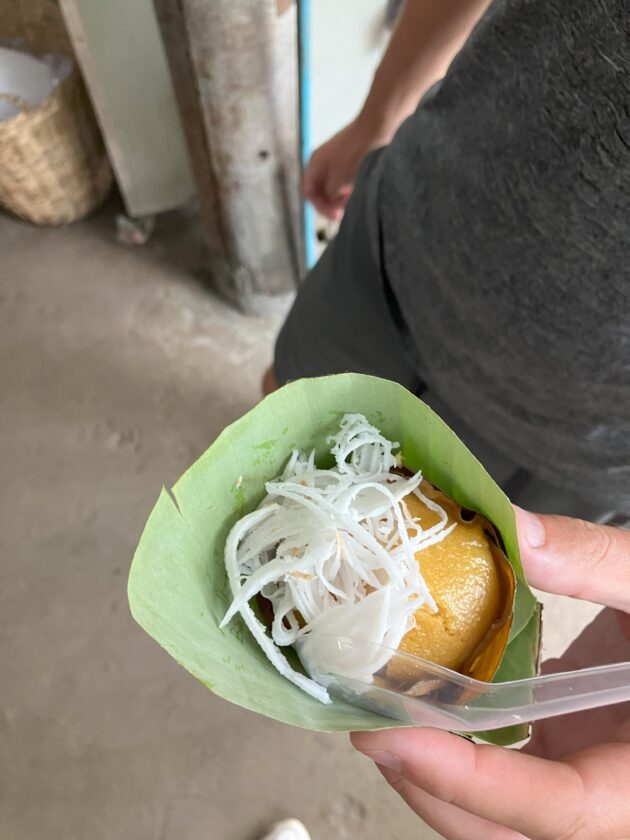
On the way to Kulen, our guide shared stories about Cambodian traditions, tourism, and everyday life (more about that in the highlights below). He was professional, full of knowledge, and what we appreciated most – he never tried to sell us anything along the way. Instead, he stopped with us in Preah Dak village, a small settlement inside the Angkor area, where we tasted traditional Cambodian palm cakes. These little treats are made from ripe palm fruit, coconut, and rice, and they were so delicious that we kept buying them later during our trip.
As we drove further, we saw panoramic views of the hills, but also the sad reality of locals standing along the road asking for donations. Soon after, we reached our first stop at the Poeng Ta Kho cliff viewpoint, where we enjoyed the wide views, took some photos, and continued deeper into the park.
Next came the famous River of a Thousand Lingas, where the riverbed is carved with ancient Hindu symbols. Beside it lies a sacred spring, which locals still consider holy. In the past, people believed the pure water was a blessing from the gods because those who drank it didn’t get sick. Today, they know it’s because the water is naturally filtered – but the spiritual meaning remains. Around the spring we also saw small shrines, both Buddhist and Hindu, showing how the two religions coexist here.
We then moved on to one of the main highlights of Phnom Kulen – the Reclining Buddha at Wat Preah Ang Thom Pagoda. Sitting high on a sandstone boulder, this huge statue is a symbol of nirvana and a place of active worship. It was fascinating to watch local families praying, offering flowers and incense, while our guide explained the differences between Buddhist traditions in Cambodia.

The last stop was the famous Phnom Kulen Waterfall. The water was extremely powerful during our visit, and although some people were brave enough to swim, we chose not to – it looked a bit too dangerous. Still, the atmosphere was magical. After some time enjoying the views, we sat down for a delicious picnic lunch, provided by the tour.

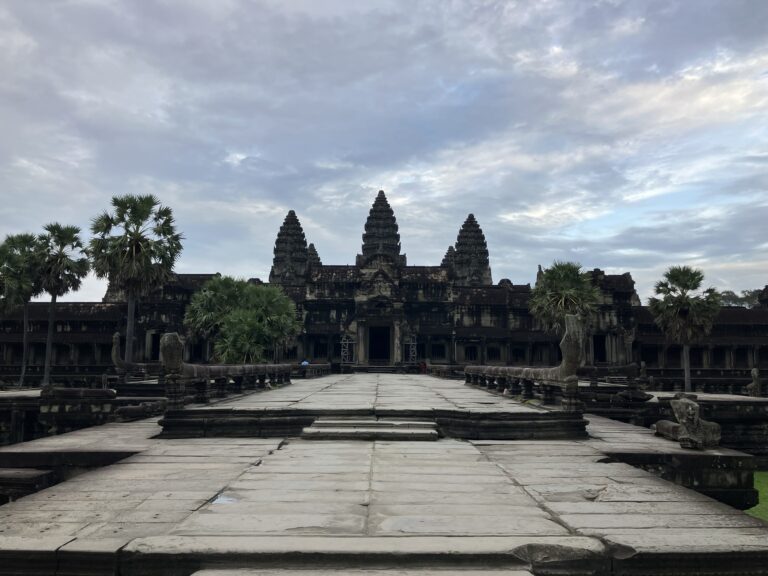
In the late afternoon, we returned towards Siem Reap. Since this was our very first day in the city, we asked the driver to drop us off at Angkor Wat instead of our hotel. With our 7-day Angkor Pass, we could freely enter in the evening – and it was the perfect way to end the day, watching the temple at sunset and looking forward to the week ahead.
Kulen Mountains Tour Experience
We visited Phnom Kulen with Asean Angkor Guide, one of the most reputable agencies in Siem Reap. Their tours are well organized, professional, and highly rated.
The Kulen Mountains tour costs $58 per person, and the entrance fee to the park (normally $20) is already included in the price. The package also covers hotel pick-up and drop-off, a comfortable air-conditioned vehicle, unlimited drinking water, a knowledgeable English-speaking guide, and a tasty picnic lunch near the waterfall.
What we appreciated most was the professionalism of the guide – he explained local traditions and history in a way that was both detailed and engaging, without ever pushing us to buy souvenirs. The transfer was very comfortable too, with spacious seating and air conditioning, which was great for the long ride.
If you’re considering a visit, we highly recommend booking this tour in advance. You can do so easily here.
Best Time to Visit Kulen Mountains
We visited Phnom Kulen during the low season, at the end of August and beginning of September, when Cambodia is in the middle of the rainy season. Surprisingly, the weather was much better than expected – it usually rained only in the evenings, and during our day trip we had only light showers. The biggest advantage of low season is that there are far fewer tourists, so in many places we were almost alone. This gave the whole trip a peaceful and authentic atmosphere.
The high season in Cambodia runs from November to March, when the weather is dry, hot, and generally more pleasant for sightseeing. However, this also means larger crowds, especially around the most popular sites.
Because the Kulen Mountains tour involves very little walking and is more about learning, views, and spiritual experiences, it is actually a trip you can comfortably do year-round. Whether you visit in the green season with fewer people, or in the dry season with clear skies, the experience will be rewarding in its own way.
How to Get to Phnom Kulen
Phnom Kulen lies about 1.5 hours from Siem Reap, and there are a few different ways to get there. A private taxi will cost around $50 USD, and if you have a valid license you could also rent a motorbike. Renting a bike makes sense especially if you want to explore more of the Kulen area on your own, since the park is quite large and there are more places to see than what is usually included on a standard tour.
It’s also possible to combine some walking with your visit, but because the sites are spread out and connected by paved roads, it’s not ideal as a full hiking destination.
For most travelers, the easiest and most convenient option is to join a guided tour. All permits, transportation, water, and even lunch are included, and you don’t have to worry about logistics. Considering the comfort and everything that’s covered, it’s actually very good value for money compared to arranging everything on your own.
Where to Stay (in Siem Reap for Visiting Kulen Mountains)
During our stay in Siem Reap, we stayed at Villa Sun – Boutique Hotel. It turned out to be an excellent choice: the staff were kind and went out of their way to make our stay comfortable. Because the property was relatively new at the time, they even arranged a provisional kitchenette for us when we asked to prepare breakfast ourselves—without any extra charge. On top of that, we received a room upgrade.
Villa Sun is located a bit outside the city center but still convenient for departing on day trips. It features amenities like air-conditioned rooms, free WiFi, an outdoor pool, garden, and terrace gardens.
For other recommended hotels, have a look at our interactive map below.
Practical Tips for Visiting Kulen Mountains
Entrance fee: The ticket to Phnom Kulen National Park normally costs $20 USD per person, but if you book a tour it’s usually already included in the price.
Dress code: Since you’ll be visiting sacred temples and pagodas, it’s important to dress respectfully. Women must cover shoulders and knees, so bring a sarong or long pants. Unlike in some places (like Sri Lanka), you can’t rent or buy sarongs at the site, so make sure to bring your own.
Swimming: If you plan to swim at the waterfall, pack swimwear and a towel. The water can be quite powerful in the rainy season, so always check conditions before getting in.
Shoes: Comfortable walking shoes or sandals are best, as paths can be uneven or slippery after rain.
Essentials: Bring sunscreen, insect repellent, and a reusable water bottle. While tours usually provide water, it’s always good to have extra.
FAQ about Kulen Mountains
How far is Phnom Kulen from Siem Reap?
Phnom Kulen is about 78.6 kilometers from Siem Reap, and the drive usually takes 1.5 to 2 hours by car or van, depending on road conditions.
Can you swim at Phnom Kulen Waterfall?
Yes, swimming is allowed and many locals enjoy it, especially on weekends. The water is clean, but during the rainy season the current can be strong, so be careful.
Is Phnom Kulen worth visiting if I already saw Angkor Wat?
Definitely. Angkor is about history and temples, while Phnom Kulen combines nature, spirituality, and local traditions. It’s a completely different experience.
Do I need a guide for Phnom Kulen?
It’s possible to go on your own if you have transport, but having a guide adds a lot of value. They explain the spiritual traditions, symbolism, and local stories that you would otherwise miss. We have an excellent guide from Asean Angkor Guide.
Are Kulen Mountains Worth Visiting?
Yes – if you have enough time in Siem Reap and have already explored the Angkor Wat, then a trip to Kulen Mountains is a wonderful addition to your itinerary. It’s a place where you can experience Cambodia’s sacred traditions, enjoy jungle landscapes, and cool off at the famous waterfall.

That said, if your schedule is very limited, we believe your time may be better spent within the Angkor Wat itself or on a day trip to Koh Ker and Beng Mealea, which offer more impressive temple exploration. Phnom Kulen is less about ancient architecture and more about nature and spirituality.
Kulen is a full day out of Siem Reap – our 3-day Angkor Wat itinerary shows where it fits, and the waterfall guide covers the park itself in detail.
Frequently asked questions
Is Phnom Kulen included in the Angkor Pass?
No. Phnom Kulen National Park is managed separately and charges its own entrance fee of US$20 per person, which no Angkor pass covers. Organized tours often include it in the price.
What time should you arrive at Phnom Kulen?
Before 11 am. The mountain road operates one-way – uphill in the morning, downhill in the afternoon – so a late arrival can mean no entry at all that day.
What is there to see in the Kulen Mountains?
The waterfall, the River of a Thousand Lingas carved into the riverbed, and the giant Reclining Buddha at Preah Ang Thom – plus the drive itself, which is half the experience.
Planning the whole trip? Our Cambodia travel guide pulls together every article we’ve written – temples, cities, the south, plus visas and costs.