3-Day Milan Itinerary: The Ultimate Travel Guide
Updated August 2026: prices, hours and transport re-checked, plus a live hotel price map.
Who doesn’t love Italy?
Delicious food, fascinating sights, iconic piazzas — it’s hard not to fall for this country’s charm. That’s exactly why we had to return once again, after previously exploring Bari and its surroundings. This time, our destination was Milan.
We arrived on a Wednesday evening and left early Monday morning, spending a total of five nights in the city. However, since one full day was dedicated to a day trip to Turin, we effectively had three full days to explore Milan itself.
If you’re planning a visit too, dive into our 3-day Milan itinerary — discover what to see, what to do, where to eat, and more.
Here below, you’ll find our Milan Ultimate Guide Interactive Map, where we’ve marked all our favorite spots in the city — from sightseeing highlights and historic villas to free museums and many other tips.
3-Day Milan Itinerary – Day 0
As we’re from Brno – the second largest city in Czechia – we were thrilled to catch a direct Ryanair flight from Brno to Bergamo. The journey to Brno–Tuřany Airport was super convenient: we drove to the Slatina district, parked for free, and then hopped on bus number E76 from the Řípská stop.
If you’re coming from Brno’s main train station (which is the most common route for travelers), you can also take bus E76 directly from there:
Once we arrived at the airport, we grabbed a seat in the small café, ordered a beer, and waited for boarding. It’s good to know that Brno–Tuřany Airport is very small, with not much to do – but that also means no long queues. You really don’t need to arrive too early before your flight, which makes the whole experience pleasantly stress-free.
After a short wait, we boarded the plane and landed smoothly in Bergamo. We had already reserved bus tickets from Bergamo Airport to Milan with Terravision, which cost €10 per person and took us directly to Milano Centrale. You can book Terravision tickets online or buy your ticket before the bus in front of the airport. Either way, the buses from Bergamo Airport to Milan run frequently. And if your flight is delayed, no worries – your Terravision ticket is still valid for a later departure. It took around an hour to get to Milano Centrale.
When we arrived at Milano Centrale, we decided to walk to our accommodation, passing through Piazza del Duomo all the way to the Navigli district, where we stayed for five nights. Our accommodation was called Hbhall Residenze Darsena, and we quickly realized that the Navigli area is one of the best locations to stay in Milan. If you’re wondering where to stay in the city, scroll down, we’ve prepared a detailed guide to the different neighborhoods below this article.
Once we arrived in Navigli, we were a bit tired, so we just took a short walk around the area and cooked dinner. We simply love being able to cook while abroad — it’s a great way to explore local ingredients and feel a bit more at home. Luckily, our apartment at Hbhall Residenze Darsena had a private kitchen, so we could easily prepare a meal before heading to bed.
3-Day Milan Itinerary – Day 1
Navigli
After a great night of sleep, we were ready to fully immerse ourselves in the streets of Milan. Naturally, our first stop was the Navigli, where we stayed during our trip.
When visiting Milan, you simply can’t miss the Navigli, located near the historic canals Naviglio Grande and Naviglio Pavese. This picturesque part of the city is full of life and offers plenty of experiences for both tourists and locals.
Navigli is famous for its lively markets, quirky boutiques, and antique shops. During the summer months, the streets come alive with people weaving through stalls and discovering all kinds of unique goods. A walk along the canals is especially magical at sunset, when the facades of the old buildings are reflected in the water, a truly romantic moment.
The district’s charm also comes from its wide selection of restaurants and cafés. It’s the perfect place to enjoy authentic Italian cuisine while relaxing in a cozy atmosphere. After dark, Navigli transforms into a buzzing nightlife hub, with people gathering in bars and restaurants for a great night out. I would love to recommend one restaurant called Pizza e Mozzarella.
Navigli is also a center of creativity and art. The nearby galleries offer a wide range of artworks representing the local scene. For art lovers, it’s a wonderful place to explore and get inspired.
Porta Ticinese
After enjoying the relaxed atmosphere of Navigli, we continued our walk across Porta Ticinese, one of Milan’s historical gates with beautiful neoclassical architecture. The current structure with its big stone columns was built in the 1800s, but the gate itself goes all the way back to Roman times.
Today it’s a cool spot where history meets street life, surrounded by cafes, trams, and the lively vibe of the city.

Basilica di Sant Eustorgio
From there, it was just a short stroll to the Basilica di Sant’Eustorgio, one of the oldest and most important churches in Milan. Dating back to the 4th century, it was once the resting place of the Three Kings (yes, those Three Kings). Today, you can still visit the Chapel of the Magi, which preserves this fascinating piece of history.
One of the real highlights is the peaceful cloister beside the church, a perfect little escape from the city’s busy streets.
Admission to the basilica is free, but if you want to explore the museum, cloisters, and the stunning Portinari Chapel, you’ll need to pay 6 € (4 € reduced).
Opening hours are Tuesday to Sunday, 10:00 AM – 6:00 PM (last entry at 5:30 PM, closed on Mondays.
To be sure, please double check the information on the official websites.

Basilica di Sant’Ambrogio
From there, we continued our walk through the heart of Milan and made our way to Basilica di Sant’Ambrogio, one of the city’s most iconic and historically significant churches. Built in the 4th century by Saint Ambrose himself (the patron saint of Milan), the basilica is a true masterpiece of Romanesque architecture.
Once you step into the courtyard with its symmetrical arcades, it feels like time slows down. Inside, the basilica features stunning mosaics, ancient sarcophagi, and crypts holding the relics of Saint Ambrose and two other martyrs.
Basilica di Sant’Ambrogio is free of charge and open from Monday to Saturday: 10:00 am – 12:00 pm and 2:30 pm – 6:00 pm. Sunday is from 3:00 pm to 5:00 pm but it can vary.

Santa Maria delle Grazie

After visiting the quiet beauty of Sant’Ambrogio, we headed towards Santa Maria delle Grazie, one of the most famous churches in Milan and a UNESCO World Heritage Site.
This place is world-renowned for housing one of the greatest masterpieces of all time: Leonardo da Vinci’s The Last Supper. While the church itself is a stunning example of Renaissance architecture, most visitors come here for the chance to stand just a few feet away from this legendary mural.
If you want to see The Last Supper, you absolutely must book tickets in advance, often even weeks ahead. The venue is open Tuesday to Sunday, 8:15 AM – 7:00 PM, with last entry at 6:45 PM. It’s closed on Mondays, January 1, and December 25.
Casa Verdi

After experiencing the historical and artistic side of Milan, we also stopped by Casa Verdi — a lesser-known but emotionally powerful place. Officially named “Casa di Riposo per Musicisti”, this building was founded by the great Italian composer Giuseppe Verdi in 1896 as a retirement home for musicians. The building itself is beautiful and houses a small museum that includes Verdi’s tomb, located in a peaceful crypt within the courtyard. Opening Hours are Monday to Friday, 9:00 AM – 12:00 PM and 2:00 PM – 5:00 PM and it is free of charge.
Parco Sempione

After visiting Casa Verdi, we decided to relax at Parco Sempione, one of the largest and most iconic green spaces in Milan. Located just behind Castello Sforzesco, this park is a favorite spot for both locals and tourists.
As we walked through the park, we passed by charming ponds, beautiful sculptures, and even caught a glimpse of the Arco della Pace (Arch of Peace) at the far end. The atmosphere was calm and laid-back, with people jogging, reading, or enjoying the sun.
Arco della Pace
From Parco Sempione, it was just a short walk to one of Milan’s most impressive monuments — the Arco della Pace (Arch of Peace).

Caselli Daziari
As we wandered away from Arco della Pace, we couldn’t miss the two symmetrical neoclassical buildings standing on either side of the wide avenue. These are the Caselli Daziari di Porta Sempione, the former customs houses of Milan.

Castello Sforzesco (Piazza d’Armi)
After a short walk from the Monumento a Giuseppe Garibaldi (also located in Parco Sempione), we arrived at one of Milan’s most iconic landmarks, the Castello Sforzesco, located on the edge of the expansive Piazza d’Armi.
Originally built in the 15th century by Francesco Sforza, Duke of Milan, this red-brick fortress has seen centuries of history from Renaissance courts to military occupation.
Today, the castle houses several museums and galleries, including works by Michelangelo, Leonardo da Vinci, and Bramante. Even if you don’t go inside, wandering through the inner courtyards and massive gates is an experience in itself.
Entrance to the castle grounds is free, but museum access costs around 5 EUR (or free on the first Sunday of each month). Opening hours are Tuesday to Sunday, 7:00–19:30 (Museums: 9:00–17:30)
If you are interested in Castello Sforzesco tours you can have a look here.

Fontana di Piazza Castello
Just outside the castle’s main entrance, we stopped at the Fontana di Piazza Castello — a popular and photogenic spot often nicknamed la fontana del Castello by locals.

After exploring all those sights, we got quite hungry — and that’s when we discovered a fantastic app that not only saves money, but also helps reduce food waste. It’s called Too Good To Go.
The idea is simple, instead of throwing good food away, businesses offer “Magic Bags” — surprise meals or products at a significantly reduced price. You won’t know exactly what you’ll get which I personally don’t like but you can see reviews and it can help you to decide.
In Milan, the app worked perfectly. We found plenty of local spots near us offering pasta dishes, pastries, or even full take-away boxes from restaurants. Some of the bags were just 4–5 euros or less, and the food was good.
For example here you can see our order from Rom’antica Milano Ponte Vetero:

And our bill was only 5 euros!
Brera
After we finished eating, we slowly walked toward one of the most charming neighborhoods in Milan, Brera.
Brera is often called the artistic heart of the city. Its narrow cobblestone streets, elegant buildings, and stylish atmosphere make it a true pleasure to explore. The district is full of cozy cafes, art galleries, design shops, and historic architecture that reflects a blend of old Milanese charm with modern sophistication.

Botanical Garden of Brera (Orto Botanico di Brera)
While exploring the Brera district, don’t miss one of its best-kept secrets — the Botanical Garden of Brera (Orto Botanico di Brera).
Tucked away behind the grand buildings of the Brera Academy and Pinacoteca di Brera, this quiet green oasis is a true hidden gem. Originally founded in 1774 by Maria Theresa of Austria, the garden was meant to support the teaching of medicine and pharmacy.
Today, it’s open to the public and free of charge, offering a peaceful retreat from the city’s buzz. You’ll find more than 300 different plant species, including ancient trees, medicinal herbs, and rare flowers.
It’s open Monday to Saturday, 10:00–18:00, and closed on Sundays and public holidays and the entrance is free.

Chiesa di San Giuseppe
Next on our route was the Chiesa di San Giuseppe, a peaceful Baroque church tucked away near Milan’s fashion district and just a few minutes from La Scala. Built in the 17th century, this church may not be as famous as the Duomo, but it’s a true hidden gem — calm, elegant, and full of history.
Usually open daily from around 7:30 AM to 12:00 PM and again from 3:30 PM to 6:30 PM. Sunday hours can vary and the entrance is free.

Duomo di Milano
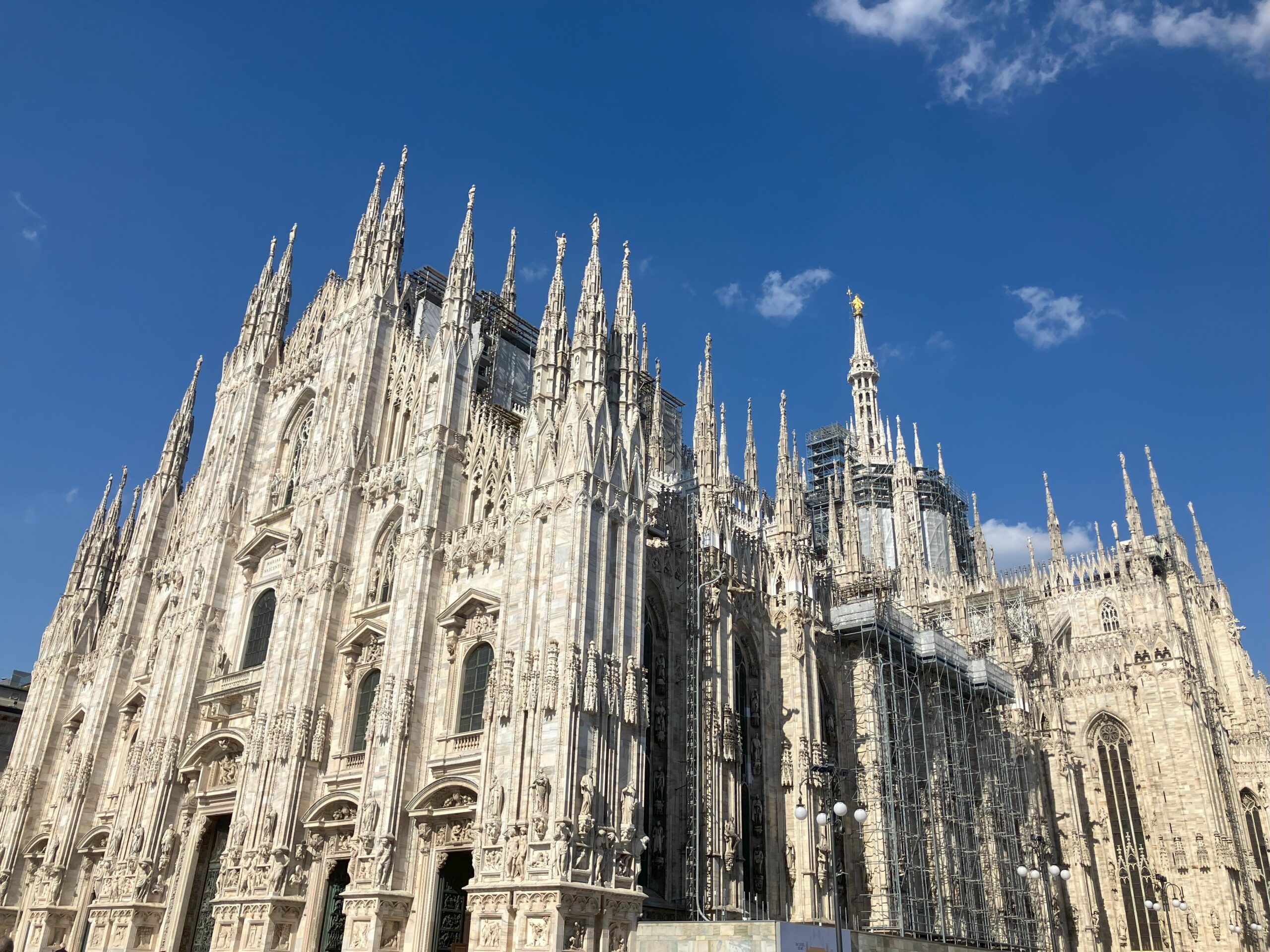
Our next stop was the magnificent Duomo di Milano, the true heart of the city — both symbolically and geographically. This awe-inspiring Gothic cathedral took nearly six centuries to complete and is one of the largest of its kind in the world. Its stunning marble façade, countless spires, and the iconic golden Madonnina statue overlooking the city make it a must-see.
We highly recommend visiting the rooftop, which offers breathtaking panoramic views of Milan and a chance to walk among the detailed statues and spires. Inside the cathedral, you’ll be amazed by the majestic columns, vibrant stained-glass windows, and even a relic said to be a nail from the cross.
The Cathedral is open daily from 8:00 AM to 7:00 PM, with last admission at 6:10 PM. The rooftop opens at 9:00 AM and closes at 7:00 PM as well, also with last admission at 6:10 PM. The museum and archaeological areas have separate opening hours, so it’s a good idea to check the current schedule online before your visit.
If you are interested in visiting Duomo di Milano let’s check the options here.

Statue of Vittorio Emanuele II
Right in front of the Duomo di Milano, you’ll find the equestrian statue of Vittorio Emanuele II, the first king of a unified Italy. This majestic monument is not just a photogenic spot but also a powerful symbol of Italian history and unity. It’s a popular meeting point and a great place to pause and soak in the energy of the Piazza del Duomo.

Galleria Vittorio Emanuele II
Just a few steps from the Duomo, you’ll enter the Galleria Vittorio Emanuele II, one of the world’s oldest and most elegant shopping arcades. This stunning 19th-century gallery is known for its magnificent glass dome, intricate mosaics, and luxury boutiques like Prada and Louis Vuitton. Even if you’re not planning to shop, it’s worth visiting just to admire the architecture.

After a full day of exploring Milan’s landmarks, we started to feel a bit tired, so we headed back to the Navigli district using the metro, the most convenient and efficient way to get around the city.
Here is the description of the Milan ticket prices:
| Ticket type | Price |
| 90 minutes | 2,20 EUR |
| 24 hours | 7,60 EUR |
| 3 days | 13 EUR |
If you’re looking for more details, feel free to check out our latest post on Milan essentials or visit the official ATM website for the most up-to-date information.
3-Day Milan Itinerary – Day 2
On our third day in Milan, we followed another exciting itinerary, this time filled with free museums, iconic sightseeing spots, and some of the most beautiful villas the city has to offer. Stay with us and explore more hidden gems of Milan!
MUDEC
Our first stop was MUDEC (Museo delle Culture), located just a short walk from our accommodation from the Navigli District. This modern museum explores world cultures and global connections through art and storytelling. During our visit, we had the chance to enjoy a powerful temporary exhibition called “Travelogue”, which focused on the historical consequences of travel, especially in the context of migration and displacement. It was thought-provoking and beautifully curated a reminder of how movement across borders has shaped societies in both inspiring and challenging ways. You can check its website here and get there for FREE temporary exhibitions.


Pizza e Mozzarella
Another great stop near the Navigli District was Pizza e Mozzarella, a local restaurant that completely won us over. If you’re looking for authentic, delicious pizza for a fantastic price, this is the place to go. With prices starting at just 5 euros per pizza, it’s a true hidden gem. The dough was delicious, the ingredients fresh, and the atmosphere totally unpretentious. If you’re in the area, just don’t miss Pizza e Mozzarella!

Navigli
Yes, we’re back in Navigli again :D. I just couldn’t help it. I truly fell in love with this part of Milan, and I really want you to see it during the day as well. Strolling around the canals (often called the “Venice of Milan”), you’ll find local markets, charming restaurants, and a laid-back vibe that’s hard to resist. You can take a boat ride as well which can be a perfect memory.

Museo del Novecento
Our next stop was Museo del Novecento, housed in the magnificent Palazzo dell’Arengario overlooking Piazza del Duomo. Dedicated entirely to 20th-century art, the museum features around 400 artworks, with a strong focus on Italian Futurists, Metaphysicists, and Abstractionists, as well as an exceptional room showcasing foreign masters like Picasso, Kandinsky, and Matisse.
The museum is open Tuesday to Sunday from 10:00 AM to 7:30 PM, with extended hours on Thursdays until 10:30 PM. It’s closed on Mondays. Entry is very affordable, Full ticket is €5, reduced is €3 (for EU citizens aged 18–25, students, and seniors), and under 18 go in for free.

Basilica di San Babila
After visiting Museo del Novecento, we walked towards Basilica di San Babila. San Babila is one of those spots that many travelers miss, but it’s worth a short stop. The church has a striking red brick facade, a peaceful interior, and feels miles away from the city’s tourist rush. Opening hours are from Monday to Saturday, 8:00 AM – 12:00 PM and 3:30 – 7:00 PM and Sunday, 4:00 – 7:00 PM. There is a free entrance.

Casa Galimberti
We made a quick stop at Casa Galimberti, one of the most beautiful façades in Milan. The mix of painted ceramic tiles, wrought-iron balconies, and floral Art Nouveau details immediately caught our eye. Even though it’s a residential building, it feels more like a public artwork.
The streets around Via Malpighi are lined with more Liberty-style villas. Just a few steps away is Casa Guazzoni, another architectural gem.

Piazza Eleonora Duse
We stopped at Piazza Eleonora Duse, a hidden gem in Porta Venezia’s “Quadrilatero del Silenzio”.

Palazzo Berri-Meregalli
From Piazza Eleonora Duse, we took a short walk deeper into the quiet streets of Porta Venezia. In just a few minutes, we reached Palazzo Berri-Meregalli.

Chiesa di San Giuseppe
We passed by Chiesa di San Giuseppe, a quiet church just a minute from the main streets. From the outside, it caught our eye with its curved stone façade and symmetrical statues tucked into niches.
Inside, it was almost empty. The space is small but striking, with a central dome, marble columns, and a few paintings worth stopping for.

Casa Campanini
We stopped at Casa Campanini, and even from the outside it was impressive. The entrance is guarded by two massive concrete caryatids, and the wrought-iron gate is full of delicate floral details.
If you’re lucky and the gate is open, you can peek into the lobby. Inside, there are stained glass panels, frescoed ceilings with cherries, and even original Art Nouveau furniture. It’s a private building, so there’s no public access


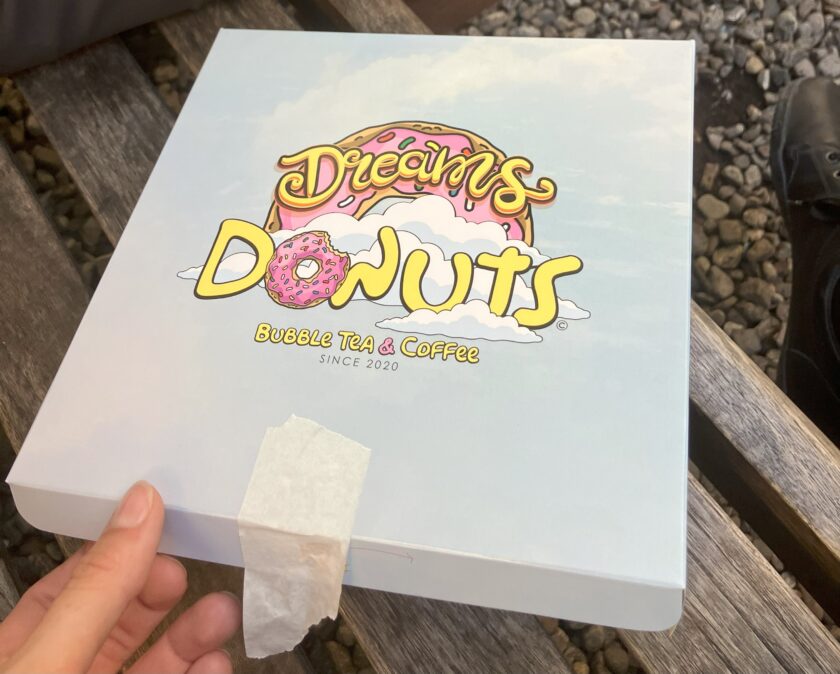
We ended our day sitting in the park near Duomo di Milano and eating donuts from Too Good To Go as I described at the start of the article.
3-Day Milan Itinerary – Day 3
This day, I wanted to see the modern side of Milan, Porta Nuova and its surroundings, including Piazza Gae Aulenti, the UniCredit Tower, and Bosco Verticale. It’s the part of the city that feels futuristic, full of glass, steel, and open urban spaces.
We also visited Pirelli HangarBicocca, which was completely different, a huge, minimalist art space in a former factory, and free to enter. The contrast between old industry and modern art made it one of the most memorable stops.
Since Filip loves Italian small towns, we decided to spend the second half of the day in Pavia. It was the perfect balance, first skyscrapers and exhibitions, then quiet streets, piazzas, and local vibes just a short train ride away.
Pirelli HangarBicocca
We visited Pirelli HangarBicocca, a massive contemporary art space set inside a former industrial warehouse. The building alone is impressive raw brick, tall ceilings, and a layout that feels open and minimal.

The exhibitions are free to enter and opening hours are from Thursday to Sunday, 10:30 AM – 8:30 PM. The exhibitions are temporary and regularly changing so it’s worth checking the official website to see what’s currently on.
I liked the exhibition by Yukinori Yanagi. The space was filled with large-scale installations combining glass, light, flags, and sand, exploring themes like identity, borders, and global power structures.

Cimitero Monumentale di Milano
After visiting Pirelli HangarBicocca, we visited Cimitero Monumentale, and it felt more like an open-air museum than a cemetery. The place is huge, quiet, and full of massive tombs, sculptures, and family monuments that look like something from an art book.

Cimitero Monumentale di Milano – Ossario
We also came across the Ossario, with its striped tower and castle-like form. If you want to visit this complex (except Ossario where you can not go inside) it is completely free and opening hours are from Tuesday to Sunday, 8:00 AM – 6:00 PM.

Piazza Gae Aulenti
From Cimitero Monumentale, we walked toward Piazza Gae Aulenti, crossing a few quieter streets before the city suddenly felt different. As we got closer, the atmosphere shifted from historic to modern.
The walk wasn’t long, and arriving at the square, we were surrounded by skyscrapers, fountains, and the clean lines of contemporary Milan.

Bosco Verticale
From Piazza Gae Aulenti, we walked just a few minutes to Bosco Verticale. And here we saw the iconic two towers covered in trees and plants on every balcony.

Porta Nuova
Right next to the towers, you can find a small park with benches, trees, and walking paths, where locals were sitting, reading, or walking dogs. There’s also a small café where you can grab a coffee or a beer and just sit back and soak in the atmosphere.

After a walk around Porta Nuova, we made our way back to Porta Venezia and caught a train to Pavia. The ticket cost 4 € per person, though on the way there, the conductor sold us two child tickets, probably trying to help us save a bit of money 😀 So it ended up being even cheaper.
The ride was comfortable and took about 45 minutes. For current prices or schedules, it’s best to check the official Trenord website or station info before your trip.
If you are interested in Pavia, let’s check our new article about our Day Trip from Milan: Pavia.
Next day, we had an early morning flight around 5 AM. We got up quietly, left our accommodation, and walked just 2 minutes to the nearest bus stop.
From there, we headed to Milano Centrale, where we had a pre-booked bus to Bergamo Airport. No sightseeing this time, just a smooth, simple exit from the city while it was still dark.
Compare live prices for your Milan dates on the map:
Where to base yourself is covered in where to stay in Milan, arrivals in the Milan airports guide, and if you have spare days, Pavia (30 minutes) and Turin (an hour) make superb escapes (all four best options, Lake Como included, are ranked in our Milan day trips guide); eastwards, Venice is 2.5 hours away (our Milan to Venice train guide shows how to pay 10 euro instead of 50). All our routes live on the itineraries page. For events during your dates, the city’s official YesMilano is the calendar to trust.
Are 3 days enough for Milan?
Yes, comfortably: the Duomo and its terraces, Brera, the castle, Navigli evenings and a Last Supper visit if you book weeks ahead, plus time to simply live well. Day trips to Pavia or Lake Como extend it naturally.
Is Milan expensive to visit?
Less than its fashion reputation suggests. Public transport is 2.20 euro a ride (7.60 for a day pass), many churches and the castle grounds are free, aperitivo doubles as dinner, and pizza slices run under 5 euro. The splurges are optional.
Do I need to book the Last Supper in advance?
Absolutely, often weeks ahead; slots are 15 minutes and sell out fast. Book on the official Cenacolo site the moment your dates firm up, and treat everything else in Milan as flexible around it.