
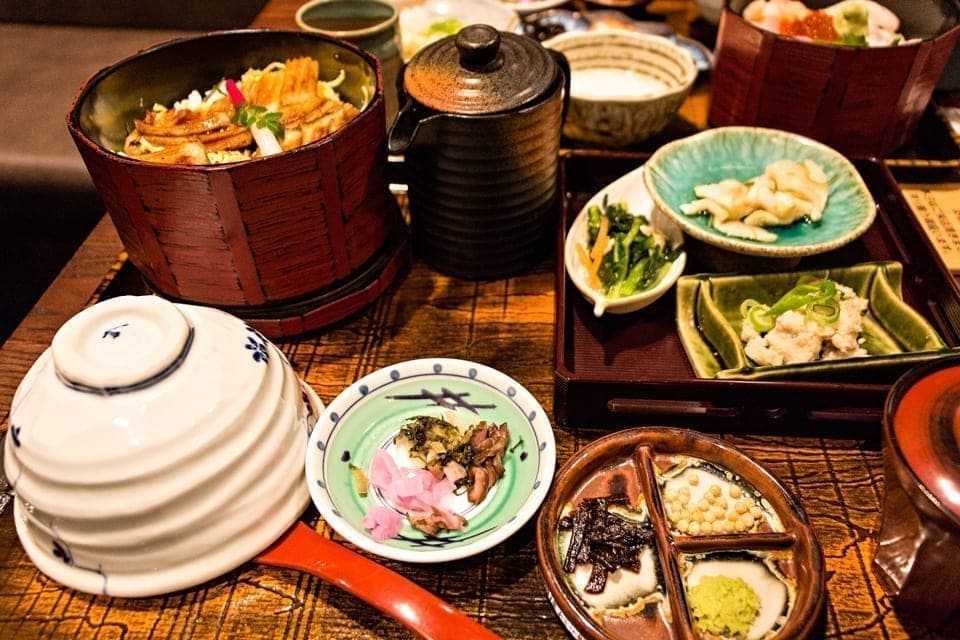
Famous Japanese food: 9 dishes you need to try in Japan
Updated August 2026: prices and picks re-checked across all nine dishes.
Food alone is an excellent reason to visit Japan. All those mouth-watering teppanyaki, sukiyaki, okonomiyaki and other yaki, as well as ramen, sushi, and so on.
Japanese food will tickle your taste buds and make them scream with happiness. Yup, Japan is a gastronomic paradise!
There are so many foods to eat in Japan that it’s hard to pick the most interesting ones. But I tried, and here’s my list!
Most Famous Japanese Food at a Glance
| Dish | What it is |
|---|---|
| Sushi & Sashimi | Raw fish with rice or served fresh |
| Tempura | Lightly battered and fried seafood or vegetables |
| Wagyu | High-quality Japanese beef |
| Udon & Soba | Traditional noodle soups |
| Ramen | Popular noodle soup with rich broth |
| Okonomiyaki | Savory Japanese pancake |
| Kaiseki | Traditional multi-course dining |
| Yakiniku | Japanese-style grilled meat |
| Fugu | Pufferfish (prepared by licensed chefs) |
Famous Japanese Dishes You Should Try
Sushi and sashimi
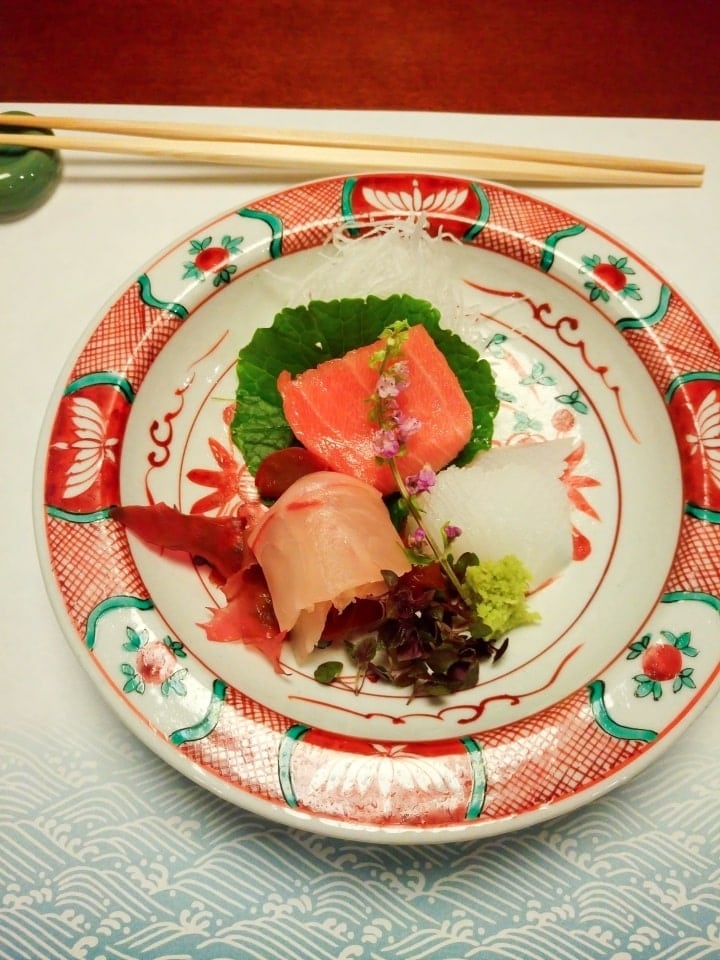
Probably no introduction needed here, just some raw fish or seafood, some rice… Sushi is definitely one of the most famous dishes in Japan.
Sushi and sashimi are usually served cold and eaten with a bit of soy sauce.
From no-frills sushi bars where your sushi comes to you on a conveyor belt to high-end restaurants, the choice of where to have this traditional Japanese food is huge.
A great place for some delicious sushi is the area around Tsukiji Outer Market in Tokyo. This place offers many good-quality sushi places, such as Tsukiji Sushi Say Honten. Watch the chefs as they prepare your sushi and then enjoy it. And definitely go by the chef’s choice – if you’re trying famous Japanese foods, make sure to experiment, too!
Tempura
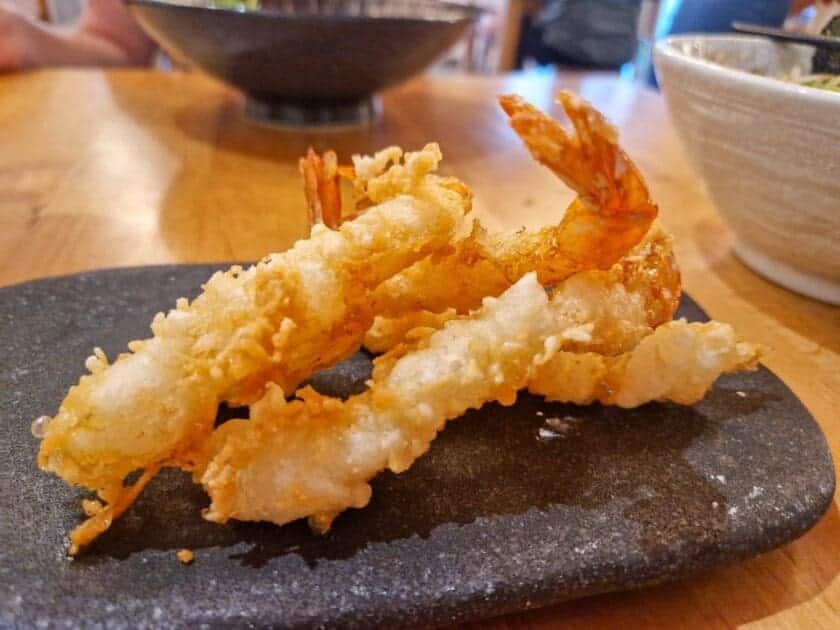
Crispy shrimps and other seafood, as well as different kinds of vegetables or mushrooms lightly battered in egg and flour and deep-fried in oil.
Most commonly eaten with a “ten-tsuyu” – a dipping sauce made of dashi soup stock, soy sauce, and sweet rice wine (mirin).
It can be both a main meal – eaten by itself with the ten-tsuyu sauce, or as a part of some other meals, for example, ten-don (a bowl of rice with tempura on top that has a sauce of concentrated soy sauce, dashi and mirin poured over it).
Wagyu
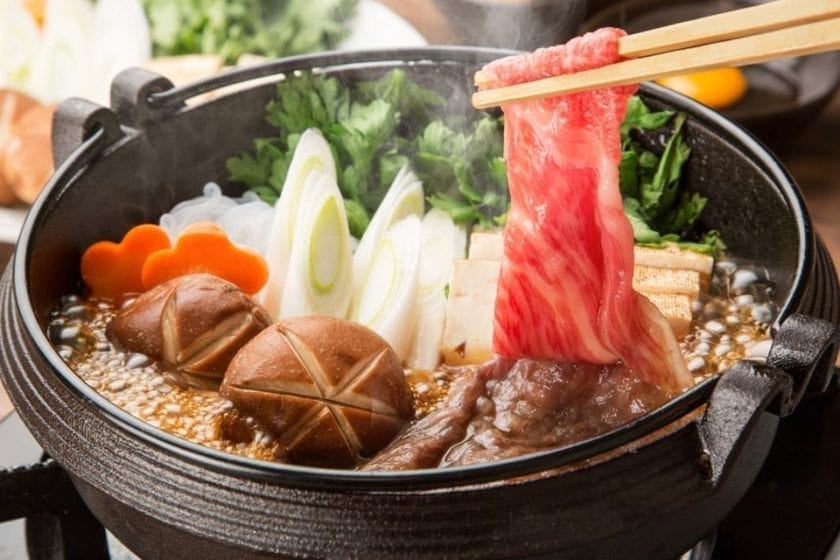
Wagyu simply means Japanese beef. And when it comes to Japanese beef, Kobe beef is what makes all the gourmets in the world especially excited. Kobe beef is from a black cattle Tajima breed raised exclusively in – guessed it – Kobe area (Hyogo prefecture).
The meat is tender, flavourful and perfectly marbled with fat like a web, which is the secret behind its unique taste. The highest quality meat is labelled as A5.
You can taste wagyu in different forms, for example, sukiyaki (beef slices simmered in a soy-sauce and rice wine-based broth in a hot pot, together with veggies, dipped into the raw egg before eating – definitely recommended for cold evenings), yakiniku (read in the following paragraphs) or simply as a steak, typically prepared on teppan (iron griddle) in teppanyaki restaurants.
For some amazing teppanyaki experience, we recommend Misono (2 restaurants in Tokyo, in Ginza and Shinjuku).
It ain’t cheap, with Kobe beef course meal setting you back a bit more than 200 EUR (220 USD), but the gourmet experience is unforgettable.
Reservations are strongly recommended, the lunch menu is still excellent and cheaper.
Udon and Soba
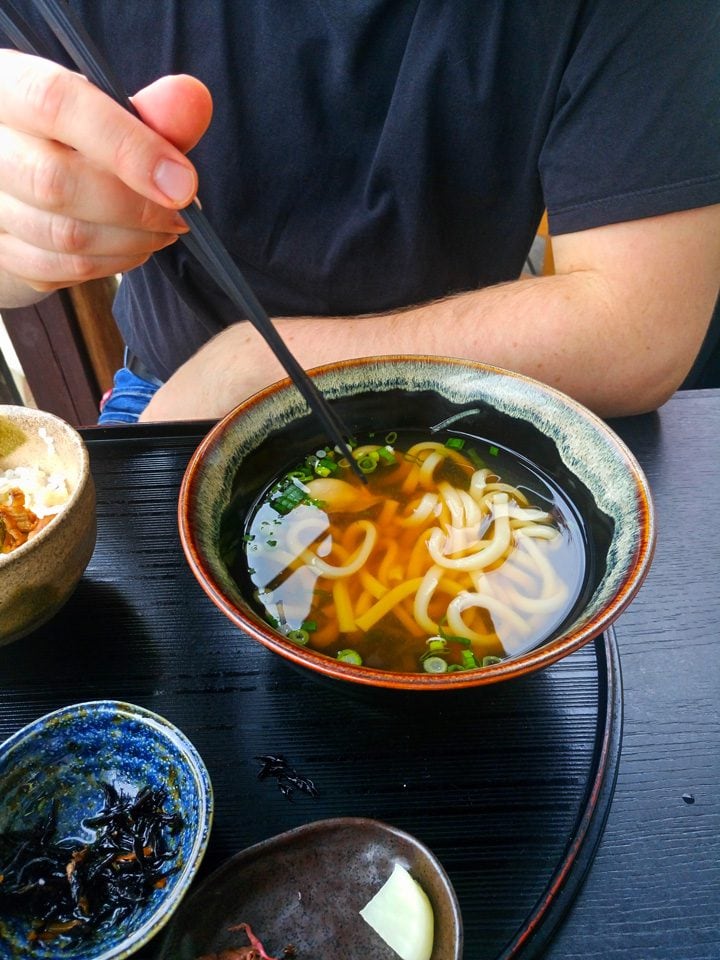
We’re talking about extremely popular noodle dishes here. Udon are thick noodles made of wheat flour while soba are somewhat thinner buckwheat flour noodles.
They are served in various ways, such as with dipping sauces or with tempura – our preferred way.
Ramen
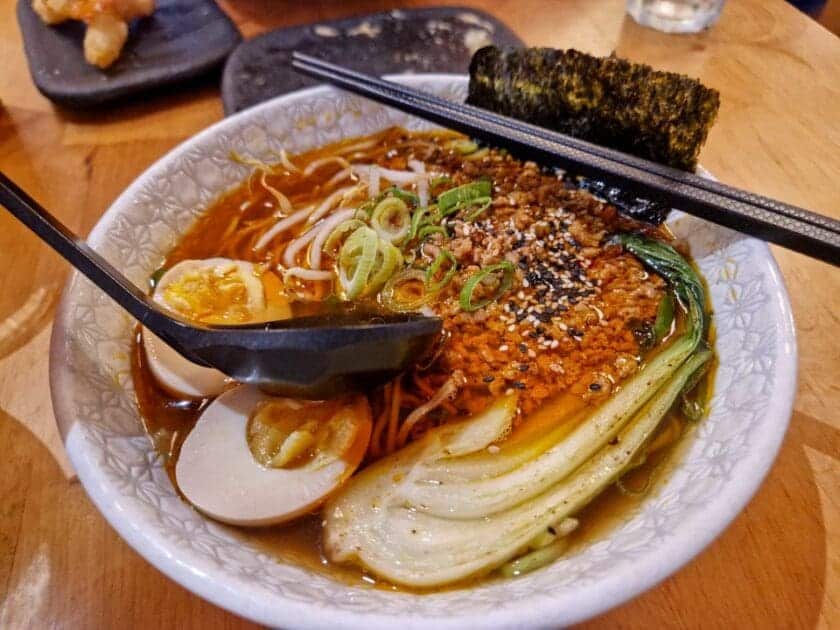
Another extremely popular noodle dish, consisting of broth (usually pork, but chicken or fish are popular as well) with noodles, meat and various toppings, such as egg, spring onions, bamboo shots, etc.
Ramen also often comes served with gyoza – little dumplings with various fillings as a side dish.
It is quite common to order ramen from a vending machine, print your ticket and present it at the counter where your ramen will be served. That’s actually what we did in Tokyo.
The popularity of this dish means that there are numerous places where to happily slurp it away, from kiosks at shopping malls to Michelin-starred restaurants.
Nakiryu in Tokyo is one of the Michelin restaurants serving ramen, and for about 10 EUR (11 USD) you can enjoy your Michelin-starred noodle delicacy. Expect queues, as reservations are not possible and the place is tiny.
Okonomiyaki
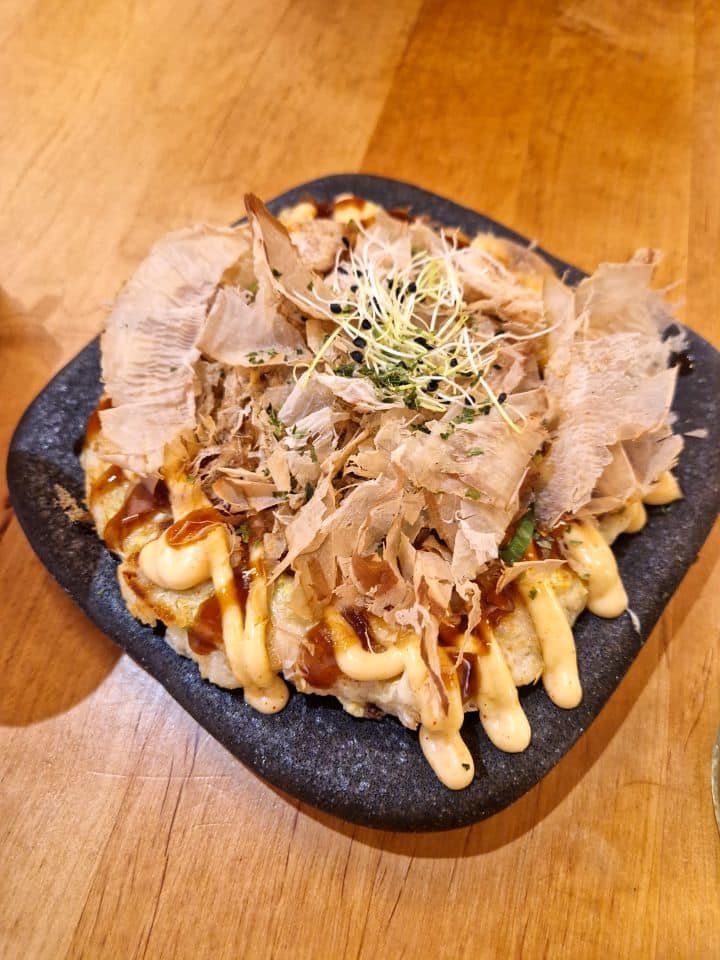
This is a savoury Japanese pancake-omelet-pizza-thing, prepared on a griddle (teppan) and filled with shredded cabbage and various toppings which include meat and seafood.
It’s a must eat in Japan, I’d say, as the ones we’ve tried in Europe are not the same.
We had okonomiyaki in Tokyo. It was quite a cool experience, as the dish was prepared right in front of you.
We recommend trying it out in Hiroshima, where this dish is extremely popular. Nagataya restaurant located next to the Atomic Bomb is great, as is Hassei (close to Peace Boulevard).
Related: One day in Hiroshima itinerary
Kaiseki
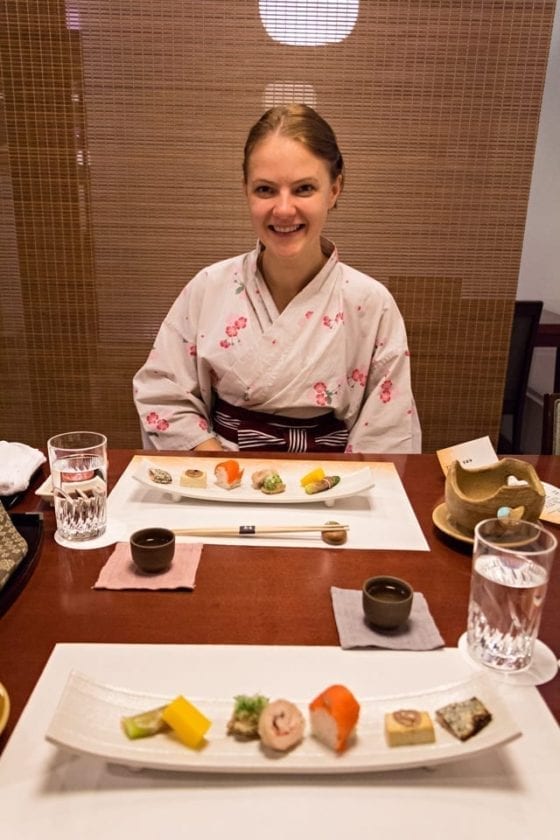
This is not a dish by itself but rather refers to Japanese haute cuisine. But really, this is a must eat in Japan.
A typical kaiseki meal is a multi-course feast, almost like a piece of art. It will engage all your senses – taste, presentation, and seasonality all play a role.
According to the Michelin Guide, it usually consists of 9 courses:
- Sakizuke: usually something pickled
- Hassun: marks the seasonality of the meal
- Suimono: a soup course made with a dashi broth base; it is revered as the most important course in a kaiseki sequence—and the mark of a chef’s ability
- Tsukuri: a sashimi course
- Yakimono: a grilled course
- Takiawase: a simmered dish, typically of vegetables mixed with some meat
- Shokuji: a rice course (gohan), served with miso soup and pickles
- Mizugashi or Mizumono: a platter of Japanese sweets or fruits
We suggest sampling kaiseki in a great ryokan during our 10-day Japan itinerary. We had kaiseki meals in our ryokan in Gora-Hakone, and it was definitely exquisite.
Yakiniku
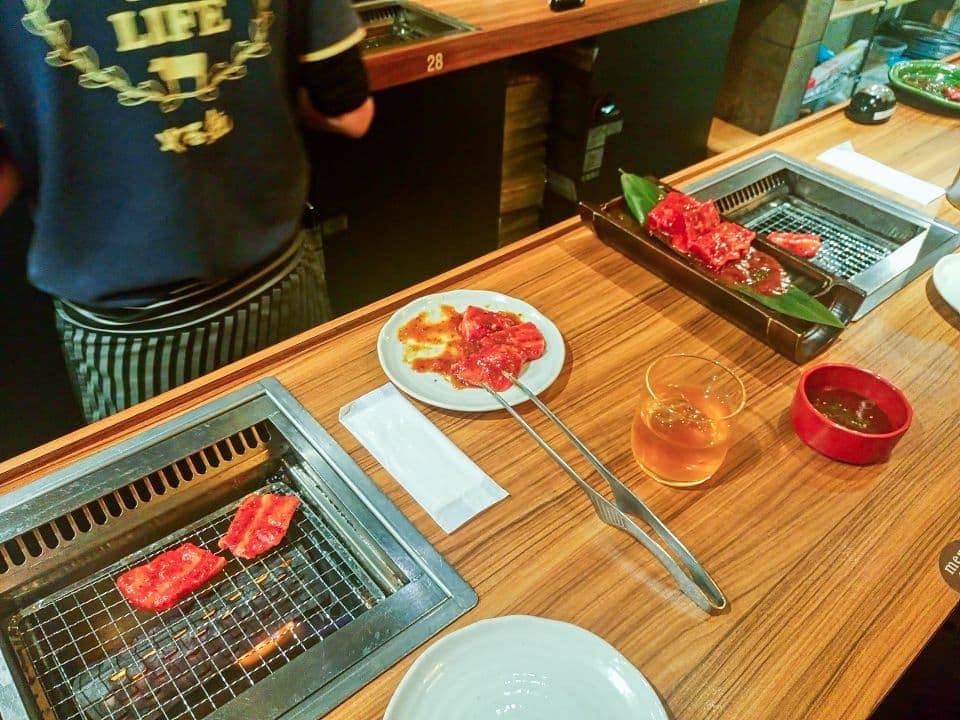
This term simply translates as grilled meat.
With various cuts of beef being the most popular, your yakiniku experience looks like this: you sit at your table with your own grill, order your meat and sauces, and cook it yourself.
Japanese barbeque at its best.
We recommend Han No Daidokoro, close to Hachiko exit of Shibuya Station in Tokyo.
We had this experience in Kyoto, in a random restaurant that we just saw while walking on a street, and it was honestly one of the coolest food experiences we had in Japan.
Fugu (blowfish, puffer fish)

Fugu is considered a luxury food in Japan.
This famously-poisonous-if-prepared-incorrectly delicacy can only be prepared by licensed chefs who take up to three years of training (and only a third of the trainees successfully pass the final test).
It’s not for the faint-hearted and it’s not for the Emperor, either – in fact, this is the only meal that the Japanese Emperor is prohibited by law to eat.
For first-timers, tecchiri (fugu hot pot), fugu karaage (deep-fried), or fugu sashimi are good options.
This is definitely one of those dishes that you must eat in Japan, or maybe Korea, as it’s not widely available outside Asia. And I’m not sure I would actually trust anyone outside the continent to prepare it correctly…
What to Drink in Japan
Green tea is very popular, with many restaurants serving a cup with the meal for free.
Enjoy a cup of delicious sencha or matcha with any meal or perhaps during a Japanese tea ceremony.
When it comes to something stronger, beer and sake (rice wine) are always a good choice, plum wine is popular as well.
Eating Out in Japan: What to Know
- Most of the restaurants specialize in one type of meal, such as sushi, ramen or okonomiyaki. Not many restaurants offer English menus, however, most of the restaurants have pictures of all the meals or even plastic models. This makes choosing and ordering your food relatively easy.
- Some of the restaurants (typically ramen joints) use vending machines for ordering your meal. You press the button for the meal you want, pay, get a ticket that you show the staff, sit down and you’ll get your meal soon.
- There are still many restaurants that accept cash payment only, so having some cash with you is always handy in Japan. Tipping is not practised in restaurants.
- Many restaurants offer water and/or green tea for free.
- The price range is huge – you can have a tasty bento lunch box from a convenience store or ramen from a vending machine for 6 EUR (7 USD) or an excellent Kobe beef steak for more than a hundred dollars, and everything in between.
The great news is that most of the meals are much closer to the cheaper end. While the food in Japan is generally more expensive than elsewhere in Asia, it is in fact cheaper than in the USA or Western Europe. - Another great news is that many great restaurants offer excellent value lunch menus.
Best food tours in Japan
If you’re feeling a bit confused about all of the tasty foods to try in Japan, I understand you! So many things, so many different places to try them…
Rest assured, there are food tours in Japan available, too and it is another great experience!
FAQ – Famous Japanese Food
What is the most famous food in Japan?
Sushi is the most famous Japanese food worldwide, but dishes like ramen, tempura, and wagyu are just as popular in Japan.
What food should you try in Japan?
Some of the must-try dishes include sushi, ramen, tempura, wagyu, okonomiyaki, and traditional kaiseki meals.
Is Japanese food expensive?
It depends. You can eat very cheaply (ramen or bento for a few euros), but high-end meals like wagyu or kaiseki can be quite expensive.
What do Japanese people eat daily?
Everyday meals often include rice, noodles (ramen, udon, soba), fish, and simple dishes with vegetables.
Do restaurants in Japan have English menus?
Not always. Many restaurants use pictures or plastic food models, which makes ordering easier even without English.
Do you need cash in Japan for food?
Yes, many restaurants still accept cash only, especially smaller places.
Do you tip in Japan?
No, tipping is not expected and can even feel awkward in Japan.
What drinks are popular in Japan?
Green tea is very common and often served for free. Beer, sake, and plum wine are also popular.
What is a kaiseki meal?
Kaiseki is a traditional multi-course Japanese dining experience focused on seasonality, presentation, and balance.
Get inspired by our 10 day Japan itinerary, where you’ll find not just the complete itinerary but also many recommended restaurants where to enjoy the famous Japanese food.
Like this article? Share it!
Know what to order; now learn how: sushi etiquette, chopstick rules and Japanese food culture. Chasing these dishes in Kyoto? Here is exactly where to go, or take a local-led food tour on night one.
What food is Japan most famous for?
Sushi worldwide, but inside Japan the everyday heroes are ramen, okonomiyaki, tempura and kaiseki. Each region guards its own speciality, from Hiroshima-style okonomiyaki to Osaka takoyaki.
How much does eating out in Japan cost?
Less than people fear: excellent ramen for 900 to 1,200 yen, set lunches from 1,000 yen, conveyor-belt sushi plates from 120 yen. Splurges like kaiseki or fugu start around 10,000 yen.
Is street food a thing in Japan?
At markets, festivals and spots like Miyajima or Nishiki, absolutely; just eat standing where you bought it rather than walking. Everyday snacking runs through the konbini instead, and it is glorious.


I think that I’ll give the puffer-fish a miss! The kaiseki, on the other hand, sounds amazing; a real showcase of the chefs’ skills. The Japanese BBQ sounds fun too, especially if the quality of the meat is as wonderful as your photo suggests. I’m hungry now!
Yes, the quality is exactly as great! All the food is high quality in Japan, it’s so amazing!
We really enjoyed Japan, but the food was always a challenge for me as I don’t like seafood. My wife loves seafood and she was happy, but for me, it was often hard. Even chicken or beef dishes often come with a seafood soup or seafood side dishes. Luckily, I had made a non-seafood sign (=a picture of a fish with with a bold red X through it), which helped a lot as many owners of small Japanese restaurants did not speak English. So, yes, we had quite a few of the dishes you describe, but the blowfish was not one of them.
Oh, yes, not liking seafood deeefinitely can make a trip to Japan tricky. Lucky you managed well!
Fab post! I loooved living in Japan for all the food! I am massive udon lover…but I also really like somen (it’s bit like soba, but thinner and you get to catch the noodles from a bamboo water shoot!)
I guess for quitenestially (and gorgeous) Japanese dishes that you missed in Unagi. That is one of the things I really miss in the summertime… Om nom nom.
I think unagi is not the only food I missed, haha! If we added all of the incredible food, the article would never end! But yes, unagi is amazing, I agree.
I really miss the plum wine, honestly! I’ve tried it here in Europe, but it’s not as good. Just sitting in a ryokan, soaking my legs in the warm thermal water by the bar and sipping plum wine. That was one of the best experiences, honestly!
I’m allergic to ginger. What dishes should I avoid?
The easiest for you would be to warn every server about your allergy. Really, ginger is used very widely in Japan, it’s even boiled into many soups and broths. So your best bet is to learn to say “I’m allergic to ginger” in Japanese. Ginger is Shōga and here’s a video which explains how to say “I’m allergic”. I suggest using Google Translate photo function to translate the menus – you can download vocabularies as well, so you don’t have to rely on wifi for that. It’s an even better idea to thoroughly research where you’d like to go to eat. Good luck!