

Different ways of travelling to your destination
When you’ve chosen a place you want to go to, maybe you’ve even checked out some things to do there and where you’d like to stay. But now it’s time to figure out a way of travelling to your destination.
There are so many different ways to travel that you can get confused about which one is the best.
In this article, we’ll look at the most common ways of traveling, along with a few alternative options you might not have considered.
Of course, if the place is on the other side of the world there are really not too many choices – most probably you’ll have to fly.
But what if it’s closer by and you have a choice of driving or flying? Or maybe even taking a train? A bus?
So let’s explore the pros and cons of some of them here.
Common Ways of Traveling
Flying

I’m pretty sure this is one of the most popular ways of travelling, especially if you don’t have tons of time available. An airplane will take you places fast and it will often get you to destinations that would be hard to reach otherwise. And it’s probably the first way of getting to the destination you check when starting to plan your vacation!
Like, when we travelled around Chile (and South America), we mostly flew everywhere. For example, we went from Santiago to Easter Island, back to Santiago, then to Atacama, back to Santiago, and then on to Patagonia. The flights let us enjoy the destinations for longer, as they are quite far from one another.
Of course, flying gets inconvenient when you’d like to take a lot of stuff with you. Luggage space is limited, and it can rack up the price of the ticket as well.
In some places, there are no airports available at all or they are still rather far from your destination. In the same Patagonia, we had to fly to Punta Arenas and then drive for some 5 hours to Torres del Paine. But still, it was faster to fly and then drive than just drive.
Pros
- The fastest way to get from point A to point B
- A versatile mode of transportation that can take you almost anywhere
Cons
- You will need a different kind of transport to get around at your destination
- Sometimes there are no airports available, or the airport is rather far from the city
- There’s limited luggage space
Driving a car
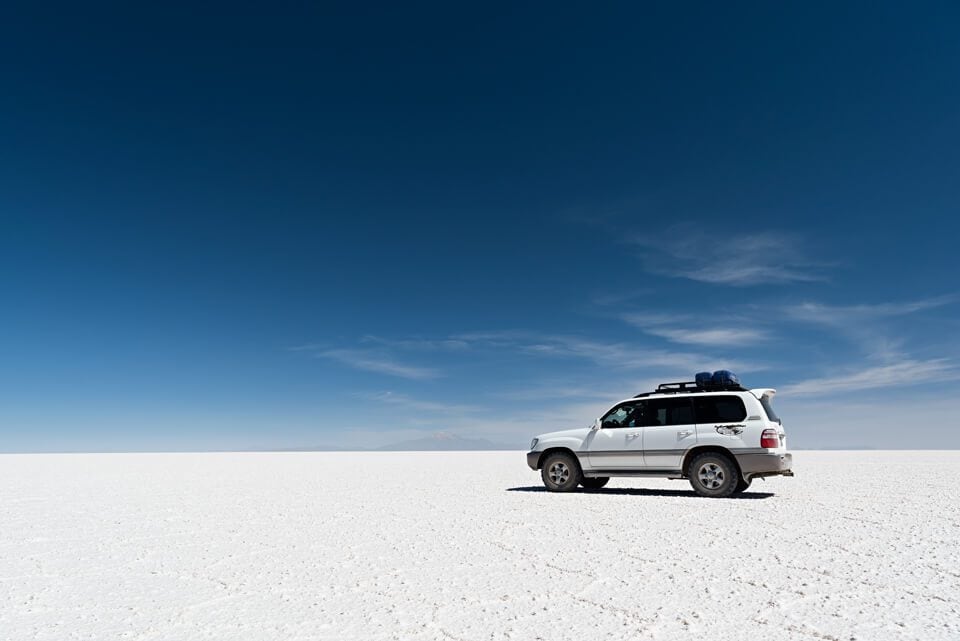
One of my favourite ways to travel, honestly, is just driving the car to the destination. This way, you can pretty much just pack what you’d like and don’t have to worry about things like lithium-ion batteries and liquids.
Plus, you have quite a lot of control over how the journey goes. For example, there’s no problem just stopping somewhere and enjoying the views on the way. And you can just leave earlier or later if you wish.
Of course, there are some minuses to using a car as your means of travel. First of all, it usually takes longer than flying and can end up being more expensive than flying. Second, it is not exactly comfortable to sit in the car for long periods of time.
Pros
- Pack what you want
- Almost complete control of the journey
Cons
- Probably will take longer than flying
- Can end up more expensive
- Not very comfortable
RVing

One of the different ways of travelling that is a bucket list item for me is to RV in Iceland so that we could see all of the incredible views at different times of the day.
It gives you the almost comfort of home on the road and lets you stop almost anywhere for a night. Of course, though, you need to go to RV parks as well to clean things like toilets and stuff out and fill up water. But still, much more freedom than needing to stay in a hotel.
Another good thing is that you don’t have to rely on places like restaurants being open in these weird times. RVing is similar to camping, with the exception that you actually can cook inside when the weather is not good. Plus, you always have a toilet available which is definitely a huge thing.
On the other hand, it can become quite costly to rent an RV. Among other things, they consume more fuel, many use propane for things like fridges, hot water, and stoves which you then have to refill. Many companies add different extra fees, such as environmental, sewage dumping, and generator use. And the camping sites pretty often cost close to budget hotel rooms.
Driving an RV takes longer than a normal car, and parking can be more difficult. Some parking lots don’t allow RVs, and larger vehicles can be hard to fit in cities.
Pros
- A house on wheels
- Toilet and kitchen available always
- Good for road trips
- More freedom to change travel plans
Cons
- Can get expensive – more expensive than a road trip in a small car
- Limitations on parking and driving
- Dealing with sewage
- Small space means clutter and less privacy
Bus
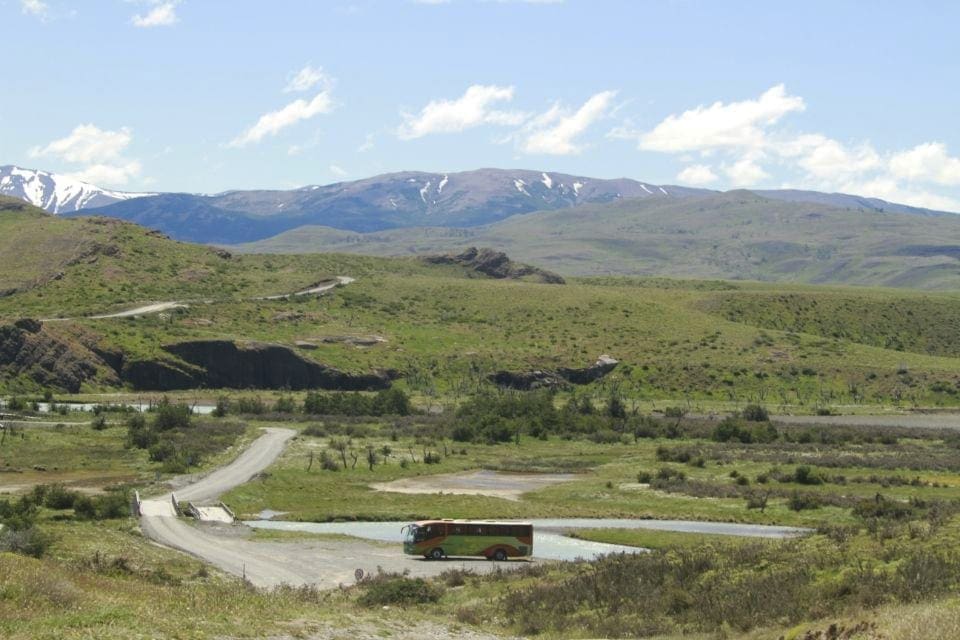
Taking a bus is a convenient way of getting from one spot to the other if you don’t want to drive by yourself.
Honestly, I prefer different ways of travelling than a bus. The one time I travelled a long distance by bus – from Latvia to Tatry – it was an incredibly bad experience.
I know that there are buses in which the seats can be made into actual beds! My cousin took one such from Latvia to France and was completely satisfied.
Anyways, buses, especially night buses, are quite a good way to travel long distances rather cheaply. Quite a few people use different types of buses all over the world, including Patagonia. So, to each their own.
Pros
- You don’t have to drive by yourself
- Available all around the world
- Can save time by travelling at night
- Compared to other different ways of travelling, cheap
Cons
- Can take longer to travel long distances
- Can be quite uncomfortable
- Not the best if you suffer from motion sickness
- No overseas travel on a bus
Train
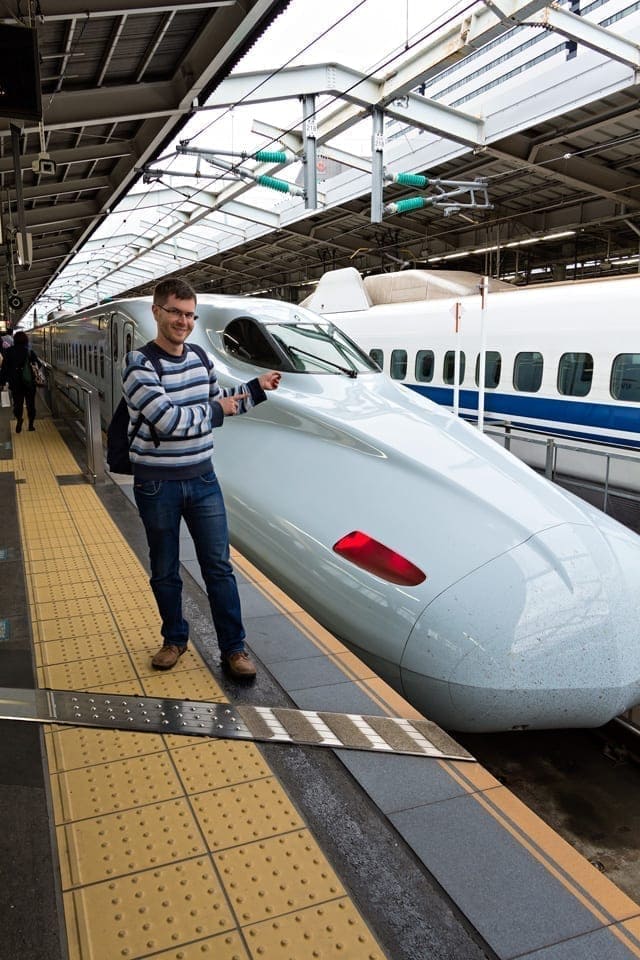
Trains are another great way of travelling. They are quite similar to buses but offer more comfort.
The seats are generally bigger with larger gaps between rows, there are quite often tables available, and you can even have private rooms and sleeper rooms for travelling at night.
We travelled all around Japan by Shinkansen and let me tell you, it was amazing. Of course, Shinkansens are a bit different than “normal” trains, but even the “normal” ones offer more comfort than buses.
On trains, it’s even possible to reach incredible remote places. A journey on the Trans-Siberian Railway is definitely on my bucket list.
Pros
- Comfortable
- More space than buses
- Can be very fast
- No need to drive by yourself
- Generally doesn’t create motion sickness since there’s less movement
Cons
- Limited to land travel
- Doesn’t go everywhere
- Can get quite expensive
Ship

One of the different ways of travelling for those of you who don’t suffer from motion sickness (like yours truly here) is by ship. And it’s not just cruises, although I must admit travelling around the world on a luxury cruise ship sounds amazing.
There are ferries that connect different countries. For example, in Europe, you can go from Germany to Italy or Latvia, Latvia to Sweden, and I’m not even going to start naming all of the different routes through the Mediterranean Sea…
And it’s not just close distances (which even I might be able to endure). If you have 2 weeks to spare on travelling, you can even go across the Atlantic.
One of the most common ways to get to Antarctica? By boat.
So if you don’t feel like flying, long-distance travel by ship is definitely possible.
Pros
- Can reach many destinations
- Comfortable, especially on longer journeys
- You can often take your car with you
Cons
- Not the best option if you have motion sickness
- A slow way to travel
- Can be expensive
Alternative Ways of Traveling
Cargo Ship
It’s not just ferries and cruises – you can also travel by cargo ship. There are usually very few passengers and limited amenities, but it’s a very different and often more affordable way to travel.
Bicycle

If you have the energy and physical shape for it, why not just bike through the country or even the continent? Go where it’s not possible to go by car, see what few other people see.
Of course, it would take a loooot of time to travel extensively, but if you’re up to it, it would definitely make an amazing story and it would be an amazing memory.
Private jet
If you have the budget, you can rent a private jet and have full control over your journey – from departure times to onboard experience.
You can get the ultimate VIP experience and control every aspect of your journey, from when to depart to what you want to eat and drink!
Of course, it will cost you a pretty buck, but it’s definitely a special way to travel.
Terra bus

If you’re going to Canada, you might want to consider taking a snow coach deep in the Canadian wilderness.
These vehicles are specifically designed to withstand the climate and go on ice and snow, these beasts will let you explore the Icefields Parkway and Athabasca Glacier. Could be quite a cool experience, especially if you’re an adventure traveller!
Hitchhiking
If you’re an adventurous person who doesn’t mind a bit of risk, why not try hitchhiking? Travelling this way allows you to meet a lot of people and learn things only locals know about a place.
We’ve hitchhiked through quite a few countries ourselves, and it’s always been a memorable experience.
If you’re curious what it’s really like, take a look at our hitchhiking in Kyrgyzstan.
Comparison of Different Ways of Traveling
| Method | Speed | Comfort | Cost |
|---|---|---|---|
| Flying | Fast | Medium | Medium–High |
| Car | Medium | Medium | Medium |
| Train | Medium–Fast | High | Medium |
| Bus | Slow | Low–Medium | Low |
| RV | Slow | Medium | High |
| Ship | Slow | High | High |
| Bicycle | Very Slow | Low | Low |
| Hitchhiking | Variable | Low | Very Low |
FAQ: Different Ways of Traveling
What are the different ways of traveling?
The most common ways of traveling include flying, driving, taking a train, bus, or ship. There are also alternative options like cycling, hitchhiking, or even traveling by cargo ship.
How many ways of traveling are there?
There isn’t a fixed number, but there are dozens of ways to travel depending on distance, budget, and personal preference. This article covers some of the most common and a few more unusual ones.
What is the best way to travel?
The best way to travel depends on your destination, budget, and time. Flying is usually best for long distances, while cars and trains work well for shorter trips.
What is the cheapest way to travel?
Buses, hitchhiking, and cycling are usually the cheapest ways to travel. Prices vary depending on the country and distance.
What is the fastest way to travel?
Flying is the fastest way to travel long distances. For shorter routes, high-speed trains can also be very efficient.
What is the most comfortable way to travel?
Trains, RV travel, and cruise ships are often considered the most comfortable, especially for longer journeys.
Like it? Share it!



Thank You